Introduction
Eating a healthy breakfast is one of the simplest ways to start the day with a positive routine. However, many people find it difficult to prepare breakfast every morning because of work, studies, family responsibilities, and other daily tasks. Sometimes, we wake up late and skip breakfast or choose unhealthy convenience foods because they are quick and easy.
In my opinion, healthy breakfast meal prep for busy people is a practical way to solve this problem. By preparing a few ingredients or meals in advance, we can save time, reduce food waste, and enjoy nutritious breakfasts without spending too much time in the kitchen.
The best thing about breakfast meal prep is that it does not need expensive ingredients or complicated recipes. Foods such as oats, eggs, yogurt, whole grain bread, bananas, apples, and nuts can help create simple and satisfying breakfast options.
In this article, I will share easy healthy breakfast meal prep ideas, affordable ingredients, storage tips, and a simple weekly breakfast plan that can make your mornings more organized.
Why Healthy Breakfast Meal Prep Is Important
I believe planning breakfast in advance can make daily life easier. When we already know what we are going to eat, we do not need to make food decisions when we are rushing to leave home.
One important benefit of meal prep is saving time. Preparing ingredients in advance can reduce the amount of cooking and cleaning required in the morning.
Another advantage is saving money. Buying breakfast outside every day can increase monthly expenses. Preparing meals at home gives us more control over ingredients and portion sizes.
Healthy breakfast meal prep can also help us make balanced food choices. We can combine whole grains, protein, fruit, and healthy fats according to our preferences and nutritional needs.
A balanced breakfast does not have to be complicated. Even a simple combination of eggs, whole grain toast, and fruit can be a useful option for a busy morning.
1. Overnight Oats for Busy Mornings
Overnight oats are one of the easiest healthy breakfast meal prep ideas. They require very little preparation and can be customized with different toppings.
To prepare overnight oats, add half a cup of rolled oats to a clean container. Pour in milk or an unsweetened milk alternative and add a spoonful of yogurt if desired. Mix the ingredients, cover the container, and refrigerate overnight.
In the morning, add sliced bananas, apples, berries, nuts, or chia seeds.
You can prepare different flavors to avoid eating the same breakfast every day. Banana and peanut butter oats are a good option for people who enjoy creamy flavors. Apple and cinnamon oats offer a different taste, while yogurt and berry oats provide a refreshing combination.
Oats contain fiber, and milk or yogurt can contribute protein and calcium. These ingredients make overnight oats a convenient choice for people who want to prepare breakfast ahead of time.
2. Boiled Eggs With Whole Grain Toast
Eggs are another practical ingredient for breakfast meal prep. They are versatile, relatively easy to prepare, and provide protein.
Boil several eggs in advance, cool them promptly, and refrigerate them in their shells in a covered container. During the week, serve them with whole grain toast, tomatoes, cucumbers, or fresh fruit.
You can also make a simple egg sandwich using whole grain bread, lettuce, and tomato slices.
I recommend keeping the meal simple because a breakfast routine should be easy to maintain. Preparing eggs ahead of time means you can assemble a balanced breakfast in just a few minutes.
For food safety, refrigerate cooked eggs promptly and generally use them within one week.
3. Yogurt and Fruit Breakfast Cups
Yogurt and fruit breakfast cups are ideal for people who prefer a light and refreshing breakfast.
To prepare them, add plain yogurt to a small container and top it with chopped fruit. Bananas, apples, strawberries, and seasonal fruits are all useful choices. Add a small portion of nuts or seeds for extra texture and flavor.
If you enjoy crunchy toppings, store granola separately and add it just before eating.
Plain yogurt can provide protein and calcium, although the nutritional content varies by product. Choosing unsweetened yogurt is a useful way to limit added sugar.
These breakfast cups are convenient for office workers, students, and anyone who needs a portable meal. Keep them refrigerated and use an insulated lunch bag with an ice pack when carrying them away from home.
4. Healthy Breakfast Sandwiches
A homemade breakfast sandwich can be both convenient and satisfying. It is also easy to customize according to your taste.
Use whole grain bread or a whole grain English muffin as the base. Add a cooked egg, tomato slices, spinach, and a small amount of cheese if desired.
You can prepare the cooked ingredients in advance and assemble the sandwich in the morning. Alternatively, suitable sandwiches can be frozen individually for later use.
When freezing breakfast sandwiches, package them in airtight wrapping and label them with the date. Reheat them thoroughly before eating.
I like this option because it offers variety without requiring complicated cooking. By changing the vegetables or adding different seasonings, you can create several breakfast combinations from a few basic ingredients.
5. Quick Breakfast Smoothies
Smoothies are useful when you have very little time to prepare breakfast. They can be made with simple ingredients and adjusted according to your preferences.
For a basic banana smoothie, blend one banana with milk, a spoonful of peanut butter, and a small portion of oats. Add more milk if you prefer a thinner consistency.
You can also combine plain yogurt with strawberries and milk for a fruit smoothie. If you enjoy green smoothies, add a small handful of spinach.
To save time, portion fruit into freezer containers ahead of time. In the morning, add the remaining ingredients and blend until smooth.
For a more balanced smoothie, include a source of protein and fiber instead of relying only on fruit juice or fruit. Remember that smoothies are most useful when they fit your appetite and overall dietary needs.
6. Prepare a Simple Weekly Breakfast Plan
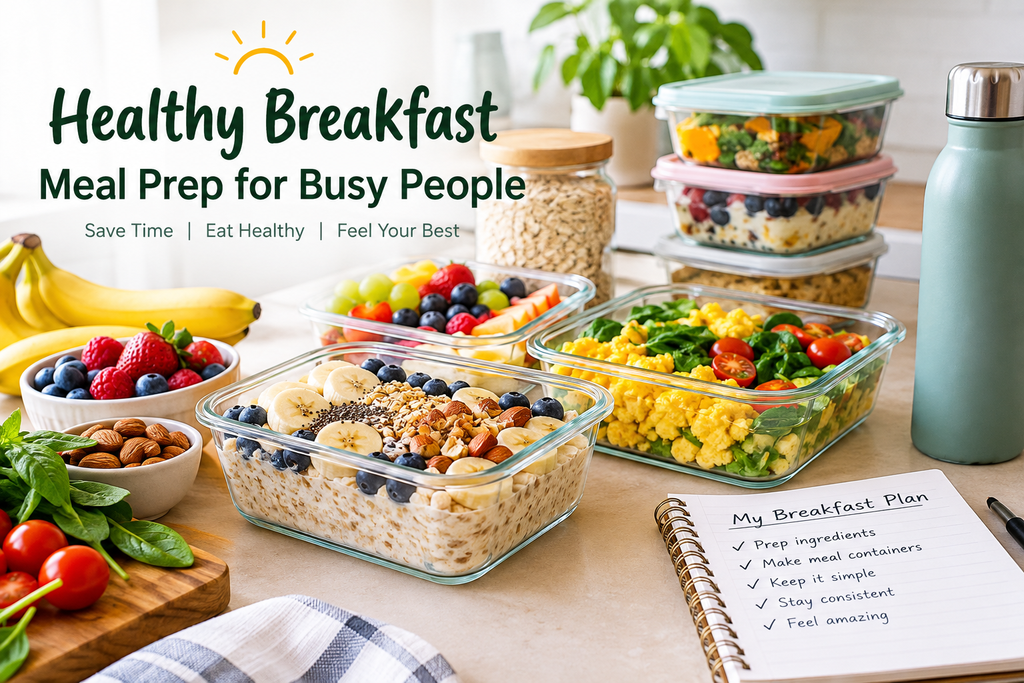
A weekly breakfast plan makes healthy meal prep easier because you know which ingredients to buy and how to use them.
You do not need seven completely different recipes. Choose a few affordable options and rotate them throughout the week.
Here is a simple example:
| Day | Breakfast |
|---|---|
| Monday | Overnight oats with banana |
| Tuesday | Boiled eggs with whole grain toast |
| Wednesday | Yogurt with fruit and nuts |
| Thursday | Peanut butter and banana toast |
| Friday | Egg and vegetable sandwich |
| Saturday | Oatmeal with apples and cinnamon |
| Sunday | Homemade fruit and yogurt smoothie |
You can adjust this plan according to your schedule, budget, and food preferences.
For example, if Monday mornings are especially busy, prepare overnight oats the night before. If you have more time on the weekend, cook eggs or prepare ingredients for sandwiches.
A flexible plan is easier to follow than a strict routine that requires too much effort.
7. Prepare Ingredients in Advance
You do not need to spend several hours preparing breakfast for the entire week. Even 30 minutes of planning can help make mornings more convenient.
Start by checking your refrigerator and pantry. Make a list of the ingredients you already have and identify what you need to buy.
Wash and cut suitable fruits and vegetables, portion out dry oats, boil eggs, and organize your breakfast containers. Store dry ingredients separately from refrigerated foods.
You can also prepare small portions of nuts, seeds, or other toppings to make breakfast assembly faster.
I believe organization is just as important as cooking. When ingredients are ready and easy to find, it becomes much easier to maintain healthy habits.
8. Keep Breakfast Meal Prep Affordable
Healthy breakfast meal prep does not have to be expensive. Many nutritious ingredients are available at reasonable prices, depending on the season and location.
Oats, eggs, bananas, seasonal fruits, plain yogurt, whole grain bread, and peanuts can all be useful options.
Buying ingredients that can be used in multiple recipes is another way to manage costs. For example, oats can be used for overnight oats, cooked oatmeal, and smoothies. Bananas can be added to cereal, yogurt, or toast.
Before shopping, decide how many breakfasts you need and make a list. This can help reduce unnecessary purchases and food waste.
If your budget is limited, focus on a few versatile ingredients rather than buying special products for every recipe.
9. Store Prepared Breakfasts Safely
Food safety is an essential part of breakfast meal prep. Foods containing eggs, milk, and yogurt should be refrigerated promptly.
Keep your refrigerator at or below 40°F (4°C). Perishable foods should generally not remain at room temperature for more than two hours, or more than one hour when temperatures exceed 90°F (32°C).
Most cooked leftovers should be used within three to four days when properly refrigerated. Freeze suitable portions if you plan to keep them longer.
Store meals in clean, covered containers and label them with preparation dates. Keep raw ingredients separate from ready to eat foods, and wash your hands before preparing meals.
When reheating cooked breakfast foods, heat them thoroughly. Never assume that food is safe simply because it looks or smells normal.
10. Build a Breakfast Routine That Works for You
The best breakfast meal prep routine is one that fits your lifestyle. You do not need to follow a complicated plan or prepare every meal perfectly.
Start with two easy breakfast recipes and repeat them until preparation becomes a habit. Later, introduce new ingredients and recipes to add variety.
Keep a few convenient backup options available for mornings when your schedule changes unexpectedly. Oats, nuts, whole grain crackers, and other suitable shelf stable foods can be useful choices.
It is also important to listen to your appetite. Some people prefer a larger breakfast, while others prefer a smaller meal. Choose portions that suit your nutritional needs, preferences, and activity levels.
Consistency matters more than complexity. Small changes that fit your daily routine are often easier to maintain over time.
Conclusion
Healthy breakfast meal prep for busy people is a simple way to save time, manage food expenses, and make balanced food choices. With affordable ingredients such as oats, eggs, yogurt, fruit, and whole grain bread, you can prepare delicious breakfasts without spending every morning in the kitchen.
My recommendation is to start with a few easy recipes, prepare ingredients in advance, and create a flexible weekly breakfast plan. You do not need to change your entire routine at once. Preparing breakfast for even two or three days can make a meaningful difference.
By choosing practical recipes, storing food safely, and using ingredients wisely, you can build a healthy breakfast routine that works with your busy lifestyle. The goal is to make healthy eating convenient, enjoyable, and sustainable.