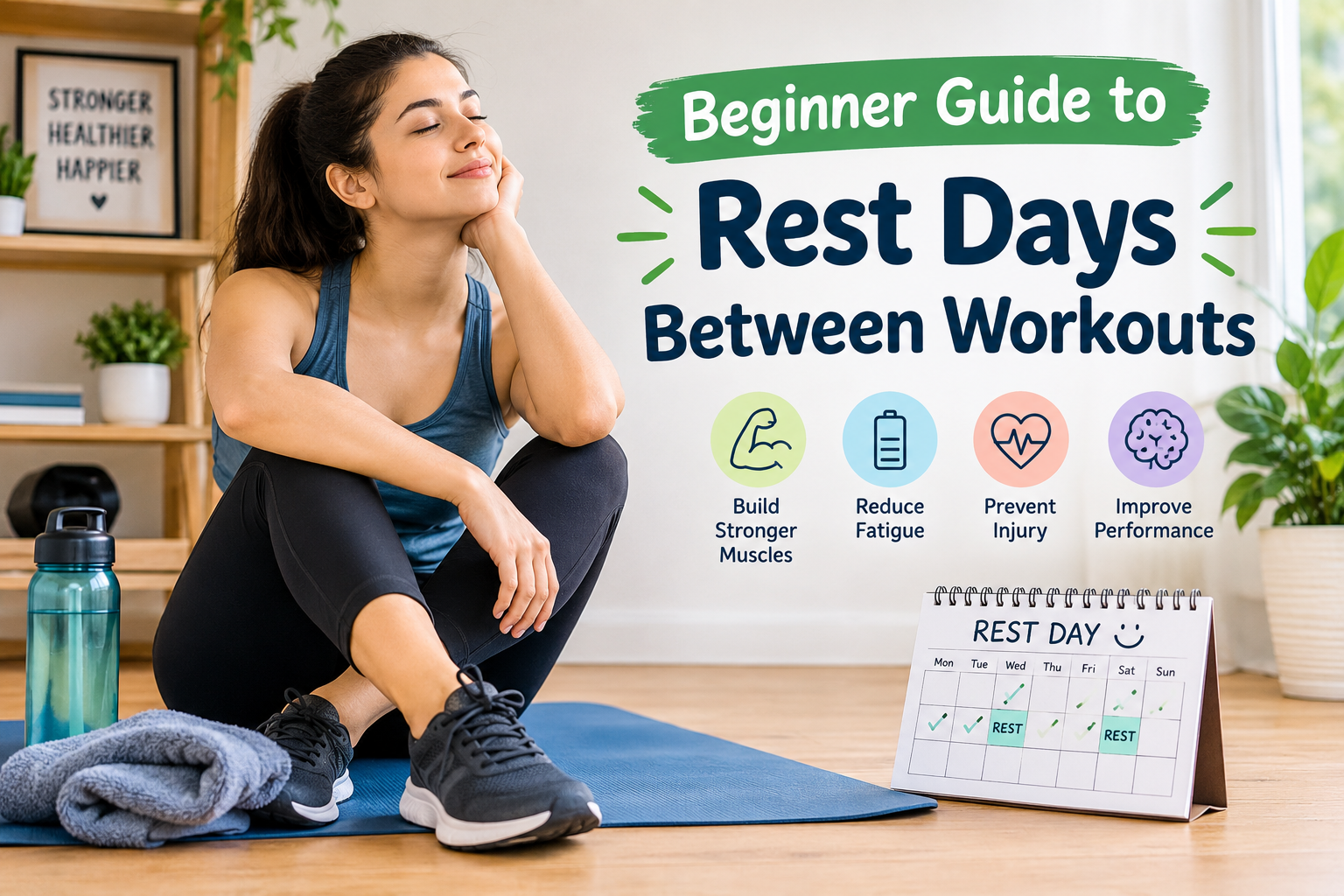
SEO Optimized Fitness Article | Beginner Friendly | AdSense Friendly
Introduction
When people start a fitness journey, they often believe that exercising every day is the fastest way to achieve better results. I used to think that working out more frequently automatically meant becoming stronger, building muscle faster, and improving overall fitness. However, one important lesson every beginner should understand is that rest is just as important as exercise.
Rest days between workouts give your body time to recover, repair muscle tissue, restore energy, and prepare for your next training session. Without enough recovery, even a well planned workout routine can become difficult to maintain. You may experience constant tiredness, muscle soreness, reduced performance, or a lack of motivation.
In my opinion, the best fitness routine is not the one that makes you exercise every single day. It is the one that allows you to remain consistent without exhausting yourself. Whether you are lifting weights, running, cycling, or following home workouts, learning how to schedule rest days can make your fitness journey healthier and more sustainable.
This beginner guide to rest days between workouts explains how often you should rest, why recovery matters, what to do on rest days, and how to recognize when your body needs a break.
What Are Rest Days Between Workouts?
Rest days are days when you take a break from demanding exercise to allow your body to recover. Depending on your training schedule, a rest day may involve no structured workout or only gentle activities such as walking, light stretching, or easy cycling.
When you exercise, your muscles experience physical stress. Strength training, in particular, creates small amounts of muscle damage that the body repairs during recovery. With adequate rest, nutrition, and sleep, your body can adapt to training and become better prepared for future sessions.
It is important to understand that recovery does not mean you are losing progress. In fact, rest days are an essential part of making progress.
Beginners especially need time to adjust because their muscles, joints, and cardiovascular system may not yet be accustomed to regular exercise. Starting with a manageable routine and allowing enough recovery can help make exercise a long term habit.
Why Are Rest Days Important for Beginners?
Rest days provide several benefits that support physical performance and general well being.
1. They Support Muscle Recovery
Muscles need time to repair and adapt after challenging workouts. If you train the same muscle groups intensely without enough recovery, you may find it harder to perform well during your next session.
Taking appropriate rest between workouts allows your muscles to recover before you challenge them again. This is particularly important for beginners who are learning how their bodies respond to different exercises.
2. They Help Reduce Excessive Fatigue
Exercise uses energy, and demanding workouts can leave you feeling tired. Rest days allow your body to replenish energy stores and recover from physical stress.
If you constantly feel exhausted, your workout intensity may be too high, your recovery may be insufficient, or your sleep and nutrition may need improvement.
3. They Can Help Lower Injury Risk
Exercise places stress on muscles, tendons, joints, and other tissues. Gradually increasing training volume and allowing recovery can help reduce the risk of overuse injuries.
Rest alone cannot prevent every injury, but it is an important part of a balanced fitness plan. Proper technique, suitable equipment, and gradual progression matter too.
4. They Improve Workout Consistency
A routine that leaves you exhausted every day can quickly become difficult to maintain. Rest days help you return to your next workout feeling more prepared.
From my perspective, consistency is more valuable than trying to achieve perfect results in a short period. A realistic schedule that includes recovery is easier to follow for months rather than just a few days.
5. They Support Mental Recovery
Fitness is not only physical. Following a demanding exercise routine can sometimes become mentally tiring, especially when you are balancing work, studies, family responsibilities, and other daily activities.
Taking a break from structured workouts can help you feel refreshed and motivated. It also reminds you that exercise should support your life rather than become another source of unnecessary pressure.
How Many Rest Days Should Beginners Take?
One of the most common questions beginners ask is how many rest days they need each week. The answer depends on workout intensity, exercise type, fitness level, sleep quality, and individual recovery.
For many beginners, starting with two or three strength training sessions per week on nonconsecutive days is a practical approach. This arrangement gives you recovery time between sessions and allows you to build a regular exercise habit.
For example, you could exercise on Monday, Wednesday, and Friday, using the remaining days for rest or gentle activity. If you are new to exercise, you can also begin with two sessions per week and increase gradually as your fitness improves.
People who enjoy daily walking or gentle mobility exercises may be able to remain active more frequently because these activities generally place less stress on the body than intense training. However, demanding workouts every day are not necessary for beginners to make progress.
The most important thing is to choose a schedule that matches your current ability. If you are consistently sore, unusually tired, or struggling to complete your normal workouts, consider adding recovery time or reducing your training intensity.
How to Plan Rest Days Between Workouts
Planning rest days becomes easier when you organize your workouts before the week begins. You do not need a complicated fitness calendar. A simple schedule is enough to help you balance exercise and recovery.
Here is an example of a beginner workout schedule.
| Day | Activity |
|---|---|
| Monday | Full body strength workout |
| Tuesday | Rest or gentle walking |
| Wednesday | Full body strength workout |
| Thursday | Rest or light stretching |
| Friday | Full body strength workout |
| Saturday | Easy cycling or walking |
| Sunday | Complete rest |
This weekly workout schedule is only an example. You can adjust it according to your energy, responsibilities, and fitness goals.
If you prefer running, swimming, or cycling, alternate challenging sessions with easier days. If your routine includes heavy strength training, avoid training the same muscle groups intensely on consecutive days, especially when you are just starting.
The goal is to create a routine that provides enough exercise to improve fitness while leaving sufficient time for recovery.
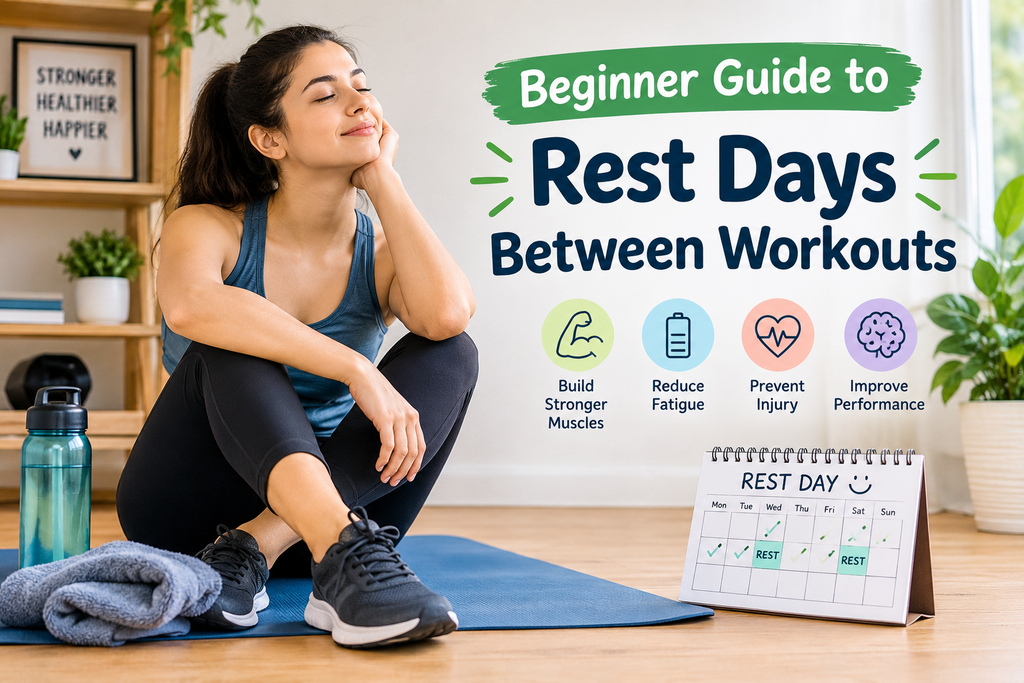
What Should You Do on Rest Days?
A rest day does not always mean staying in bed or avoiding every type of movement. Some people feel better when they include gentle activities, while others benefit from taking a complete break.
Here are a few simple ways to spend your rest days.
Go for a Gentle Walk
Walking is an easy way to remain active without placing excessive demands on your body. A relaxed walk around your neighborhood or garden may help you feel less stiff after a workout.
Keep the pace comfortable. Your rest day should not turn into another intense training session.
Try Light Stretching
Gentle stretching can help maintain flexibility and make movement feel more comfortable. Focus on relaxed movements rather than forcing your muscles into uncomfortable positions.
You can also try simple mobility exercises for your hips, shoulders, ankles, and back.
Prioritize Sleep
Sleep plays an important role in physical recovery. Adults generally need seven to nine hours of sleep each night, although individual needs can vary.
Maintaining a consistent bedtime, limiting late night screen use, and creating a comfortable sleeping environment may improve sleep quality.
Eat Balanced Meals
Your body needs sufficient energy and nutrients to recover from exercise. Include protein sources such as eggs, beans, lentils, yogurt, fish, or chicken, along with vegetables, fruits, and carbohydrate sources such as rice, oats, potatoes, or whole grains.
You do not need to stop eating normally just because you are taking a rest day. Your body continues to use energy even when you are not exercising.
Stay Hydrated
Water supports normal body functions and helps replace fluids lost through sweating. Drink regularly throughout the day and pay attention to your thirst, activity level, and weather conditions.
People exercising in hot environments may need additional fluids. If you have a medical condition that affects fluid intake, follow your healthcare professional’s advice.
Signs That Your Body Needs More Rest
Learning to recognize recovery signals is an important part of a beginner fitness journey. Muscle soreness after a new workout is common, but persistent or unusual symptoms should not be ignored.
Consider taking additional recovery time if you notice the following signs.
Persistent muscle soreness: If soreness remains intense or makes everyday movements difficult, reduce training intensity and allow more time for recovery.
Declining workout performance: If your usual exercises suddenly feel much harder over several sessions, you may need more rest, better nutrition, or improved sleep.
Unusual tiredness: Feeling exhausted despite getting enough sleep may indicate that your training schedule needs adjustment.
Reduced motivation: Losing interest in exercise can sometimes happen when your routine is too demanding or repetitive.
Poor sleep or irritability: Changes in sleep and mood may occur when overall stress becomes difficult to manage.
These signs do not always mean that exercise is the cause. Illness, stress, and other health factors can also affect recovery. If symptoms are persistent or concerning, seek advice from a healthcare professional. Sharp pain, significant swelling, chest pain, or unusual shortness of breath should not be treated as ordinary workout soreness.
Do You Need Rest Days for Weight Loss?
Rest days are important whether your goal is weight loss, muscle growth, improved endurance, or general health.
If your goal is weight loss, you might feel tempted to exercise every day to burn more calories. However, taking appropriate rest can help you maintain a sustainable routine and avoid excessive fatigue.
Weight management depends on several factors, including eating habits, physical activity, sleep, and overall energy balance. Rest days do not automatically cause weight gain, and you do not need to compensate for them by eating less or exercising harder the next day.
A balanced approach that combines regular movement, suitable nutrition, strength training, and recovery is generally easier to maintain over time.
Common Rest Day Mistakes Beginners Should Avoid
Many beginners understand that rest is important but still make mistakes when planning recovery.
One common mistake is feeling guilty about taking a day off. Rest is not a sign of laziness. It is part of a well designed training plan.
Another mistake is turning every rest day into a high intensity workout. If you perform demanding exercise daily, you may not give your body the recovery it needs.
Some beginners also ignore nutrition and sleep while focusing only on their workout schedule. However, exercise, recovery, food, and sleep work together to support progress.
Finally, avoid comparing your recovery needs with those of experienced athletes. Someone who has trained for years may tolerate a different workout schedule than someone who started last week.
Listen to your body and increase exercise gradually instead of trying to copy someone else’s routine.
How to Make Rest Days Part of Your Fitness Routine
The easiest way to stay consistent is to plan recovery from the beginning. Choose realistic workout days, mark your rest days on a calendar, and adjust the schedule when life becomes busy.
You can also keep a simple fitness journal. Record your workouts, energy levels, sleep, and muscle soreness. After a few weeks, you may notice patterns that help you decide when to train harder and when to take it easier.
Remember that progress is not always measured by how many workouts you complete. Better technique, improved stamina, greater strength, and feeling healthier are also meaningful signs of progress.
If you miss a workout because you need rest, there is no need to double your training the following day. Simply return to your normal schedule when you feel ready.
Conclusion
Rest days between workouts are an essential part of a healthy and sustainable fitness routine. They give your body time to recover, help manage fatigue, support muscle adaptation, and make it easier to remain consistent with exercise.
For beginners, two or three strength training sessions each week, separated by appropriate recovery time, can be a practical starting point. Gentle walking, balanced meals, hydration, and sufficient sleep can also support recovery.
In my opinion, the best approach is to stop thinking of rest as time wasted and start treating it as part of your progress. You do not need to push your body to its limits every day to become stronger or healthier.
Start with a manageable workout schedule, pay attention to how you feel, and adjust your rest days when necessary. With patience and consistency, you can develop a fitness routine that supports your goals without making exercise feel exhausting or overwhelming.