Introduction
In our daily lives, it is easy to become busy with work, family responsibilities, household tasks, and personal goals. Sometimes, we spend the entire day moving from one activity to another without taking a moment to relax. Over time, this busy routine can leave us feeling mentally tired, tense, and overwhelmed. One simple habit that can help us slow down is practicing breathing exercises for everyday relaxation.
I believe relaxation does not always require expensive equipment, special classes, or a long break from daily responsibilities. Sometimes, a few minutes of calm and controlled breathing can provide a helpful opportunity to pause and refocus. Breathing is something we do naturally, but paying attention to it can make it easier to recognize tension and settle ourselves during stressful moments.
The best part is that simple breathing exercises can be practiced almost anywhere. Whether I am sitting at home, taking a short break from work, or preparing for sleep, gentle breathing techniques can become part of an everyday wellness routine. In this article, I will explain several easy breathing exercises, their potential benefits, and practical ways to include them in daily life.
Why Breathing Exercises Are Important for Everyday Relaxation
Breathing is an automatic process, but the way we breathe can change depending on our emotions, activities, and surroundings. When people feel stressed or anxious, their breathing may become quicker and shallower. Slowing down and paying attention to breathing can help some people feel calmer and more comfortable.
One reason I find breathing exercises useful is that they are simple and accessible. There is no need to purchase special equipment or follow a complicated routine. A comfortable chair, a quiet corner, and a few minutes of attention are often enough to get started.
Regular breathing practice may support relaxation, improve awareness of physical tension, and help people manage everyday stress. It can also provide a useful transition between different activities, such as moving from a busy workday to a peaceful evening.
However, breathing exercises are not a replacement for professional care when someone experiences persistent anxiety, breathing difficulties, or other health concerns. Their main purpose is to support general relaxation and well being.
1. Deep Belly Breathing
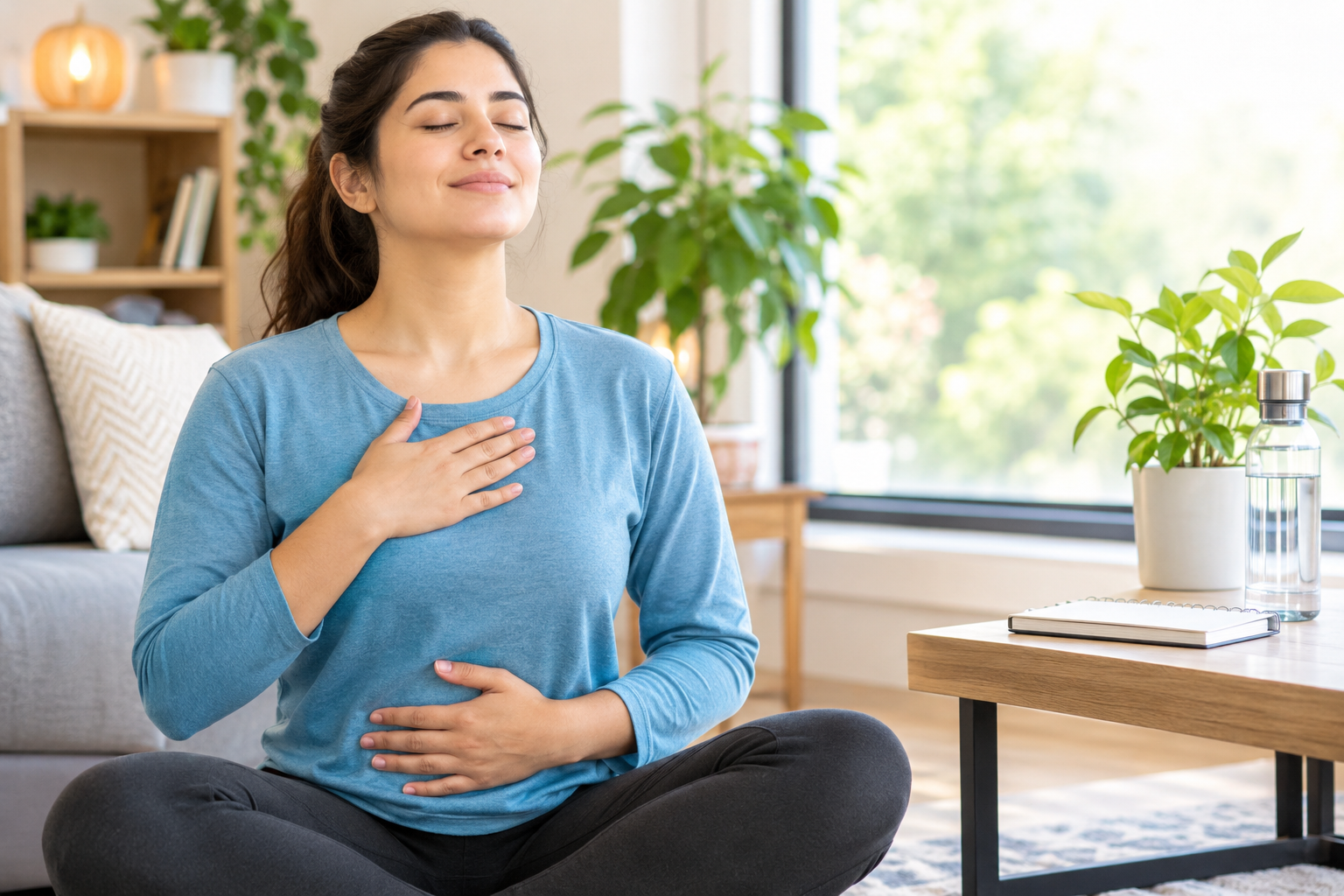
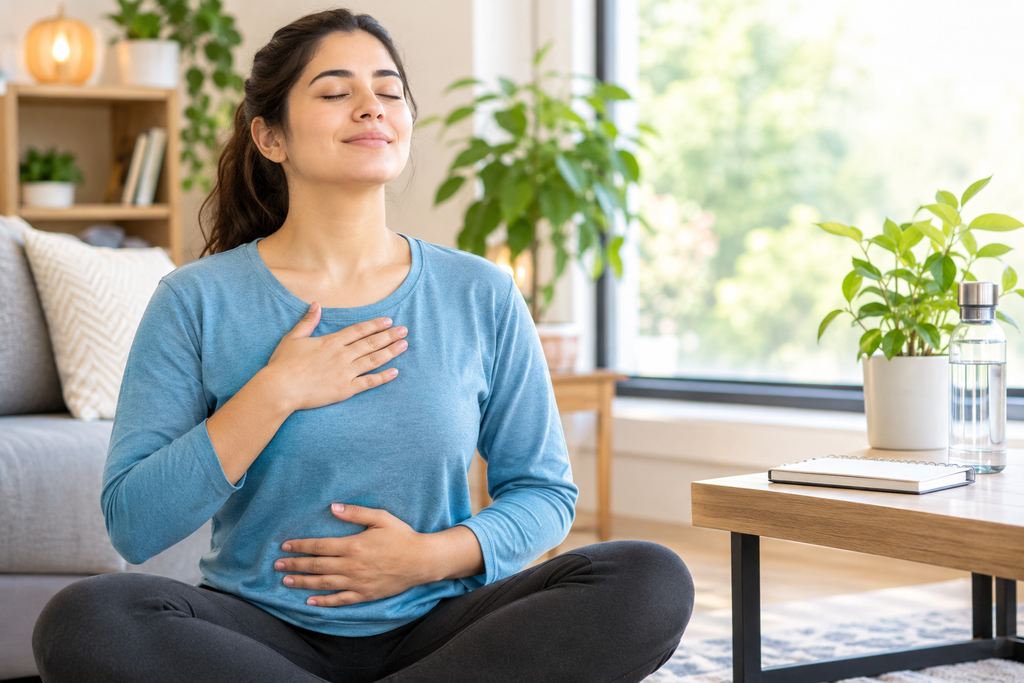
Deep belly breathing, also called diaphragmatic breathing, is one of the simplest breathing exercises for beginners. It encourages gentle movement of the abdomen instead of relying only on shallow chest breathing.
To practice this exercise, sit comfortably in a chair or lie down on your back. Relax your shoulders and place one hand on your chest and the other on your abdomen.
Breathe in slowly through your nose if comfortable, allowing your abdomen to expand naturally. Then breathe out gently without forcing the air from your lungs. Notice how your abdomen moves as you breathe.
Continue for two to five minutes, keeping each breath comfortable and unforced.
I consider this a useful exercise for people who are new to relaxation techniques because it does not require complicated counting or special movements. It can be practiced after a busy morning, during a lunch break, or whenever you want to take a quiet moment for yourself.
2. Slow and Gentle Breathing
Slow breathing is another practical technique for everyday relaxation. Instead of breathing quickly or holding your breath, the goal is to develop a comfortable, steady rhythm.
Start by sitting in a relaxed position with your feet resting on the floor. Allow your jaw, neck, and shoulders to soften. Breathe in gently and then breathe out slowly.
You can try breathing in for approximately three seconds and breathing out for four seconds, adjusting the timing to suit your comfort. There is no need to follow exact numbers if they make you uncomfortable.
Practice for two or three minutes and pay attention to how your body feels.
Slow breathing may help you create a short break from distractions and bring your attention back to the present moment. It is especially convenient when you have limited time and want a simple way to pause between tasks.
3. Box Breathing for Better Focus
Box breathing is a structured technique that uses four equal stages. It is sometimes used to support calmness and concentration.
The basic pattern is to breathe in, hold the breath, breathe out, and hold again for equal periods.
To begin, try the following pattern:
- Breathe in gently for four seconds.
- Hold your breath for four seconds if comfortable.
- Breathe out slowly for four seconds.
- Pause for four seconds before beginning again, provided the pause feels comfortable.
Repeat for a few cycles without straining.
Some people enjoy box breathing because the predictable rhythm gives their attention something simple to follow. It may be helpful before a presentation, during a demanding workday, or when preparing for an important conversation.
However, breath holding is not necessary for relaxation. If you feel dizzy, short of breath, or uncomfortable, stop the exercise and return to normal breathing. You can also practice a simple pattern of gentle inhalation and exhalation without holding your breath.
4. Pursed Lip Breathing
Pursed lip breathing involves breathing in gently through the nose and breathing out through slightly pursed lips, as if you were slowly blowing on a hot drink.
First, relax your shoulders and keep your mouth closed while inhaling gently through your nose, if possible. Then narrow your lips and exhale slowly through the small opening.
Allow the exhalation to last a little longer than the inhalation without forcing it. Repeat a few times at a comfortable pace.
This technique can help some people slow their breathing and feel more in control of their exhalation. It is also used in certain respiratory care settings, although people with ongoing breathing problems should follow guidance from a qualified healthcare professional.
For everyday relaxation, the important thing is to remain comfortable. Do not blow out forcefully or try to empty your lungs completely.
5. Mindful Breathing
Mindful breathing is a simple exercise that focuses on noticing each breath without trying to control it.
Find a comfortable position and gently bring your attention to your breathing. Notice the air moving through your nose, the rise and fall of your abdomen, or the feeling of your chest expanding.
Your mind may wander toward unfinished tasks, worries, or other thoughts. This is normal. Whenever you notice your attention moving away, gently return it to your breathing.
You can practice mindful breathing for just one to five minutes.
What I like about this method is that it does not require perfect concentration. The purpose is not to stop every thought or force the mind to become completely quiet. Instead, it offers a chance to notice what is happening without immediately reacting to every distraction.
Mindful breathing can be included in a morning routine, a quiet afternoon break, or an evening relaxation habit.
6. Equal Breathing
Equal breathing is another beginner friendly exercise that involves making inhalation and exhalation approximately the same length.
Sit comfortably and breathe in gently for three seconds. Then breathe out for three seconds. Continue repeating this pattern while maintaining a natural, relaxed rhythm.
If three seconds feels too short or too long, adjust the timing. The purpose is to find a pace that feels smooth rather than challenging.
Practice for one to three minutes and gradually increase the duration if you find it helpful.
Equal breathing can be useful when you want a straightforward exercise without breath holding or complicated instructions. It can also be practiced while sitting at your desk, provided you remain comfortable and attentive to your surroundings.
7. Morning Breathing for a Fresh Start
The morning can be an ideal time to introduce a short breathing exercise into your routine. Many people begin the day immediately checking messages, thinking about deadlines, or rushing through household responsibilities.
Taking two minutes to breathe gently before starting these activities may help create a calmer transition into the day.
After waking up, sit on your bed or in a comfortable chair. Relax your shoulders and take several gentle breaths. Notice how your body feels and allow your breathing to settle into a natural rhythm.
You can combine this practice with drinking a glass of water, opening a window, or planning your main tasks for the day.
Morning breathing does not need to be complicated. Consistency matters more than duration, and even a short practice can provide a useful reminder to approach the day at a manageable pace.
8. Evening Breathing for Relaxation
Evening breathing exercises can help create a peaceful transition between daytime responsibilities and bedtime.
Before sleeping, reduce distractions where possible. Sit comfortably or lie down and allow your breathing to become gentle and natural. Breathe in without straining, then let your exhalation happen slowly.
Continue for three to five minutes while relaxing your hands, shoulders, and jaw.
You may also combine breathing with a simple body awareness exercise. Notice your feet, legs, abdomen, shoulders, and face, allowing each area to relax naturally.
A consistent evening routine can make it easier to set aside work related thoughts and prepare for rest. Although breathing exercises do not guarantee better sleep, they can be a useful part of a calming bedtime routine.
Benefits of Practicing Breathing Exercises Regularly
The potential benefits of breathing exercises extend beyond the few minutes spent practicing them. When used consistently, they can help people develop greater awareness of their breathing patterns and physical responses to stress.
Some possible benefits include the following.
Better stress management: Gentle breathing can provide a practical way to pause during a stressful situation.
Improved awareness: Paying attention to breathing may help you notice tension in your shoulders, jaw, or abdomen.
A calmer daily routine: Short breathing breaks can create moments of quiet between demanding activities.
Support for concentration: Focusing on a steady breathing pattern may help some people temporarily redirect their attention away from distractions.
A relaxing bedtime habit: Gentle breathing may help you settle down before sleep when combined with other healthy sleep habits.
Results differ from person to person. Breathing exercises should be viewed as one part of a balanced approach to well being rather than a solution to every physical or emotional difficulty.
How to Make Breathing Exercises a Daily Habit
The easiest way to maintain a breathing routine is to connect it with activities you already do. For example, you might practice mindful breathing after waking up, take a short breathing break during lunch, and use gentle breathing before bedtime.
Start with just one or two minutes each day. Once the habit feels natural, you can gradually extend your sessions if you wish.
Choose a comfortable environment whenever possible, but remember that a perfectly quiet room is not essential. You can practice while sitting at your desk, resting on a sofa, or taking a break from household tasks.
It can also help to choose one technique rather than trying every method at once. Beginners may prefer deep belly breathing or equal breathing because both are straightforward and do not require breath holding.
Most importantly, avoid treating breathing exercises as another task that must be completed perfectly. If you miss a day, simply return to your routine when convenient.
Common Mistakes to Avoid
One common mistake is taking breaths that are too deep or forceful. Breathing more deeply than feels natural can cause discomfort or dizziness. Relaxation should feel gentle, not like a physical challenge.
Another mistake is trying to control every part of the breathing process. It is perfectly acceptable to let your breathing remain natural, particularly during mindful breathing.
Some people also expect immediate results. Although a short session may feel helpful, relaxation can vary depending on the situation, your surroundings, and your personal needs.
Finally, do not ignore warning signs. If an exercise causes dizziness, tingling, chest discomfort, or a feeling that you cannot get enough air, stop and return to normal breathing. Seek appropriate medical advice for persistent or concerning symptoms, and obtain urgent care for severe or sudden breathing difficulties or chest pain.
Conclusion
Simple breathing exercises for everyday relaxation can be an accessible way to create small moments of calm in a busy life. From deep belly breathing and mindful breathing to equal breathing and gentle evening exercises, there are several techniques worth exploring.
In my view, the most useful approach is to begin with a method that feels comfortable and practice it regularly without putting pressure on yourself. You do not need a long session or a special setting to get started. A few quiet minutes may be enough to help you pause, notice your body, and refocus on the present moment.
By making breathing exercises part of your morning, work breaks, or bedtime routine, you can develop a simple habit that supports everyday relaxation. Keep your breathing gentle, listen to your body, and remember that consistency and comfort are more important than following a perfect pattern.
Frequently Asked Questions
How long should I practice breathing exercises each day?
Beginners can start with one to five minutes a day. You can gradually increase the time if the exercise feels comfortable and useful.
What is the easiest breathing exercise for beginners?
Deep belly breathing and equal breathing are good starting points because they are simple to learn and do not require complicated steps.
Can breathing exercises help with everyday stress?
Gentle breathing exercises may help some people manage everyday stress and feel calmer. They work best as part of a broader routine that includes adequate sleep, physical activity, and other healthy habits.
Is it better to practice breathing exercises in the morning or at night?
Both can be suitable. Morning practice may help you begin the day mindfully, while evening practice may support a relaxing bedtime routine. Choose the time that fits your schedule.
Can I practice breathing exercises at work?
Yes. You can take a short break at your desk, relax your shoulders, and practice a few gentle breaths. Keep your eyes open when you need to remain aware of your surroundings.