Introduction
Maintaining a healthy lifestyle is not only about exercising regularly. It is also about giving the body enough time to rest, recover, and prepare for the next activity. In my opinion, one of the most important parts of a successful fitness routine is finding the right balance between physical activity and rest. Many people focus entirely on exercise because they want to become stronger, lose weight, or improve their fitness. However, they sometimes forget that recovery is just as important as movement.
Learning how to balance exercise and rest in a weekly routine can help make fitness more enjoyable and sustainable. Instead of pushing yourself every day, you can create a practical schedule that supports your energy, strength, and overall well being.
The good news is that a balanced routine does not require an expensive gym membership or complicated workout plans. With a little planning, consistent habits, and attention to your body’s needs, you can build a weekly exercise schedule that fits your lifestyle.
Why Exercise and Rest Are Both Important
Regular physical activity offers many benefits. It can improve cardiovascular health, strengthen muscles, support healthy bones, and help manage stress. Activities such as walking, cycling, swimming, and strength training can also improve mood and make everyday tasks easier.
However, exercise places demands on the body. Muscles need time to recover after challenging workouts, and the body needs sufficient energy and sleep to adapt to physical activity.
This is where rest becomes important. Recovery gives your body time to repair and prepare for future exercise sessions. Without adequate rest, you may experience persistent tiredness, reduced motivation, muscle soreness, or declining performance.
I believe the best fitness routine is one that considers both effort and recovery. Exercising consistently matters, but exercising more is not always better. A sensible balance helps you maintain healthy habits without making your routine feel exhausting.
1. Start by Understanding Your Fitness Goals
Before planning your weekly exercise routine, consider what you want to achieve. Your goals will influence the type of exercise you choose, how often you train, and how much recovery you need.
For example, someone who wants to improve general health may benefit from regular walking, moderate cycling, and a couple of strength training sessions each week. Someone who enjoys running may need to alternate harder running days with easier activities or rest.
If your main goal is building strength, you should allow the muscles you train to recover before challenging them intensely again. If you are focusing on flexibility and general movement, gentle stretching and mobility exercises may fit comfortably into more days of the week.
It is also important to consider your current fitness level. Beginners usually benefit from starting slowly rather than following an advanced workout schedule immediately.
Set realistic goals that fit your available time and energy. A routine you can maintain for months is generally more useful than an ambitious plan that leaves you exhausted after a few days.
2. Create a Realistic Weekly Exercise Schedule
Planning your exercise sessions in advance makes it easier to maintain consistency. Instead of deciding what to do every morning, you can assign different activities to specific days.
For general health, adults are commonly advised to aim for at least 150 minutes of moderate intensity aerobic activity each week, along with muscle strengthening activities on two or more days. You can divide this activity into manageable sessions according to your schedule and fitness level.
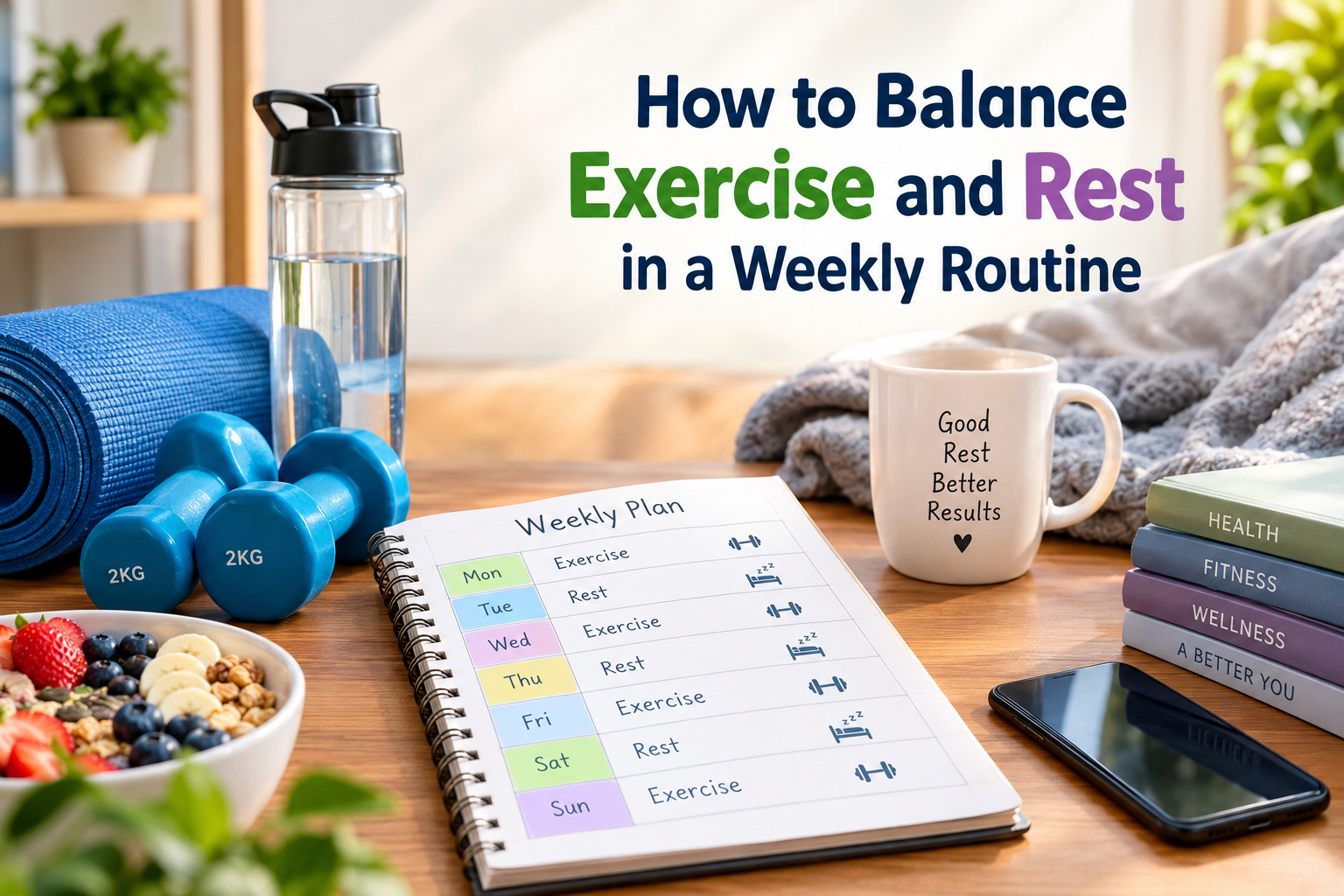
Here is an example of a balanced weekly exercise routine.
Monday: Brisk walking for 30 minutes and a short strength training session.
Tuesday: Moderate cycling, swimming, or another enjoyable aerobic activity.
Wednesday: Strength training with appropriate recovery between challenging sessions.
Thursday: Gentle walking, stretching, or mobility exercises.
Friday: A moderate cardio session or a workout that suits your fitness goals.
Saturday: An enjoyable outdoor activity, such as hiking, dancing, or cycling.
Sunday: Rest or very gentle movement, depending on how your body feels.
This is only an example, not a strict rule. You can rearrange the days to suit your work, family responsibilities, and personal preferences. Beginners may need shorter sessions and additional recovery days.
The main idea is to avoid making every workout intense. Combining challenging sessions with easier activities creates a more manageable routine.
3. Learn the Difference Between Rest Days and Active Recovery
Rest does not always mean spending the entire day sitting or lying down. There are different ways to recover, and choosing the right one depends on your energy level and the intensity of your previous workout.
A complete rest day involves taking a break from structured exercise. You can enjoy normal daily activities while avoiding demanding workouts. This approach may be especially useful when you feel unusually tired or sore.
Active recovery involves gentle movement that does not place excessive demands on the body. Examples include relaxed walking, easy cycling, light stretching, and gentle mobility exercises.
In my view, active recovery can be a practical option for people who enjoy staying physically active every day. However, it should remain comfortable and low intensity. If you feel exhausted, unwell, or unusually sore, taking a complete rest day may be more appropriate.
Remember that recovery is not a competition. You do not need to fill every free day with another activity to maintain a healthy lifestyle.
4. Avoid Exercising Intensely Every Day
One common fitness mistake is assuming that every workout must be difficult to produce results. This belief can make people feel guilty when they choose a lighter session or take a day off.
In reality, workout intensity should vary throughout the week. Challenging exercise can be useful, but repeating demanding sessions without adequate recovery may increase fatigue and make it harder to maintain consistency.
Try alternating harder workouts with lighter activities. For example, after a demanding leg workout, you might choose an easy walk or an upper body session the following day, depending on your experience and recovery.
You can also adjust the length of your workouts. A shorter, moderate session may be more appropriate on a busy day than an intense workout that leaves you drained.
Pay attention to how you feel during and after exercise. Persistent soreness, unusual fatigue, declining performance, and a loss of motivation can be signs that your schedule needs adjustment.
If symptoms are severe or do not improve with rest, consider seeking advice from a qualified healthcare professional.
5. Make Sleep a Priority for Better Recovery
Sleep is one of the most valuable parts of a balanced exercise routine. During sleep, the body carries out important recovery processes that support physical and mental health.
Most adults need at least seven hours of sleep per night, although individual needs can vary. Getting sufficient sleep can help you feel more energetic, concentrate better, and approach exercise with greater motivation.
Try to maintain a consistent bedtime and waking time, including on weekends when possible. Keep your bedroom comfortable, reduce unnecessary noise, and limit stimulating activities before bedtime.
If evening workouts make it difficult for you to relax, consider exercising earlier in the day or allowing more time between your workout and bedtime.
I find that it helps to treat sleep as part of the fitness plan rather than something to fit in after everything else. A regular workout schedule becomes much easier to maintain when you are not constantly tired.
6. Support Your Routine With Balanced Nutrition and Hydration
Exercise and rest work best when your body receives enough energy and fluids. A balanced diet can help support daily activity, muscle recovery, and general health.
Include a variety of foods in your meals, such as vegetables, fruits, whole grains, beans, eggs, dairy products, nuts, fish, or other suitable protein sources. Protein supports muscle repair, while carbohydrates provide energy for many forms of physical activity.
You do not need to follow an expensive diet or purchase special fitness products to build healthy habits. Ordinary foods can provide valuable nutrients when your meals are varied and balanced.
Hydration is equally important. Drink water regularly throughout the day, and pay attention to your fluid needs during exercise, especially in hot weather.
Avoid assuming that eating less will automatically improve your fitness results. If you regularly exercise while consuming insufficient food, you may feel weak and find recovery more difficult.
If you have specific dietary requirements or medical conditions, a qualified healthcare professional or registered dietitian can help you choose an appropriate approach.
7. Listen to Your Body and Adjust Your Plan
A weekly exercise schedule should provide direction without becoming a burden. Some days you may feel energetic and ready for a workout. On other days, poor sleep, work demands, stress, or muscle soreness may mean you need to reduce your activity.
Learning to recognize these differences is an important part of long term fitness.
For example, if your legs remain very sore after a demanding workout, you could replace your planned running session with gentle walking or rest. If you feel refreshed after an easy day, you may be ready to return to your normal schedule.
Keep track of your workouts, sleep, energy levels, and recovery. A simple notebook or calendar is enough. Over time, you may notice patterns that help you understand which routines work best for you.
Do not ignore persistent pain or symptoms that feel unusual. Stop activities that cause significant pain and seek appropriate medical advice when necessary.
Consistency does not mean following the same plan regardless of circumstances. It means continuing to make sensible choices that support your health.
8. Make Exercise Enjoyable and Sustainable
The best exercise routine is one you can realistically maintain. If your schedule feels too demanding, it becomes easier to skip workouts or lose interest.
Choose activities you genuinely enjoy. Some people prefer walking outdoors, while others like dancing, swimming, gardening, cycling, or working out at home. Enjoyable activities can make regular movement feel less like an obligation.
You can also exercise with friends or family members. A walking partner or shared weekend activity may help you stay motivated and make fitness a more social experience.
Start with manageable sessions and increase the duration or intensity gradually as your fitness improves. There is no need to change your entire lifestyle overnight.
If you miss a workout, simply return to your routine when you can. Avoid trying to compensate by doubling your exercise the next day. A flexible approach is more likely to support lasting progress.
9. Common Mistakes to Avoid When Balancing Exercise and Rest
Several common mistakes can make it difficult to maintain a healthy weekly routine.
The first is ignoring rest because you believe more exercise always produces better results. Recovery is an essential part of a sustainable fitness plan.
The second is increasing exercise intensity too quickly. Give your body time to adapt, particularly if you are new to physical activity or returning after a long break.
The third is treating every rest day as a failure. Rest is a planned part of training, not a sign of laziness.
Another mistake is copying someone else’s workout schedule without considering your own fitness level, age, responsibilities, or recovery needs.
Finally, avoid expecting immediate results. Improvements in strength, endurance, and general fitness develop gradually. Focus on regular habits rather than judging your progress by a single workout or one difficult week.
Conclusion
Learning how to balance exercise and rest in a weekly routine is an important step toward building a healthier lifestyle. Exercise helps improve strength, endurance, and overall well being, while rest allows your body to recover and prepares you for future activity.
In my opinion, a successful routine does not need to be complicated. Plan a mixture of aerobic activity, strength training, lighter movement, and adequate recovery. Support these habits with balanced meals, sufficient water, and regular sleep.
Most importantly, remain flexible and listen to your body. Some weeks will be easier than others, and your routine may need to change as your responsibilities and fitness goals develop.
Start with small, realistic steps and build gradually. When exercise and rest work together, it becomes easier to maintain consistency, enjoy physical activity, and support your health over the long term.
Frequently Asked Questions
How many days a week should I exercise?
Many adults can work toward regular aerobic activity throughout the week and muscle strengthening exercises on at least two days. The appropriate schedule depends on your fitness level, health, and recovery needs.
Should I take a rest day every week?
A recovery plan should include enough time for your body to recover. Some people benefit from one or more complete rest days, while others use lighter active recovery days. The right balance depends on workout intensity and individual needs.
Is walking on a rest day a good idea?
Gentle walking can be suitable for active recovery if it feels comfortable. If you are very tired, unwell, or experiencing significant soreness, a complete rest day may be more appropriate.
Can I exercise every day?
Daily movement can be part of a healthy lifestyle, but every session does not need to be a workout. Alternate demanding activities with gentle movement and recovery according to your needs.
What are the signs that I need more rest?
Persistent fatigue, worsening soreness, reduced exercise performance, difficulty sleeping, and declining motivation may indicate that your routine is too demanding. Reduce the intensity and prioritize recovery. Seek professional advice if symptoms persist or are concerning.