Introduction
Many people spend a large part of their day sitting at a desk, working on a computer, attending online meetings, studying, or completing everyday tasks. Although sitting makes these activities easier, staying in the same position for hours can leave the body feeling stiff and uncomfortable. The neck may become tight, the shoulders may feel heavy, and the lower back may start aching by the end of the day.
In my opinion, one of the simplest ways to make a desk routine more comfortable is to include a few easy stretching exercises throughout the day. You do not always need a gym membership, special equipment, or a long workout session to take better care of your body. A few minutes of gentle movement can help you change positions, reduce feelings of stiffness, and feel more refreshed.
Simple desk stretches are especially useful for office workers, students, remote employees, and anyone who spends long hours sitting. Most of these exercises can be performed beside your desk or while sitting in a stable chair.
In this article, I will explain some of the best desk stretches for people who sit all day, how to perform them correctly, and how to build a simple stretching routine into your daily schedule.
Why Desk Stretches Are Important
Sitting for long periods can make it easy to forget about movement. When you concentrate on your work, you might remain in the same position for several hours without realizing it.
Over time, prolonged sitting may contribute to muscle stiffness, neck discomfort, tight hips, and back discomfort. Poor desk positioning can add to the problem, particularly when your screen is too low or your shoulders remain raised while typing.
Desk stretching provides an opportunity to move your joints, change your posture, and relax muscles that feel tight. It can also serve as a useful reminder to stand up and walk around.
I believe the most important benefit is that desk stretches are simple enough to become a regular habit. You do not have to complete a complicated exercise routine. Starting with two or three stretches and repeating them throughout the day can be a practical approach.
1. Neck Side Stretch
The neck is one of the areas that can become uncomfortable after spending hours looking at a computer screen. Keeping your head tilted forward or holding your neck in one position for too long may contribute to tension.
The neck side stretch is an easy exercise that can be performed while sitting or standing.
How to do it:
- Sit upright with your shoulders relaxed.
- Slowly tilt your right ear toward your right shoulder.
- Keep your left shoulder down instead of raising it.
- Hold the comfortable stretch for about 15 to 20 seconds.
- Return to the center and repeat on the other side.
Avoid pulling your head forcefully with your hand. The movement should feel gentle, not painful.
This stretch can be helpful during a short break from reading, typing, or attending online meetings.
2. Shoulder Rolls
Shoulder rolls are among the easiest desk stretches for office workers because they require very little space. They are particularly useful when your shoulders feel tense after typing for a long time.
How to do it:
- Sit or stand with your back in a comfortable position.
- Lift your shoulders gently toward your ears.
- Roll them backward in a smooth circular motion.
- Repeat five to ten times.
- Change direction and roll them forward.
Keep your breathing natural and avoid moving too quickly.
I find this type of movement useful as a reminder to relax the upper body. You can perform shoulder rolls between tasks without interrupting your work for long.
3. Seated Upper Back Stretch
The upper back may feel stiff when you spend much of the day leaning toward a laptop or keyboard. A gentle upper back stretch encourages movement through the shoulders and upper spine.
How to do it:
- Sit near the front of a stable chair.
- Extend both arms in front of you.
- Interlock your fingers if comfortable.
- Gently reach your hands forward while allowing your upper back to round slightly.
- Lower your chin a little and hold for 15 to 20 seconds.
- Return to your normal sitting position.
Keep the movement controlled and avoid forcing your spine into a deep bend.
This exercise can be included in a short stretching routine whenever your upper back begins to feel tight.
4. Seated Spinal Twist
A seated spinal twist is a gentle way to introduce rotation into your upper body after a long period of sitting.
How to do it:
- Sit upright with both feet flat on the floor.
- Place your right hand on the outside of your left thigh.
- Rest your left hand on the chair arm or backrest if available.
- Slowly turn your upper body toward the left.
- Hold for 10 to 15 seconds while breathing normally.
- Return to the center and repeat on the opposite side.
Keep your hips facing forward and avoid twisting forcefully. The movement should remain comfortable throughout.
This stretch is not about turning as far as possible. A small, controlled movement is enough to introduce variety into your sitting position.
5. Wrist and Finger Stretch
People who use computers throughout the day repeatedly move their fingers and wrists. Typing, scrolling, and using a mouse can sometimes leave the hands feeling tired or tight.
Wrist and finger stretches offer a simple way to pause these repetitive movements.
How to do it:
- Extend your right arm in front of you with your palm facing upward.
- Gently straighten your fingers.
- Use your left hand to guide the fingers slightly downward, only as far as comfortable.
- Hold for 10 to 15 seconds.
- Turn your palm downward and repeat gently if comfortable.
- Switch hands.
You can also open your fingers wide and then relax them several times.
Avoid aggressive stretching, especially if you already have wrist pain, tingling, numbness, or swelling. Persistent symptoms should be assessed by a qualified healthcare professional.
6. Seated Hip Stretch
The hips remain bent while you sit, which can contribute to a feeling of tightness after long working sessions. A seated figure four stretch may help gently stretch the muscles around the outer hip.
How to do it:
- Sit upright in a stable chair with both feet on the floor.
- Place your right ankle over your left thigh, above the knee, if your flexibility allows.
- Keep your back comfortably straight.
- Gently lean forward from your hips until you feel a mild stretch.
- Hold for 15 to 20 seconds.
- Return to the starting position and switch sides.
Do not press down on your raised knee. If this position causes knee or hip discomfort, skip it and choose a gentler movement.
This stretch can be a helpful addition to a routine for people who spend much of their working day sitting.
7. Standing Hamstring Stretch
The hamstrings are the muscles along the back of your thighs. Sitting for extended periods keeps the knees bent and may leave the back of the legs feeling tight.
A standing hamstring stretch can help introduce movement into your routine.
How to do it:
- Stand beside your desk or a sturdy chair for support.
- Place one heel slightly in front of you with the toes pointing upward.
- Keep the front knee gently straight.
- Bend forward slightly from your hips while maintaining a comfortable back position.
- Stop when you feel a mild stretch behind the thigh.
- Hold for 15 to 20 seconds and switch legs.
Avoid rounding your back excessively or trying to touch your toes. A small stretch is sufficient.
Make sure the floor is clear and your chair or desk provides reliable support before beginning.
8. Standing Calf Stretch
Your calves can benefit from movement after your legs have remained in the same position for a long time. The standing calf stretch is simple and requires only a small amount of space.
How to do it:
- Stand facing a wall or desk for balance.
- Place your right foot behind you.
- Keep the back heel on the floor and point your toes forward.
- Bend your front knee slightly while keeping the rear leg comfortably straight.
- Lean forward until you feel a gentle stretch in the back calf.
- Hold for 15 to 20 seconds and switch legs.
Do not bounce or force your heel toward the floor.
You can combine this stretch with a short walk around the office to break up a long sitting session.
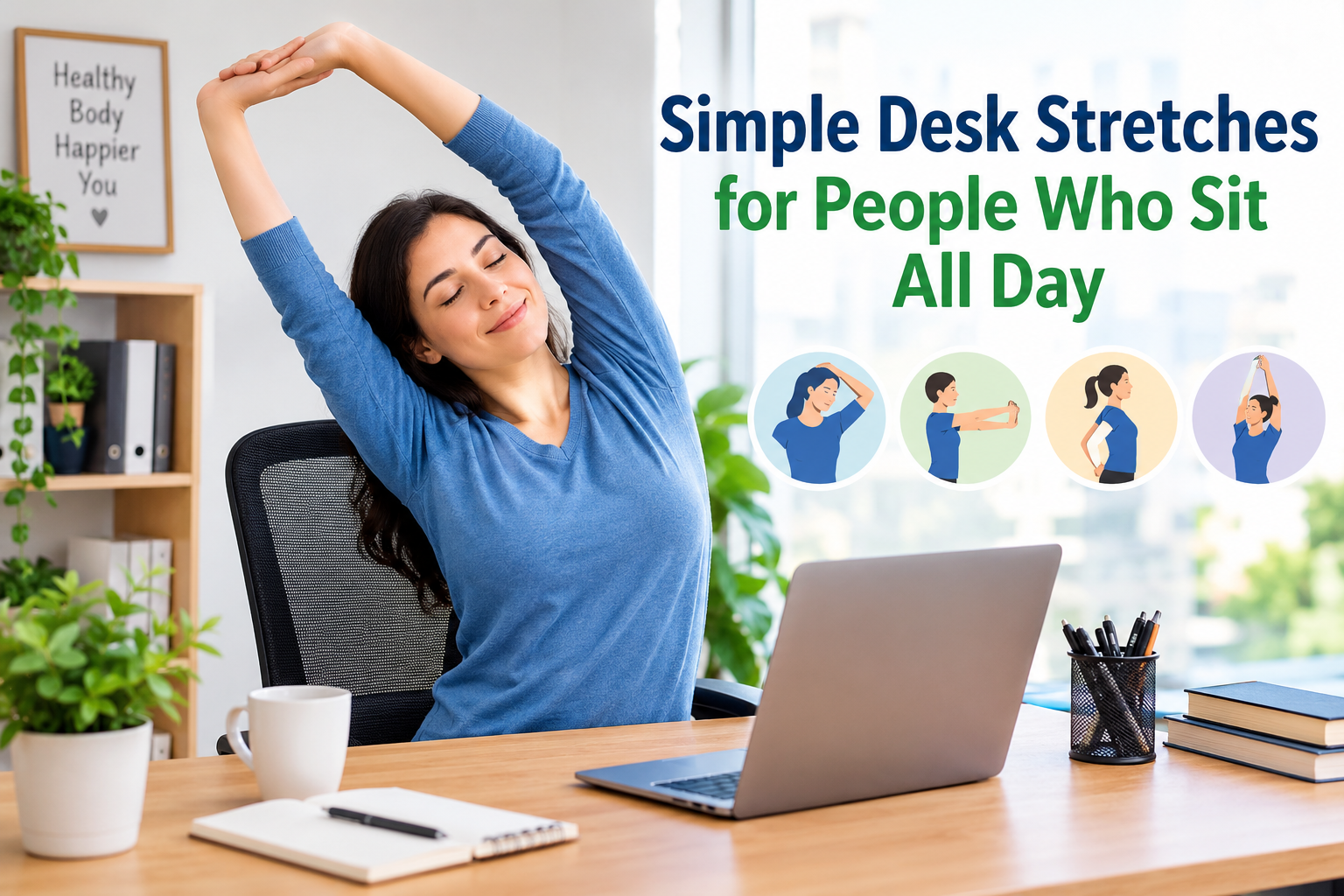
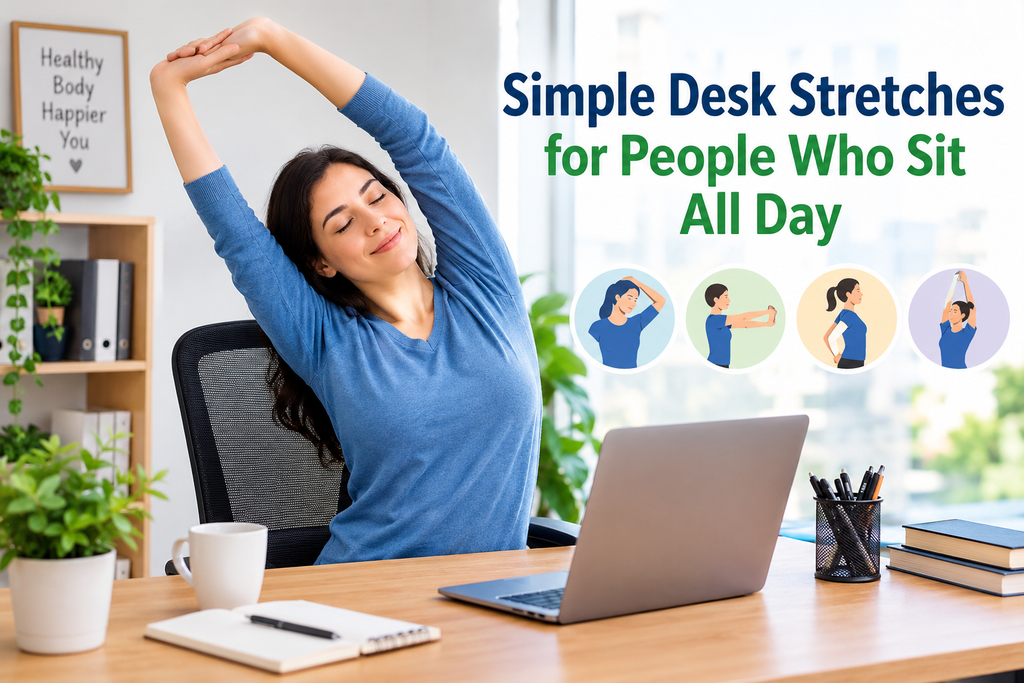
9. Overhead Side Stretch
The overhead side stretch is another useful exercise for people who spend long hours working at a desk. It introduces movement through the sides of the torso and can help you change position after sitting.
How to do it:
- Sit or stand comfortably with your shoulders relaxed.
- Raise your right arm overhead.
- Slowly lean your upper body toward the left.
- Keep both hips facing forward.
- Hold for 10 to 15 seconds.
- Return to the center and repeat on the other side.
Avoid leaning forward or twisting while performing the stretch. Keep the movement gentle and controlled.
This is a convenient stretch to perform during a short break between computer tasks.
10. Chest Opening Stretch
Working at a desk often encourages a forward leaning position. A chest opening stretch can help move your shoulders backward and provide a change from your usual typing posture.
How to do it:
- Stand or sit with your back comfortably straight.
- Bring your hands behind your back and gently clasp them if possible.
- Move your shoulders slightly backward.
- Lift your chest gently without arching your lower back.
- Hold for 10 to 15 seconds.
- Release and relax your shoulders.
If clasping your hands is uncomfortable, simply place your arms beside your body and gently draw your shoulders backward.
The goal is comfortable movement, not maintaining a perfect posture throughout the day.
How to Build a Simple Desk Stretching Routine
Knowing different desk stretches is helpful, but consistency is what makes the routine practical. You do not need to perform every exercise during every break.
A simple routine can take approximately five minutes.
A five minute desk stretching plan:
- Shoulder rolls for 30 seconds.
- Neck side stretches for 30 seconds on each side.
- Seated upper back stretch for 30 seconds.
- Wrist and finger movements for 30 seconds.
- Standing calf stretches for 30 seconds on each side.
- A gentle overhead side stretch for 30 seconds on each side.
- Use any remaining time to stand, walk, and relax before returning to work.
Adjust the timing according to your comfort and available space. You can also choose just two or three movements when you are busy.
A practical approach is to stretch briefly every 30 to 60 minutes, depending on your schedule. Try setting a reminder on your phone or taking a movement break after completing a task.
Stretching should complement regular movement rather than replace it. When possible, stand up, walk around, refill your water bottle, or take a short walk during longer breaks.
Tips for Stretching Safely at Your Desk
Simple desk stretches are generally easy to perform, but proper technique matters.
First, move slowly and avoid sudden movements. Stretch only until you feel mild tension. Pain is not a sign that an exercise is working better.
Second, breathe normally instead of holding your breath. Relax your shoulders and avoid forcing your body into a position it cannot comfortably maintain.
Third, pay attention to your workstation. Position your screen at a comfortable height, keep your keyboard and mouse within easy reach, and use a chair that supports your back.
Finally, remember that stretching is not a substitute for medical care. Stop an exercise if it causes sharp pain, dizziness, numbness, or tingling. If discomfort persists or repeatedly interferes with daily activities, consult a healthcare professional.
People with existing injuries or medical conditions may need to modify certain stretches according to professional advice.
Common Desk Stretching Mistakes to Avoid
One common mistake is stretching only after discomfort becomes severe. Taking regular movement breaks can be more practical than waiting until your neck or back feels very stiff.
Another mistake is stretching too aggressively. Gentle movements are usually more appropriate for a short office break than deep stretches that strain the muscles.
Some people also focus entirely on the upper body while forgetting their hips and legs. A balanced routine should include movement for different parts of the body.
Finally, avoid believing that stretching alone can cancel out an entire day of sitting. Regular walking, appropriate exercise, workstation adjustments, and changes in sitting position are also important parts of a healthy daily routine.
Conclusion
Simple desk stretches for people who sit all day are an easy way to introduce more movement into a busy work schedule. Exercises such as shoulder rolls, neck stretches, seated spinal twists, wrist stretches, and standing calf stretches can help you change positions and manage feelings of stiffness.
In my view, the best routine is one that fits naturally into your day. You do not need complicated exercises or a large amount of free time. Starting with a few gentle stretches and taking regular movement breaks is a realistic way to build a healthier desk routine.
Make stretching a regular part of your working day, listen to your body, and remember that movement matters just as much as the time you spend completing your tasks. Small changes, repeated consistently, can make your daily routine more comfortable and active.
Frequently Asked Questions
How often should I do desk stretches?
A practical starting point is to take a brief movement break every 30 to 60 minutes. You can adjust this according to your comfort, workload, and individual needs.
What are the best desk stretches for beginners?
Shoulder rolls, gentle neck side stretches, wrist movements, seated upper back stretches, and short standing calf stretches are good options for beginners.
Can desk stretches help with back stiffness?
Gentle stretching and regular movement may help reduce feelings of stiffness associated with prolonged sitting. However, persistent or severe back pain may require professional assessment.
Can I stretch while sitting in my office chair?
Yes. Many stretches, including shoulder rolls, neck side stretches, wrist stretches, and seated upper back stretches, can be performed while sitting in a stable chair.
Are five minutes of stretching enough?
Five minutes is a useful starting point for a short movement break. However, it should not be your only physical activity throughout the day. Combine stretching with regular walking and other forms of movement when possible.