Introduction
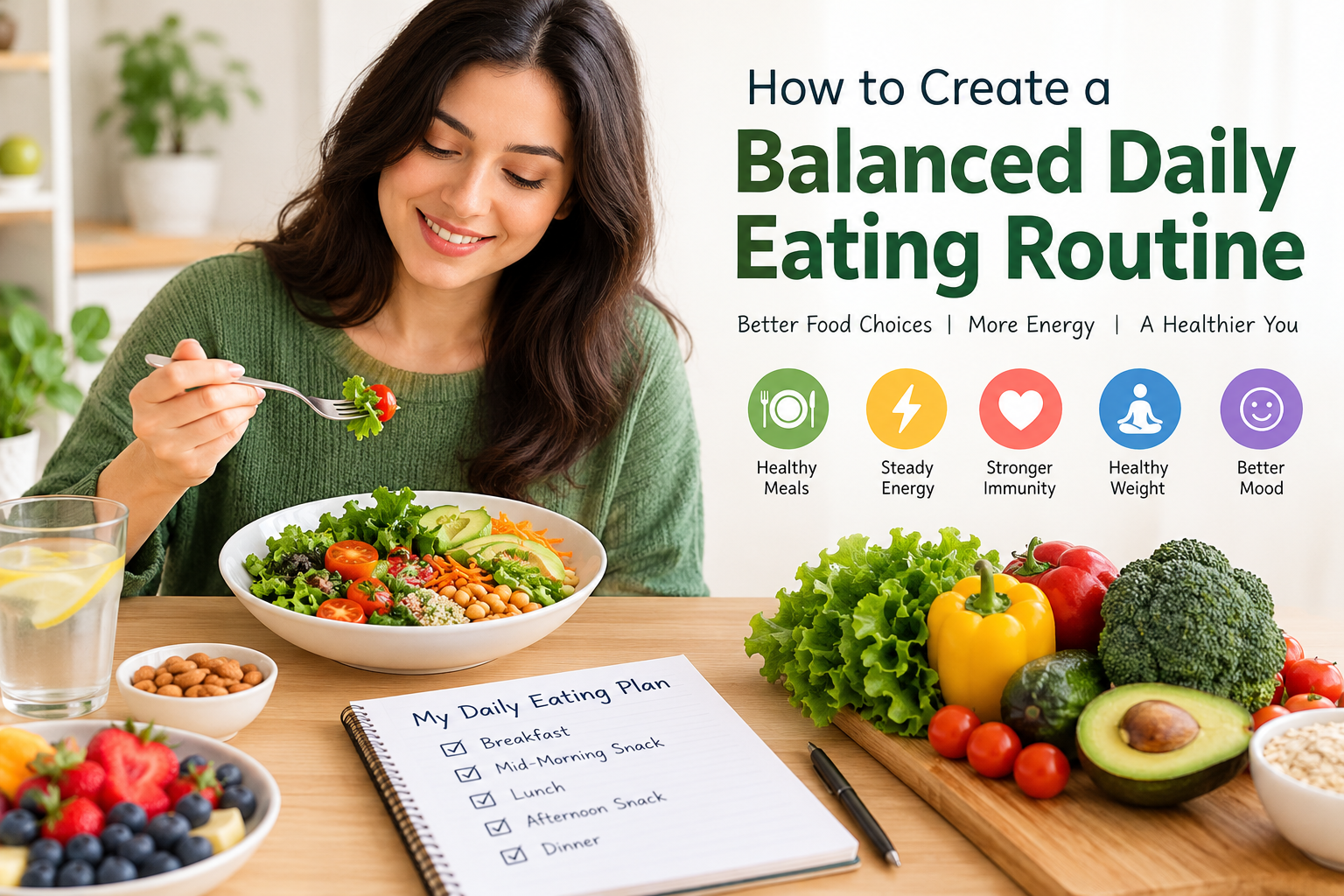
Creating a balanced daily eating routine is one of the simplest ways to support a healthy lifestyle. In my opinion, eating well is not about following strict diets, avoiding all your favorite foods, or making complicated meal plans. It is about developing simple eating habits that fit your daily life and help you feel energetic, satisfied, and comfortable throughout the day.
Many people want to improve their eating habits but struggle because of busy schedules, irregular meal times, and easy access to processed foods. I believe the best solution is to start with small, realistic changes instead of trying to change everything at once. When you plan your meals, choose a variety of nutritious foods, and pay attention to your hunger, maintaining a balanced daily eating routine becomes much easier.
In this article, I will explain practical ways to create a healthy eating schedule, choose balanced meals, manage snacks, and develop habits that you can maintain for the long term.
1. Start Your Day With a Nutritious Breakfast
Breakfast is an important part of a balanced daily eating routine because it provides an opportunity to get essential nutrients at the beginning of the day. Although everyone’s appetite and schedule are different, choosing a nutritious breakfast can help you feel satisfied and prepared for your morning activities.
I prefer keeping breakfast simple rather than spending too much time preparing complicated meals. Options such as oatmeal with fruit, eggs with whole grain bread, plain yogurt with nuts, or whole grain porridge can provide a combination of important nutrients.
A balanced breakfast should ideally include protein, fiber, and some healthy fats. Protein helps support normal body functions, while fiber contributes to digestive health and can help you feel full for longer.
If you do not feel hungry immediately after waking up, you do not necessarily need to force yourself to eat a large meal. Instead, consider your schedule and appetite and choose a suitable time for your first meal.
The main goal is to establish a morning routine that works for you and supports your nutritional needs.
2. Include a Variety of Foods in Your Meals
One of the most useful healthy eating habits is including different types of foods throughout the day. No single food provides every nutrient your body needs, so variety is essential when planning balanced meals.
I recommend including vegetables, fruits, whole grains, protein rich foods, and healthy fat sources in your daily eating routine.
Vegetables such as carrots, spinach, broccoli, cabbage, and cucumbers provide vitamins, minerals, and fiber. Fruits such as apples, bananas, oranges, and berries offer additional nutrients and can be convenient snacks.
Whole grains, including oats, brown rice, and whole wheat bread, provide carbohydrates that help supply energy. Protein sources such as eggs, beans, lentils, fish, chicken, yogurt, and tofu help support muscle maintenance and other important body functions.
Healthy fats can come from nuts, seeds, olive oil, and avocados.
You do not need expensive ingredients to eat well. Traditional foods such as lentils, seasonal vegetables, homemade yogurt, chapati, and beans can all contribute to a nutritious eating pattern when combined appropriately.
3. Follow a Consistent Meal Schedule
A regular meal schedule can make daily eating more organized. When meals are planned around your normal activities, it becomes easier to prepare food, manage hunger, and avoid relying entirely on convenience foods.
For example, your daily eating schedule might include breakfast in the morning, lunch around midday, an afternoon snack if needed, and dinner in the evening.
However, there is no single meal schedule that works for everyone. Some people prefer three main meals, while others feel more comfortable including one or two snacks between meals.
In my view, consistency matters more than following an exact timetable. Try to avoid skipping meals simply because you are busy, especially if doing so leaves you extremely hungry later in the day.
You can prepare a simple meal schedule based on your working hours, family responsibilities, and sleeping routine. Keep it flexible enough to accommodate unexpected changes.
The purpose of a consistent eating routine is to make healthy choices easier, not to create unnecessary pressure.
4. Build Balanced Lunches and Dinners
Lunch and dinner are opportunities to combine different food groups into satisfying meals. Instead of focusing on one food or eliminating entire food groups, aim for variety and reasonable portions.
A practical approach is to fill approximately half your plate with vegetables and fruits, one quarter with protein rich foods, and one quarter with whole grains or other starchy foods. This is a useful general guide, although individual nutritional needs can vary.
For lunch, you might choose grilled chicken with vegetables and brown rice, or lentils with whole wheat chapati and a fresh salad. For dinner, baked fish with potatoes and vegetables or beans with rice can provide a balanced combination of nutrients.
If you enjoy traditional homemade meals, you do not need to replace them with unfamiliar foods. You can improve their nutritional balance by including more vegetables, choosing suitable protein sources, and adjusting portions according to your needs.
Cooking methods also matter. Steaming, baking, grilling, and using moderate amounts of oil can help you prepare a variety of meals without relying heavily on deep frying.
Remember that balanced eating is about your overall dietary pattern rather than making every individual meal perfect.
5. Choose Healthy Snacks for Busy Days
Snacks can be a useful part of a balanced daily eating routine, particularly when there is a long gap between meals or when you need something convenient during a busy day.
The key is to choose snacks that provide nutrients and satisfy your hunger rather than eating automatically whenever food is available.
Some practical snack options include fresh fruit, a handful of nuts, plain yogurt, boiled eggs, roasted chickpeas, or whole grain toast with peanut butter.
I find that preparing snacks in advance can make healthier choices more convenient. For example, you can wash fruit, portion nuts into small containers, or keep yogurt in the refrigerator for easy access.
It is also helpful to understand the difference between physical hunger and eating out of boredom or stress. If you are genuinely hungry, having a snack is reasonable. If you are eating without thinking, consider taking a short break or drinking some water before deciding what you need.
There is no need to avoid every sweet or savory snack. Enjoying favorite foods in moderation can be part of a balanced eating pattern.
6. Drink Enough Water Throughout the Day
Hydration is another important part of healthy daily habits. Water supports normal body functions, helps regulate body temperature, and contributes to digestion.
Some people forget to drink water when they are busy working, studying, or managing household responsibilities. Keeping a reusable water bottle nearby can serve as a simple reminder.
You can also drink water with meals and after physical activity. Foods with high water content, such as watermelon, cucumbers, oranges, and soups, can contribute to your overall fluid intake.
Your hydration needs depend on several factors, including physical activity, climate, and individual health conditions. Rather than assuming everyone needs exactly the same amount, pay attention to your body’s needs and drink regularly throughout the day.
Sugary drinks can add substantial amounts of sugar to your diet, so choosing water more often is a practical step toward improving your daily eating routine.
Tea and coffee can also contribute to fluid intake, but it is helpful to be mindful of added sugar and caffeine.
7. Practice Mindful Eating and Portion Awareness
Healthy eating is not only about the foods you choose. It is also about how you eat and how you respond to hunger and fullness.
Mindful eating means paying attention to your food, eating at a comfortable pace, and noticing when you feel satisfied. This can be difficult when you are distracted by television, mobile phones, or work.
I recommend sitting down for meals whenever possible and giving yourself enough time to enjoy your food. Eating slowly may help you recognize fullness before you become uncomfortably full.
Portion awareness is equally important, but it does not mean you must measure every ingredient or count every calorie. Start by serving a reasonable amount, eating attentively, and allowing yourself more food if you remain hungry.
Your nutritional needs can change depending on your age, activity level, health, and other individual factors. Therefore, portion sizes should be flexible rather than treated as strict rules.
Avoid labeling foods as completely good or bad. A healthy relationship with food includes flexibility, enjoyment, and an understanding that occasional treats can fit into an overall nutritious diet.
8. Plan Your Meals Before the Week Begins
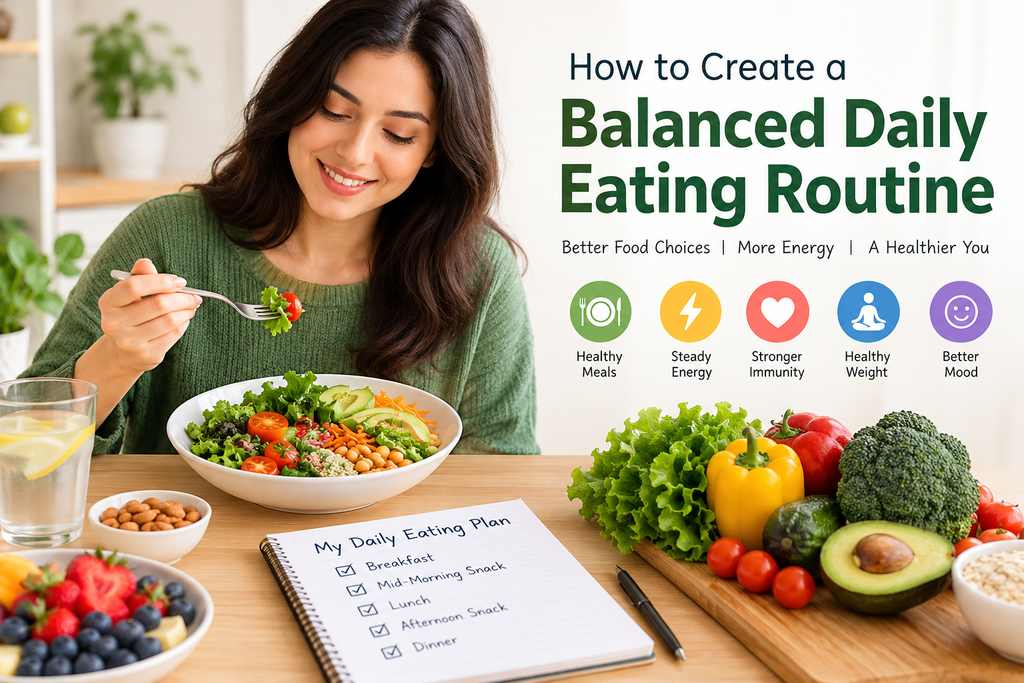
Meal planning can save time, reduce stress, and make balanced eating more practical. Without a basic plan, it is easy to reach for convenient foods simply because you have not decided what to prepare.
You do not need to plan every meal in detail. Start by choosing a few breakfasts, lunches, dinners, and snacks that you enjoy and can prepare easily.
Make a shopping list based on those meals. Include staple foods such as whole grains, lentils, eggs, seasonal produce, yogurt, and suitable protein sources.
Preparing a few ingredients in advance can also help. You might wash vegetables, cook a batch of lentils, boil eggs, or prepare portions of grains to use during the week.
If you have a busy work schedule, choose recipes that require minimal preparation and use ingredients in multiple meals. For example, cooked beans can be used in salads, wraps, or homemade bowls.
Meal planning should reduce your workload rather than create another demanding responsibility. Even planning two or three meals ahead can make a noticeable difference in how organized your eating routine feels.
9. Make Healthy Eating Work With Your Lifestyle
A balanced eating routine should fit your real life. Work commitments, family responsibilities, travel, celebrations, and changing schedules can all affect your meals.
Instead of expecting yourself to follow a perfect plan every day, focus on habits that are easy to repeat.
Keep convenient nutritious foods available, learn a few quick recipes, and identify healthy options you can choose when eating outside the home.
When you attend social gatherings, enjoy the food without feeling guilty. You can return to your usual eating routine at your next meal instead of skipping meals or trying to compensate with unnecessary restrictions.
It is also important to be patient. Lasting habits usually develop through repeated actions rather than sudden changes.
If you miss a planned meal or choose a less nutritious option, it does not mean you have failed. One meal does not determine the quality of your entire diet.
The goal is to make nutritious choices more often while maintaining a flexible and enjoyable approach to food.
10. Track Your Progress and Improve Gradually
Reviewing your eating habits can help you understand what works and what needs improvement. You do not need an elaborate tracking system to get started.
For a few days, you might note your meal times, water intake, snack choices, and energy levels. This can help you identify patterns, such as skipping breakfast, forgetting water, or relying on takeaway meals when you are busy.
Once you recognize an area for improvement, choose one manageable change.
For example, you could add a serving of vegetables to lunch, prepare snacks the night before, or keep water within reach while working.
After the habit becomes easier, introduce another small improvement. This gradual approach can be more sustainable than attempting to change your entire diet overnight.
If you have a medical condition, specific nutritional requirements, or a history of disordered eating, consider seeking guidance from a qualified healthcare professional or registered dietitian.
Conclusion
Creating a balanced daily eating routine does not require expensive foods, strict rules, or complicated meal preparation. It begins with understanding your nutritional needs and building simple habits that fit your lifestyle.
By eating a variety of nutritious foods, maintaining a flexible meal schedule, choosing satisfying snacks, drinking enough water, and practicing mindful eating, you can develop a more organized approach to everyday nutrition.
In my opinion, the most important part of healthy eating is consistency without perfection. Start with small changes, prepare when possible, and give yourself time to adjust.
A balanced daily eating routine should support your well being while allowing you to enjoy food and everyday life. When healthy choices become part of your normal routine, maintaining them can feel less like a challenge and more like a natural part of your day.
Frequently Asked Questions
What is a balanced daily eating routine?
A balanced daily eating routine includes a variety of nutritious foods throughout the day, such as vegetables, fruits, whole grains, protein rich foods, and healthy fats. It also includes suitable hydration and meal timing that fits your individual needs.
How many meals should I eat each day?
The ideal number of meals depends on your appetite, schedule, activity level, and health needs. Many people prefer three main meals, while others benefit from including snacks between meals.
How can I start eating healthier on a budget?
Choose affordable staples such as lentils, beans, eggs, seasonal vegetables, fruit, oats, and whole grains. Preparing meals at home and planning your shopping can help reduce food waste and expenses.
Is it necessary to avoid carbohydrates to eat healthily?
No. Carbohydrates are an important energy source. Foods such as oats, whole wheat bread, rice, potatoes, and other grains can be part of a balanced diet. Choosing fiber rich options more often can support overall nutritional quality.
How long does it take to develop a healthy eating routine?
The time required varies from person to person. Begin with manageable changes and repeat them consistently. Focus on gradual improvement rather than expecting immediate perfection.
What is the easiest way to maintain a balanced diet?
Keep nutritious foods available, plan a few meals in advance, drink water regularly, and include a variety of food groups in your meals. Simple habits that fit your lifestyle are generally easier to maintain over time.