Introduction
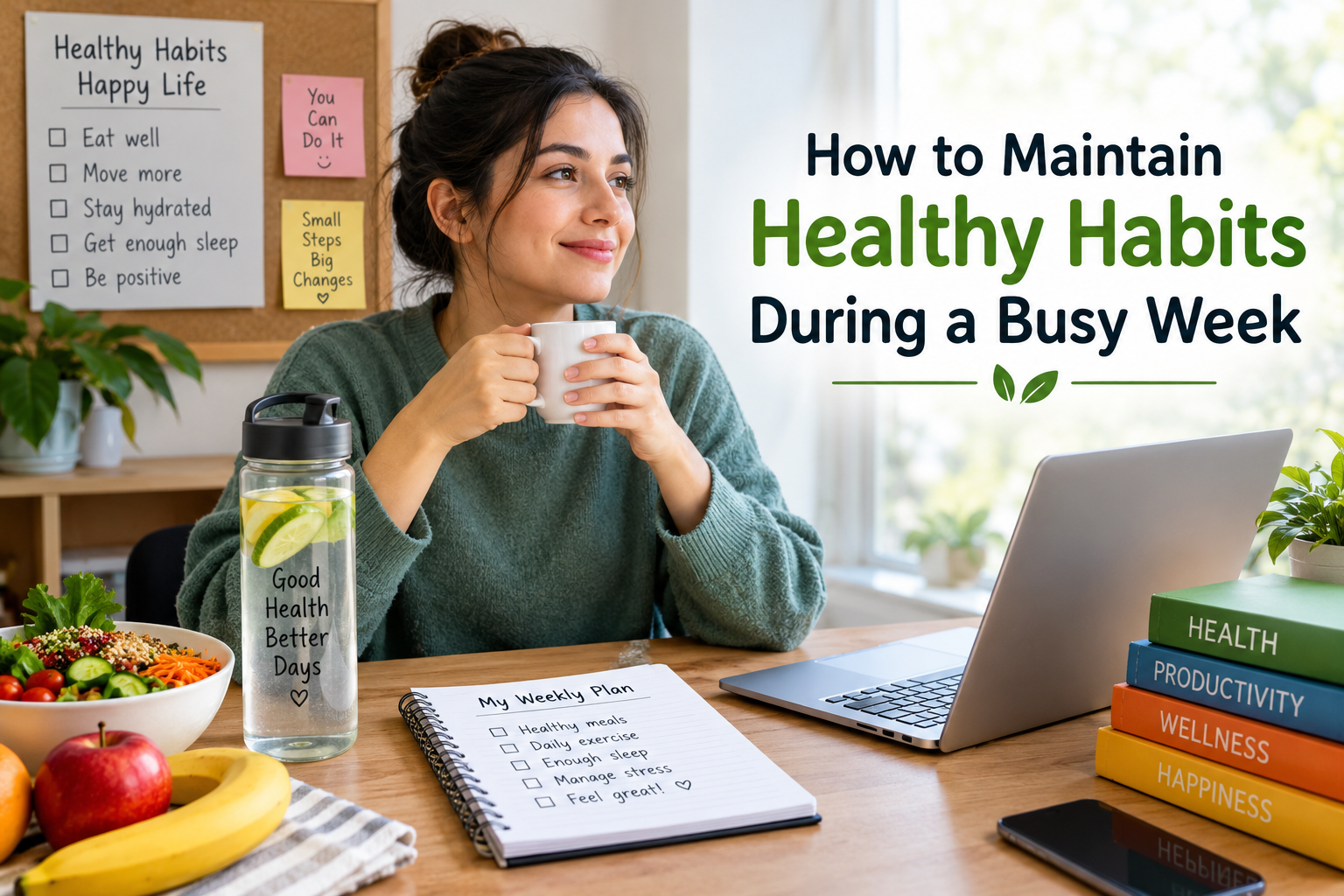
Maintaining healthy habits during a busy week can be challenging. Between work, family responsibilities, household tasks, personal commitments, and unexpected problems, it is easy to put our health at the bottom of the priority list. We may skip breakfast, spend hours sitting in front of a screen, drink less water, or stay awake late to finish unfinished tasks. Although these choices might seem harmless at first, repeating them every week can make us feel tired, distracted, and less productive.
In my opinion, living a healthy lifestyle does not mean following a perfect routine every day. It means making practical choices that support our physical and mental well being, even when life becomes stressful. We do not always need expensive fitness equipment, complicated meal plans, or several hours of free time to improve our health. Small actions, such as preparing a healthy breakfast, walking for ten minutes, drinking enough water, and going to bed at a reasonable time, can make daily life more manageable.
The key to maintaining healthy habits during a busy week is to create a routine that fits our real lives. Instead of expecting ourselves to do everything perfectly, we should focus on consistency, flexibility, and simple improvements. In this article, I will share practical ways to stay healthy, manage time wisely, and maintain a balanced lifestyle even when the week feels overwhelming.
1. Plan Your Week Before It Begins
One of the simplest ways to maintain healthy habits during a busy week is to plan ahead. When we start the week without a clear idea of our responsibilities, we may spend too much time deciding what to do next. This can leave very little time for exercise, healthy meals, or relaxation.
I believe spending just 15 to 20 minutes planning the upcoming week can make a noticeable difference. Write down your important tasks, appointments, work commitments, and personal responsibilities. Then identify small opportunities to include healthy activities in your schedule.
For example, you might plan a short walk before work, prepare lunch the night before, or reserve a few minutes in the evening for stretching. You do not need to schedule every minute of your day. The purpose is to make healthy choices easier to remember.
A realistic weekly plan should also include breaks and personal time. If your schedule is already full, avoid adding too many new habits at once. Start with two or three manageable goals and build from there.
2. Start Your Day With a Simple Morning Routine
A healthy morning routine can help you begin the day with more energy and a clearer mind. However, maintaining a morning routine does not require waking up extremely early or following a long list of activities.
I prefer the idea of keeping mornings simple and practical. Start by waking up at a reasonably consistent time, drinking water, washing up, and eating a balanced breakfast if you are hungry. A few minutes of gentle stretching or quiet time can also help you transition into the day.
Try to avoid checking social media immediately after waking up. Constant notifications can distract you before you have even started your important tasks. Instead, give yourself a few minutes to prepare mentally for the day ahead.
If you have very little time in the morning, focus on the essentials. Even a ten minute routine can provide structure and help you feel more organized.
The most important thing is to create a morning routine that you can maintain regularly rather than copying someone else’s schedule.
3. Eat Healthy Meals Without Complicating Your Routine
Eating healthy during a busy week can feel difficult, especially when cooking takes time. Many people depend on fast food, packaged snacks, or sugary drinks because they are convenient. While occasional convenience foods can fit into a balanced diet, relying on them for most meals may make it harder to meet your nutritional needs.
One practical solution is to prepare some ingredients in advance. You can wash vegetables, cook beans or lentils, prepare rice, boil eggs, or portion out snacks before your busiest days begin.
A balanced meal can include vegetables, a source of protein, whole grains or other carbohydrate foods, and some healthy fats. The exact combination depends on your preferences, budget, culture, and dietary needs.
Here are some simple meal ideas for busy days:
- Oatmeal with fruit and nuts for breakfast.
- Eggs with whole grain bread and vegetables.
- Rice with lentils and a vegetable dish.
- A homemade chicken or bean wrap with salad.
- Yogurt with fruit for a convenient snack.
I believe healthy eating becomes easier when we stop expecting every meal to be perfect. Keep a few affordable, nutritious ingredients available so that preparing something satisfying does not become another stressful task.
4. Stay Hydrated Throughout the Day
Drinking enough water is another important part of maintaining healthy habits during a busy week. When we concentrate on work or other responsibilities, we may forget to drink until we feel thirsty.
Water supports normal body functions, and staying adequately hydrated can help prevent problems associated with dehydration, such as thirst, headaches, and reduced concentration.
An easy approach is to keep a reusable water bottle near your workspace. Drink water with meals, after physical activity, and whenever you feel thirsty. You can also include water rich foods such as cucumbers, oranges, and watermelon as part of your diet.
Your fluid needs can vary depending on activity level, temperature, health, and other factors. People who work outdoors or exercise in hot weather may need more fluids than those spending the day in a cool indoor environment.
Rather than following a rigid rule, develop a routine that reminds you to drink regularly. Small reminders throughout the day can be particularly useful when your schedule is demanding.
5. Make Time for Physical Activity
Exercise is often one of the first habits people abandon when they become busy. Many assume that a workout is only useful if it lasts 45 minutes or an hour. However, shorter periods of physical activity can also contribute to overall health.
I think the best way to stay active during a busy week is to stop treating exercise as something that requires a special occasion. Instead, look for opportunities to move throughout the day.
You can take a ten minute walk during a lunch break, use the stairs when practical, stretch between tasks, or follow a short home workout. If you spend most of your day sitting, stand up and move around periodically.
Here are a few simple ways to include more movement in your routine:
- Walk outside before or after work.
- Do gentle stretches during study breaks.
- Try bodyweight exercises at home.
- Take short walking breaks between long periods of sitting.
- Choose an enjoyable physical activity that suits your fitness level.
Adults are generally encouraged to work toward at least 150 minutes of moderate intensity aerobic activity each week, along with muscle strengthening activities on two or more days. If you are currently inactive, begin with an amount you can manage and gradually increase it.
Consistency matters more than trying to complete an intense workout when you are already exhausted.
6. Protect Your Sleep Schedule
Sleep plays an important role in maintaining both physical and mental health. Unfortunately, busy schedules can encourage us to stay awake late, especially when unfinished work or entertainment competes with bedtime.
In my view, sacrificing sleep regularly to gain extra working hours is not always a productive decision. Poor sleep can affect concentration, mood, energy, and our ability to manage everyday responsibilities.
Most adults need at least seven hours of sleep per night, although individual needs can vary. Try to maintain a reasonably consistent bedtime and waking time, including on weekends.
You can improve your sleep routine by reducing screen use before bed, keeping your bedroom comfortable, avoiding heavy meals close to bedtime when they disturb your sleep, and limiting caffeine later in the day.
It also helps to create a short evening routine. Prepare your clothes for the next day, organize your important tasks, and put away unnecessary distractions. These small steps can make it easier to relax rather than worrying about tomorrow’s responsibilities.
If you have a particularly demanding day, remember that sleep is a basic health need, not a reward you earn after finishing every task.
7. Manage Stress With Small Daily Breaks
A busy week can affect our mental well being as much as our physical health. Deadlines, financial responsibilities, family demands, and constant notifications can make it difficult to relax.
That is why managing stress should be part of a healthy lifestyle. You do not need to eliminate every source of pressure, because some responsibilities are unavoidable. Instead, focus on developing healthier ways to respond to stressful situations.
Take a few minutes to breathe slowly, step away from your screen, listen to calming music, or spend time outdoors. If something feels overwhelming, divide the task into smaller steps and complete one step at a time.
Talking with a trusted friend or family member can also provide emotional support. If you enjoy writing, keeping a journal may help you organize your thoughts and identify what is causing stress.
I believe short breaks are useful because they allow us to pause before exhaustion takes over. Even five quiet minutes between demanding tasks can provide an opportunity to reset.
If stress becomes persistent or begins interfering significantly with everyday life, consider seeking support from a qualified mental health professional.
8. Reduce Unnecessary Screen Time
Phones, computers, and other digital devices are important parts of modern life. However, spending excessive time on screens, especially when it replaces movement, sleep, or meaningful personal activities, can make it harder to maintain a balanced routine.
One helpful habit is to use technology intentionally. Check messages during planned breaks rather than interrupting every task to respond to notifications. You can also set app limits, silence nonessential alerts, or keep your phone away while eating.
For example, if you usually spend 30 minutes scrolling through social media before bed, try using part of that time to prepare for tomorrow, read a book, or relax without a screen.
The goal is not to avoid technology completely. It is to make sure technology supports your life instead of controlling your attention.
9. Build Healthy Habits That Fit Your Lifestyle
One common mistake is trying to change too many things at once. A person might decide to exercise daily, cook every meal, wake up early, meditate, and stop eating all favorite snacks in the same week. Although the motivation may be genuine, the routine can quickly become exhausting.
I recommend starting with small, achievable changes. Choose one habit and connect it to something you already do.
For example, drink a glass of water after waking up, walk for ten minutes after lunch, or prepare tomorrow’s breakfast after dinner. When a habit becomes easier to maintain, add another one.
It is also important to make adjustments when circumstances change. A busy workday may require a shorter workout, while a family commitment may mean preparing a simpler meal. Adapting your routine does not mean abandoning your goals.
Healthy habits should make life more manageable, not create another source of pressure.
10. Review Your Progress at the End of the Week
Taking a few minutes to review your progress can help you understand which habits are working and which need adjustment.
At the end of the week, consider a few simple questions. Did you get enough sleep most nights? Were you able to include physical activity? Did you eat regular, balanced meals? What made your routine difficult to follow?
Be honest without criticizing yourself. The purpose of reviewing your week is to learn from your experience and make the next week easier.
You can keep a basic checklist on paper or use a notes app to track your progress. Focus on actions rather than perfection. For instance, record how often you walked, prepared meals, or followed your bedtime routine.
If something did not work, look for a practical solution. Perhaps your workout was too long, your meal plan was too complicated, or your schedule needed more flexibility.
Recognizing small improvements can help you stay motivated and gradually develop a healthier lifestyle.
A Simple Healthy Routine for a Busy Week
Here is an example of how you can organize healthy habits without making your schedule complicated.
| Time | Healthy habit |
|---|---|
| Morning | Drink water, eat breakfast if hungry, and review priorities |
| During work or study | Take movement breaks and drink water regularly |
| Lunch | Eat a balanced meal and take a short walk |
| Afternoon | Choose a nutritious snack if needed and manage notifications |
| Evening | Enjoy a balanced dinner and spend time with family |
| Before bed | Prepare for tomorrow and follow a relaxing sleep routine |
You can adjust this routine according to your working hours, family responsibilities, preferences, and energy levels. It is a guide rather than a strict timetable.
Conclusion
Learning how to maintain healthy habits during a busy week is about finding balance rather than following a perfect schedule. When life becomes demanding, simple actions such as eating balanced meals, drinking enough water, getting regular physical activity, protecting sleep, and managing stress can help support overall well being.
In my opinion, the most effective approach is to begin with small changes that fit naturally into everyday life. You do not have to transform your entire routine overnight. Start with one or two habits, practice them consistently, and adjust them when necessary.
Remember that a difficult day does not erase your progress. If you miss a workout, eat a less balanced meal, or go to bed later than planned, return to your usual routine when you can. Long term consistency is more valuable than short periods of perfection.
By planning ahead, respecting your personal limits, and making healthier choices whenever possible, you can build a routine that supports your health even during your busiest weeks. Small steps taken regularly can become lasting habits that help you feel more organized, energized, and prepared for everyday challenges.