Mindless snacking is a common habit that many people develop without even realizing it. Sometimes, I find that the urge to eat does not always come from hunger. It can happen when I am bored, stressed, tired, or simply sitting in front of a screen for too long. Reaching for chips, cookies, chocolates, or other snacks can become an automatic response to these situations.
The good news is that reducing mindless snacking does not mean giving up all your favorite foods. In my opinion, the best approach is to understand your eating habits, recognize what triggers unnecessary snacking, and make small changes that fit naturally into your daily routine.
If you want to develop healthier eating habits, manage your appetite, and feel more in control of your food choices, there are several simple ways to reduce mindless snacking without making your lifestyle complicated.
1. Understand What Causes Mindless Snacking
The first step toward reducing mindless snacking is understanding why it happens. Many people eat between meals because food is easily available, not necessarily because their bodies need energy.
For example, you might open a packet of chips while watching television, eat biscuits while working, or reach for chocolate whenever you feel stressed. These habits can develop over time until eating becomes something you do without thinking.
I believe paying attention to these patterns is more useful than blaming yourself for your eating choices. When you understand the reason behind a habit, it becomes easier to find a practical solution.
Try asking yourself a few simple questions before reaching for a snack.
Am I physically hungry, or am I bored?
Have I eaten a satisfying meal recently?
Am I feeling stressed, tired, or upset?
Would I enjoy a proper meal, or do I only want a particular treat?
These questions can help you recognize the difference between physical hunger and eating triggered by emotions or routine. Remember that hunger is normal, and snacks can be a healthy part of your eating routine when you genuinely need them.
2. Eat Balanced Meals Throughout the Day
One of the simplest ways to reduce mindless snacking is to make your regular meals satisfying. If breakfast, lunch, or dinner does not provide enough energy, you may feel hungry again shortly afterward.
A balanced meal generally includes a combination of protein, fiber rich carbohydrates, healthy fats, and vegetables or fruit. These foods provide different nutrients and can help you feel satisfied for longer.
For breakfast, you might choose eggs with whole grain toast, oatmeal with fruit and nuts, or plain yogurt with berries. For lunch, a meal containing chicken, beans, lentils, vegetables, and rice can provide a satisfying combination of nutrients.
In my view, skipping meals to control eating is not always a helpful strategy. It may leave you feeling extremely hungry later, making it harder to make thoughtful food choices.
Instead, develop a regular eating routine that works with your schedule. When your meals are satisfying and your energy needs are met, you may find it easier to manage unnecessary snacking between meals.
3. Avoid Eating Directly From Packets
Eating directly from a large packet of snacks can make it difficult to notice how much you have consumed. When your attention is focused on a movie, phone, or work task, you might continue eating simply because the food is in front of you.
A practical solution is to place your desired snack in a small bowl or on a plate before eating. This simple step makes the portion more visible and encourages you to pay attention to your food.
For example, if you want some nuts, place a suitable amount in a bowl instead of keeping the entire packet beside you. If you want popcorn while watching television, serve it before sitting down.
This approach is not about following strict food rules. It is about creating a little more awareness around eating.
I find that small environmental changes can make healthy habits easier because they reduce the need to rely entirely on willpower.
4. Keep Healthy Snacks Within Easy Reach
Your surroundings can influence your food choices more than you might expect. When cookies, chips, and sweets are always visible, you may feel tempted to eat them even when you are not hungry.
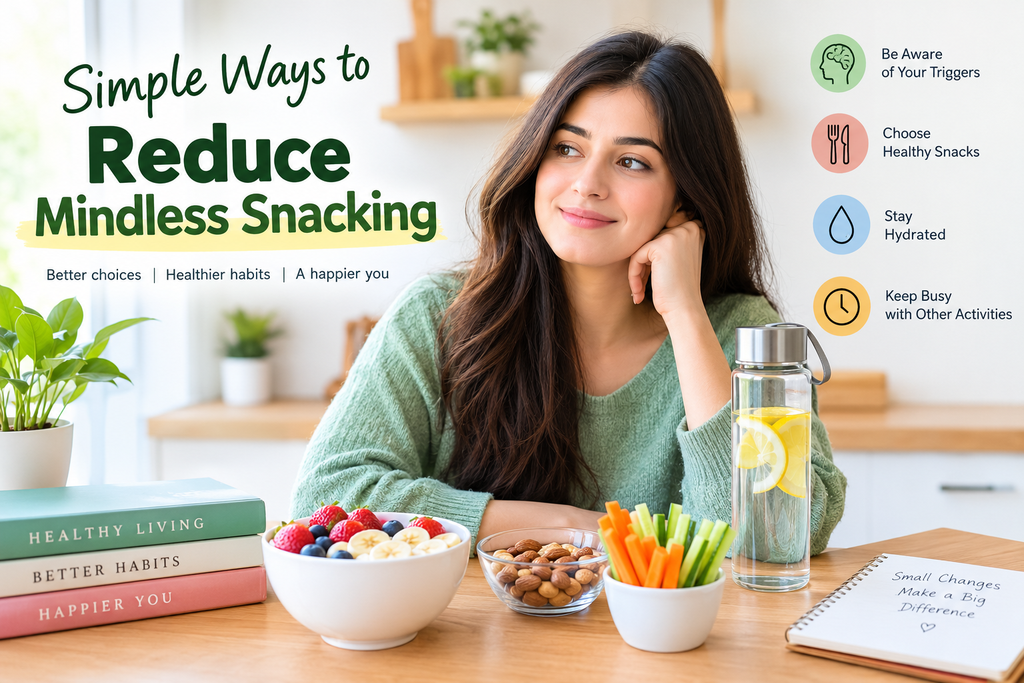
One way to reduce mindless snacking is to make nutritious options easier to access.
Consider keeping these foods available at home or work:
- Fresh apples, bananas, oranges, and other seasonal fruits
- Carrot and cucumber sticks
- Plain yogurt with fruit
- A small serving of nuts or seeds
- Boiled eggs
- Roasted chickpeas
- Whole grain crackers with hummus
These snacks provide different combinations of nutrients and can be convenient when hunger appears between meals.
You do not need to remove every enjoyable food from your kitchen. Instead, arrange your environment so that nutritious choices are visible and convenient.
For example, place washed fruit in a bowl on the counter and keep prepared vegetables in a container in the refrigerator. When you want something to eat, having these options ready can make your decision easier.
5. Practice Mindful Eating
Mindful eating means paying attention to your food, your hunger, and your experience while eating. It encourages you to slow down instead of treating meals and snacks as activities that happen automatically.
When eating, try putting your phone aside, sitting comfortably, and focusing on the taste, texture, and smell of your food. Chew at a comfortable pace and give yourself time to notice when you feel satisfied.
You do not have to make every meal a formal mindfulness exercise. Even a few minutes of attention can help you become more aware of your habits.
For instance, if you usually eat snacks while scrolling through social media, try eating the snack first and returning to your phone afterward. You may discover that you enjoy the food more when your attention is not divided.
Mindful eating also means avoiding unnecessary guilt. If you choose chocolate or your favorite dessert, enjoy it without treating the experience as a failure.
The goal is to develop a more balanced relationship with food, not to control every bite you take.
6. Drink Water and Check Your Thirst
Sometimes, people reach for a snack when they have not paused to consider whether they are thirsty. Drinking water regularly throughout the day can support normal hydration and help you respond more thoughtfully to your body’s signals.
Try keeping a water bottle near your desk, carrying water when you leave home, or drinking a glass with your regular meals.
If you feel like snacking, take a moment to consider when you last had something to drink. If you are thirsty, have some water and see how you feel afterward.
However, water should not be used to ignore genuine hunger. If you need food, eating a satisfying snack is a reasonable choice.
I believe the most helpful approach is to recognize both hunger and thirst instead of assuming that every desire to eat has the same cause.
7. Find Alternatives to Emotional Eating
Stress, loneliness, frustration, and boredom can sometimes increase the desire to snack. Food may provide temporary comfort, especially after a difficult day.
There is nothing unusual about enjoying food for pleasure. The problem may arise when eating becomes the only way you respond to uncomfortable emotions.
Instead of automatically reaching for a snack whenever you feel stressed, consider trying another activity first.
You could take a short walk, listen to music, call a friend, read a few pages of a book, stretch for several minutes, or spend some time on a hobby.
If you still feel hungry afterward, you can eat. These alternatives are not meant to prevent you from eating when you need food. They simply give you more options for responding to your feelings.
For example, if you regularly snack while feeling overwhelmed at work, a short break away from your desk might help you relax and decide what you actually need.
Over time, building different coping strategies can help you develop healthier daily habits without depending on food for every emotional situation.
8. Reduce Screen Time While Eating
Watching television, playing games, and scrolling through social media can make eating less noticeable. When your attention is focused on a screen, it becomes easier to continue snacking without realizing how much you have eaten.
A useful habit is to separate eating from entertainment whenever practical.
If you want a snack while watching a movie, prepare it in advance and put the remaining food away. You can also try eating your main meals at a table rather than in front of a computer.
At work, consider taking a proper break instead of eating while answering emails. This allows you to focus on your food and return to your tasks afterward.
You do not need to avoid all entertainment while eating. The important thing is to recognize when distractions make it difficult to notice your hunger, fullness, and satisfaction.
Small changes to your eating environment can gradually make your habits more intentional.
9. Create a Simple Daily Eating Routine
An unpredictable schedule can make it harder to recognize hunger and plan satisfying meals. When you become extremely hungry, you may grab whatever food is available, even if it does not leave you feeling satisfied.
Creating a flexible eating routine can help you avoid this situation.
Start by identifying the times when you usually eat breakfast, lunch, and dinner. Then consider whether you regularly need a snack between particular meals.
For example, if you become hungry during the afternoon, prepare a snack such as fruit with yogurt or whole grain crackers with cheese. If you often feel hungry after returning home from work, keep a convenient option ready.
Your routine should fit your lifestyle rather than follow a strict timetable. Some days you may need more food than others because of physical activity, sleep, stress, or changes in your schedule.
The purpose of planning is to make eating easier, not to ignore your body’s changing needs.
10. Get Enough Sleep and Manage Daily Stress
Sleep and stress can influence appetite, food preferences, and eating behavior. When you are tired, you may find it harder to make thoughtful decisions or resist automatic habits.
Establishing a relaxing bedtime routine may help. Try maintaining a consistent sleep schedule, reducing screen use before bed, and creating a comfortable sleeping environment.
For stress management, choose activities that feel realistic for your daily life. A short walk, gentle stretching, deep breathing, or a conversation with someone you trust can provide a useful break.
You do not need to change your entire lifestyle at once. Start with one manageable habit and build from there.
For example, you might begin by going to bed at a more consistent time or taking a five minute break during a busy afternoon.
Better sleep and stress management will not eliminate every urge to snack, but they may help you understand your eating patterns and respond to them more effectively.
11. Keep a Simple Food and Habit Journal
Writing down your eating habits can help you identify patterns that are difficult to notice during a busy day.
You do not need to count every calorie or weigh every portion. Instead, record when you snack, what you were doing, and how you felt before eating.
For example, you might notice that you often reach for biscuits during long work sessions or eat chips when you feel bored in the evening.
Once you recognize these patterns, you can make a specific plan to address them. If boredom is the main trigger, schedule short breaks. If long gaps between meals leave you hungry, prepare a satisfying snack.
Keep your journal simple and avoid using it to judge yourself. Food tracking should help you understand your habits, not create anxiety or encourage unnecessary food restrictions.
If tracking makes you feel stressed or overly focused on food, you can stop and use other approaches instead.
12. Focus on Progress Instead of Perfection
One of the biggest mistakes people make when changing eating habits is expecting immediate results. When they snack more than planned, they may feel disappointed and decide that their efforts have failed.
In my opinion, lasting lifestyle changes come from consistency, flexibility, and patience.
You might successfully avoid automatic snacking for several days and then find yourself eating more frequently during a stressful week. This does not mean you have lost your progress. It simply gives you an opportunity to understand what happened and decide what might help next time.
Start with one or two changes rather than trying to change everything at once. You could begin by eating without your phone or serving snacks in a bowl instead of eating from the packet.
Once these habits become more natural, introduce another change.
Remember that healthy eating includes enjoyment, variety, and flexibility. You can enjoy your favorite treats while still developing a balanced eating routine.
If you regularly experience episodes of feeling unable to control your eating, intense guilt after eating, or significant distress around food, consider speaking with a qualified healthcare professional or registered dietitian for individualized support.
Conclusion
Reducing mindless snacking is not about eliminating every snack or following strict food rules. It is about understanding your eating habits, recognizing your triggers, and making choices that support your overall well being.
Simple strategies such as eating balanced meals, practicing mindful eating, keeping nutritious snacks available, drinking water when thirsty, managing stress, and reducing distractions can help you become more aware of your food choices.
The most effective approach is the one you can maintain in your everyday life. You do not need to make dramatic changes overnight or feel guilty when your routine does not go exactly as planned.
Start small, pay attention to your body’s signals, and give yourself time to develop new habits. With patience and consistency, you can reduce automatic snacking, build a healthier relationship with food, and create a daily routine that feels both enjoyable and sustainable.