Introduction
Busy days can make it difficult to maintain healthy eating habits. Between work, family responsibilities, household tasks, and personal commitments, finding time to prepare nutritious food is not always easy. When hunger strikes between meals, many people choose whatever is available, which may include chips, cookies, sugary drinks, or other convenient snacks. Although these foods can be enjoyed occasionally, relying on them every day may make it harder to maintain a balanced diet.
In my opinion, planning healthy snacks for busy days is one of the simplest ways to develop better eating habits. It does not require expensive ingredients, complicated recipes, or hours in the kitchen. With a little preparation and a few practical ideas, anyone can make nutritious snacks a regular part of their daily routine.
The key is to choose foods that are convenient, satisfying, and easy to carry. Whether you are working in an office, studying at school, managing a household, or spending the day outside, having healthy snacks available can help you make thoughtful food choices when hunger appears.
In this article, I will share simple ways to plan healthy snacks for busy days, prepare them in advance, and build a routine that fits your lifestyle.
1. Understand Why Healthy Snacking Matters
Healthy snacking can be a useful part of a balanced eating routine. It helps you respond to hunger between meals and gives you an opportunity to include nutritious foods in your day.
For example, fresh fruit provides vitamins, minerals, and fiber. Nuts and seeds provide healthy fats and some protein, while yogurt can contribute protein and calcium. Whole grain crackers offer carbohydrates that help provide energy.
I believe the best approach is to pay attention to your body’s hunger signals instead of eating simply because food is available. Some people feel comfortable with three meals a day, while others prefer smaller meals with snacks between them. Both routines can work, depending on individual needs and preferences.
Healthy snacking is not about eating constantly or following strict food rules. It is about making suitable choices when you feel hungry and choosing portions that leave you comfortably satisfied.
2. Plan Your Snacks Before the Week Begins
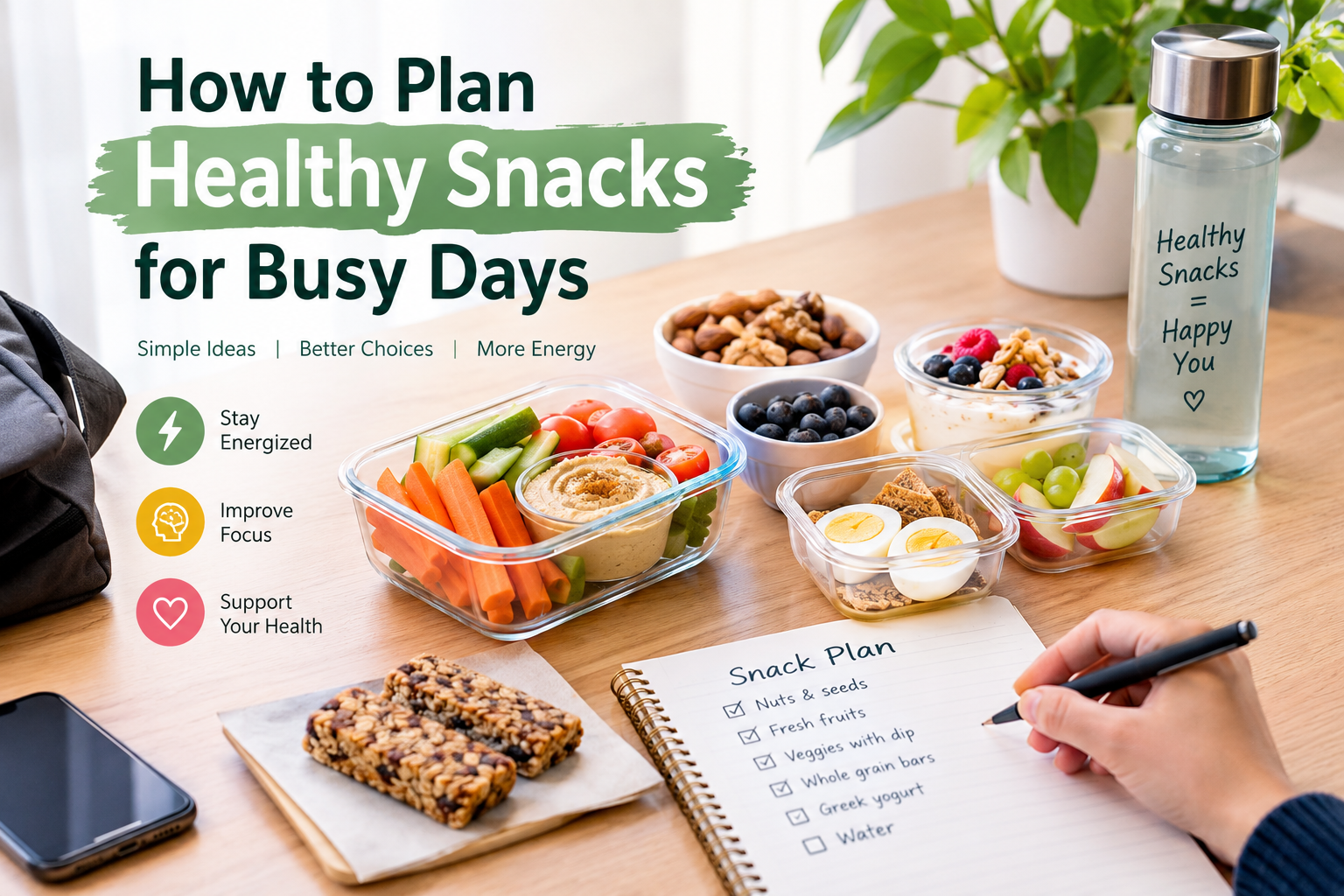
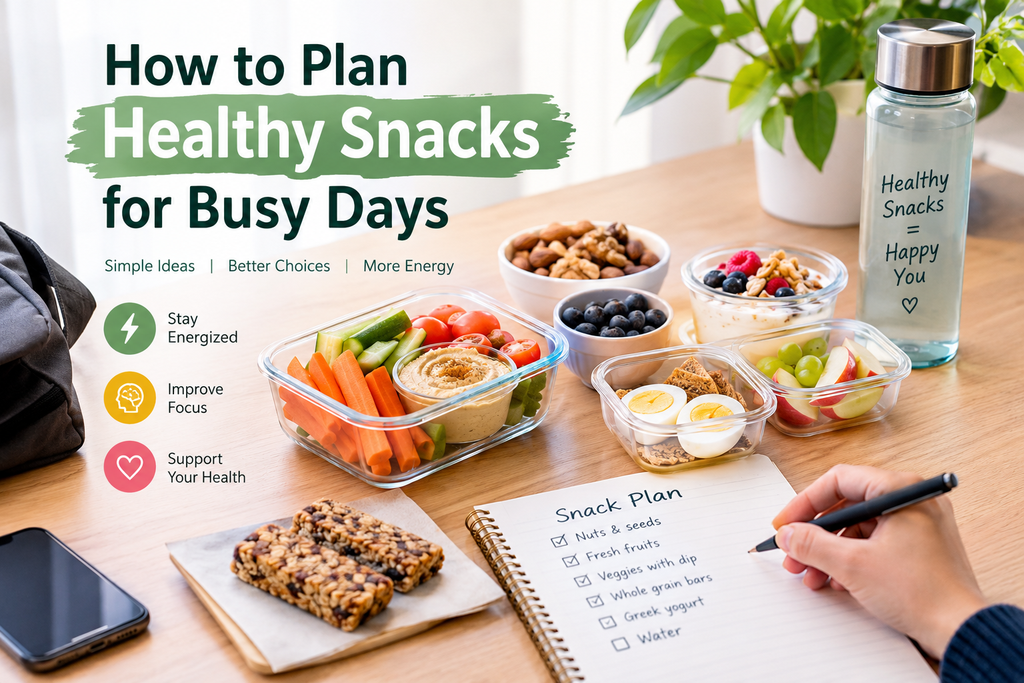
One of the easiest ways to plan healthy snacks for busy days is to make a simple weekly snack plan. When you decide what to eat in advance, you reduce the chances of choosing less nutritious options because you are short on time.
You do not need a complicated meal planning system. Spend a few minutes before the week begins thinking about your schedule and the snacks you might need.
For example, if you work outside the home, you may want portable snacks that fit easily into your bag. If you spend most of your day at home, you can prepare fruit bowls, yogurt, or vegetable snacks in your kitchen.
Here is a simple snack plan you can follow:
| Day | Healthy snack idea |
|---|---|
| Monday | Apple slices with peanut butter |
| Tuesday | Plain yogurt with fresh fruit |
| Wednesday | Carrots and cucumber with hummus |
| Thursday | A small handful of nuts and a banana |
| Friday | Whole grain crackers with cheese |
| Saturday | Homemade oatmeal snack bites |
| Sunday | Boiled eggs with whole grain toast |
You can adjust this list according to your budget, food preferences, and available ingredients. The purpose is to make healthy eating easier, not to follow a rigid schedule.
3. Choose Snacks That Combine Different Nutrients
When planning healthy snacks, I recommend combining foods that offer different nutrients. This can help make a snack more satisfying than eating a food that contains mostly refined carbohydrates on its own.
A useful combination includes a source of protein, fiber, or healthy fat alongside a carbohydrate rich food.
For example, you can pair an apple with peanut butter, whole grain crackers with cheese, or yogurt with berries and a few nuts. These combinations offer variety and can help you feel satisfied between meals.
Here are some simple combinations to try:
- Banana with a small serving of nuts
- Whole grain toast with peanut butter
- Plain yogurt with oats and fruit
- Boiled eggs with cucumber slices
- Hummus with carrots and bell peppers
- Cheese with whole grain crackers
- Roasted chickpeas with a piece of fruit
You do not need to combine every nutrient perfectly in every snack. Think of these ideas as flexible options that help you enjoy a wider variety of foods throughout the day.
4. Prepare Healthy Snacks in Advance
Preparation is one of the most practical healthy snacking tips for people with busy schedules. Even simple snacks can become inconvenient when you need to wash, cut, cook, or assemble everything at the last minute.
I find that setting aside a short amount of time for preparation can make the rest of the week easier. You might wash fruit, cut vegetables, portion nuts, or prepare a few boiled eggs ahead of time.
Store ready to eat snacks in clean containers so they are easy to find when you need them. Keep refrigerated foods in the refrigerator and pack perishable items in an insulated lunch bag with an ice pack when taking them to work or school.
Try these easy preparation ideas:
Wash fresh fruit: Apples, grapes, and oranges are convenient options for everyday snacking.
Prepare vegetables: Cut carrots, cucumbers, and bell peppers into manageable pieces and store them in the refrigerator.
Portion nuts and seeds: Divide them into small containers so they are easy to carry and serve.
Prepare simple homemade snacks: Oatmeal bites or roasted chickpeas can be made in advance and stored appropriately.
Keep yogurt ready: Choose convenient portions and add fresh fruit when you are ready to eat.
A little preparation can save time and make healthy snacks more accessible throughout the week.
5. Keep Portable Snacks in Your Bag
When you spend several hours away from home, portable snacks can be especially helpful. You may not always have access to a refrigerator, kitchen, or suitable food options.
Keeping a few shelf stable snacks in your bag, desk, or travel kit can help you prepare for unexpected delays and long working hours.
Some convenient choices include:
- Unsalted nuts and seeds
- Whole grain crackers
- Roasted chickpeas
- Fresh apples or oranges
- A suitable whole grain snack bar
- Plain popcorn with minimal added salt
Check ingredient labels when buying packaged snacks. Look at the amount of added sugar, sodium, fiber, and protein rather than judging a product by its packaging alone.
For snacks containing dairy, eggs, cooked foods, or cut fruit and vegetables, remember that many perishable items need refrigeration. Do not leave these foods in a warm bag or vehicle for extended periods.
The goal is to keep practical options available so that you do not have to depend entirely on convenience store snacks when you become hungry.
6. Make Healthy Snacking Affordable
Eating nutritious food does not have to be expensive. In my opinion, one of the best ways to save money is to build your snack plan around simple ingredients that you already enjoy.
Seasonal fruits and vegetables are often practical choices. Bananas, apples, carrots, cucumbers, and oranges can be used in different combinations throughout the week.
Other affordable options include oats, homemade popcorn, boiled eggs, plain yogurt, chickpeas, and peanut butter. Buying suitable ingredients in larger packages can sometimes reduce the cost per serving, although it is important to purchase only what you can store and use.
You can also prepare homemade alternatives to some packaged snacks. For example, roasted chickpeas can be seasoned with spices, while oatmeal can be combined with mashed banana to make simple baked snack bites.
Avoid buying too many ingredients simply because a recipe looks appealing online. Start with a few affordable foods and use them in several ways.
A realistic healthy snack plan should fit your budget. Consistency is easier when the foods you choose are both nutritious and financially manageable.
7. Avoid Relying Too Much on Sugary Snacks
Sweet snacks are not automatically unhealthy, and there is no need to remove every favorite food from your diet. However, frequently relying on sweets, sugary drinks, and highly processed snack foods may leave less room for nutritious choices.
Instead of trying to eliminate all treats, focus on adding variety to your routine.
For example, if you usually reach for cookies in the afternoon, you could sometimes choose yogurt with fruit or a banana with nuts. If you enjoy chocolate, you can include a small portion alongside other foods as part of a balanced eating pattern.
I believe this flexible approach is more practical than creating strict rules that are difficult to maintain.
Pay attention to how different snacks affect your hunger and satisfaction. If a small snack does not keep you satisfied, you may need a more substantial option or a regular meal instead.
Healthy eating should support your daily life without making food stressful or unnecessarily restrictive.
8. Listen to Your Hunger and Portion Needs
Healthy snack planning is not only about selecting nutritious foods. It is also about understanding when you are hungry and how much food you need.
Some days you may need only a piece of fruit, while other days a combination of yogurt, oats, and nuts may be more satisfying. Your appetite can change depending on your activity level, meal timing, sleep, and individual needs.
Instead of following a strict portion rule, start with a reasonable serving and notice how you feel afterward.
Eating slowly can also help you recognize when you are comfortably satisfied. Try to take a short break from your phone or computer while eating so you can pay attention to the food.
Remember that snacks do not need to replace proper meals when you are very hungry. If you regularly feel hungry shortly after eating, review whether your main meals contain enough food and a suitable balance of protein, carbohydrates, fats, and fiber.
The purpose of healthy snacking is to support your needs, not to ignore hunger.
9. Drink Water Throughout the Day
Water is an important part of a healthy daily routine. When you are busy, it is easy to forget to drink enough, especially if you spend long hours working or travelling.
Keeping a reusable water bottle nearby can serve as a useful reminder. You can drink water with your snacks and meals or whenever you feel thirsty.
Water does not replace food when you are hungry, so avoid using it to suppress genuine hunger. Instead, make hydration and balanced snacking two separate habits that work together.
If you enjoy variety, unsweetened tea can also be an option, depending on your preferences and caffeine tolerance.
Small routines, such as filling your bottle in the morning and keeping it within reach, can make staying hydrated more convenient.
10. Create a Snack Routine You Can Maintain
The best healthy snack plan is one that fits naturally into your life. You do not need to prepare elaborate recipes every day or buy expensive health foods.
Start by identifying the times when you usually feel hungry. Then choose two or three snacks that are easy to prepare and suit your schedule.
For example, you might keep fruit and nuts available for work, prepare yogurt for an afternoon snack, and store cut vegetables in the refrigerator at home.
Review your choices at the end of the week. Notice which snacks were convenient, which foods you enjoyed, and what went uneaten. Use this information to improve your next plan.
Allow yourself flexibility when your schedule changes. If you run out of one snack, choose another suitable option rather than abandoning your routine entirely.
Small, repeatable actions often make healthy habits easier to maintain over time.
Conclusion
Learning how to plan healthy snacks for busy days can make everyday eating more convenient and enjoyable. With a little preparation, affordable ingredients, and a flexible routine, you can have nutritious options available even when your schedule is full.
Start by planning a few snacks for the week, combining different food groups, preparing ingredients in advance, and keeping portable options available when you leave home. Pay attention to your hunger, stay hydrated, and choose foods that suit your preferences and budget.
In my view, healthy snacking is not about following a perfect diet. It is about making small, thoughtful decisions that support your overall eating habits. You do not have to change everything at once. Begin with one or two simple ideas, practice them consistently, and build your routine gradually.
Over time, these practical steps can help you make healthy snacks a natural part of your busy lifestyle.