Introduction
Healthy eating is not only about choosing nutritious foods. It is also about understanding how much food our bodies need. Many people focus on eating healthy meals but forget that portion sizes can make a difference in their daily eating habits. This is where healthy portion control becomes important.
In my opinion, portion control is one of the simplest ways to develop a balanced eating routine without giving up your favorite foods. It does not mean eating very little or feeling hungry throughout the day. Instead, it means learning to serve reasonable amounts, listening to your body’s hunger signals, and enjoying food without unnecessary restrictions.
For beginners, portion control may seem confusing at first. However, a few simple habits can make it easier to manage meal sizes and build a healthier relationship with food. In this article, I will share practical healthy portion control tips for beginners that can fit into everyday life.
What Is Healthy Portion Control?
Healthy portion control means paying attention to the amount of food you eat at each meal or snack. It helps you understand the difference between eating until you feel comfortably satisfied and continuing to eat simply because food is available.
A portion is the amount of food you choose to eat, while a serving size is a reference amount listed on food packaging or used in dietary guidance. These amounts are not always the same.
For example, a packet of snacks may contain several servings, even though someone might finish the entire packet in one sitting. Understanding this difference can help you make more informed food choices.
The purpose of portion control is not to make every meal smaller. It is to create balanced meals that provide enough energy, protein, fiber, vitamins, and minerals to support your daily activities.
1. Use a Balanced Plate as a Guide
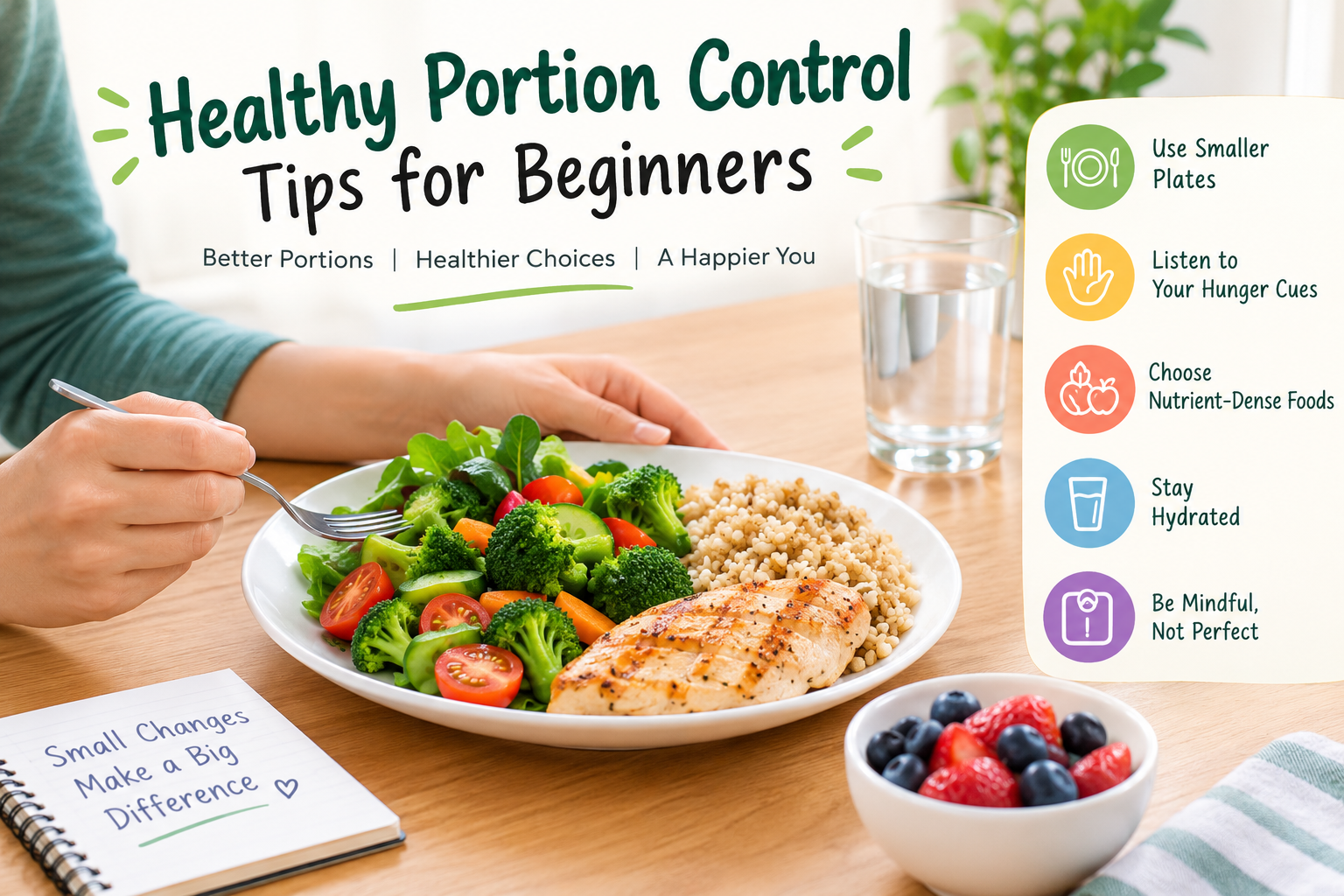
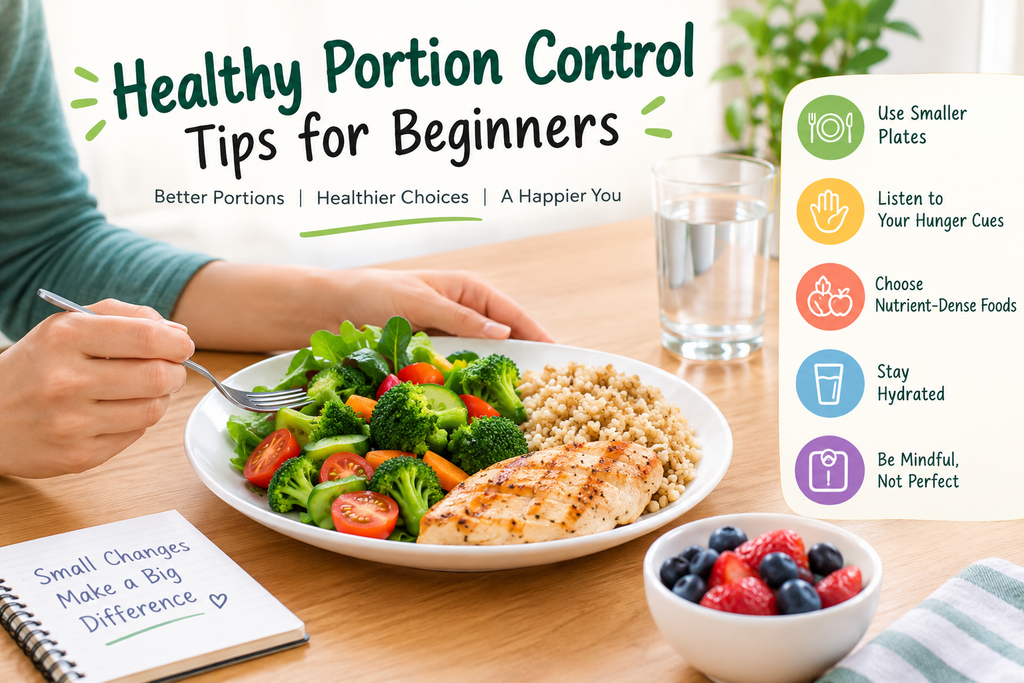
One of the easiest portion control tips for beginners is to build meals using a balanced plate. This approach provides a visual guide without requiring complicated calculations or constant calorie counting.
For many healthy adults, a useful starting point is to divide a plate into sections. Fill about half with vegetables and fruits, one quarter with protein rich foods, and the remaining quarter with whole grains or other carbohydrate rich foods.
Vegetables such as carrots, spinach, broccoli, cucumbers, and cabbage provide fiber and important nutrients. Protein sources can include eggs, fish, chicken, beans, lentils, and yogurt. Whole grain options include oats, brown rice, and whole wheat bread.
You can adjust these proportions according to your appetite, activity level, cultural food preferences, and individual nutritional needs.
For example, a balanced lunch might include grilled chicken, brown rice, and a generous serving of vegetables. If you prefer traditional home cooked meals, lentils with whole wheat roti and vegetables can also be part of a balanced eating routine.
2. Try Using Smaller Plates
Plate size can influence how much food we serve ourselves. A large plate may look empty when it contains a reasonable amount of food, encouraging us to add more than we need.
Using a medium sized plate can make portions easier to judge visually. It can also help you avoid serving extra food simply to fill the plate.
However, smaller plates are only a practical tool, not a strict rule. You should still eat enough to meet your body’s needs.
I believe the best approach is to serve a comfortable amount of food, eat slowly, and check your hunger before deciding whether you need more.
3. Learn to Recognize Hunger and Fullness
Listening to your body is an important part of mindful eating. Sometimes, we eat because we are bored, stressed, distracted, or following a routine rather than because we are physically hungry.
Before eating, take a moment to notice how you feel. Physical hunger may develop gradually and can include an empty stomach, reduced energy, or thoughts about food.
During a meal, pay attention to changes in your appetite. You may notice that your hunger decreases before you finish everything on your plate.
Try to stop when you feel comfortably satisfied rather than uncomfortably full. At the same time, do not ignore genuine hunger just to follow a portion guideline.
Hunger and fullness can vary from day to day, so there is no need to expect the same appetite at every meal.
4. Eat Slowly and Enjoy Every Bite
Eating too quickly can make it harder to notice when you are satisfied. When we eat while rushing, we may finish a meal before giving ourselves enough time to recognize fullness.
A simple solution is to slow down and enjoy your food. Chew thoroughly, put your spoon or fork down occasionally, and take short breaks during meals.
Try to make mealtimes more relaxing instead of treating them as another task to finish.
You can also focus on the taste, texture, and smell of your food. This makes eating more enjoyable and encourages greater awareness of your portions.
There is no need to count every bite or follow a strict eating speed. The goal is simply to give yourself time to notice your body’s signals.
5. Measure Portions When Necessary
You do not need to weigh every food item to practice portion control. However, measuring certain foods can be helpful when you are learning what different amounts look like.
For example, you can use measuring cups for rice, oats, cereal, or other foods that are easy to serve in larger quantities. Checking food labels can also help you understand the recommended serving information for packaged products.
Once you become familiar with common portions, you may find it easier to estimate amounts without measuring everything.
Remember that serving sizes on food labels do not automatically represent the right amount for everyone. Your nutritional requirements depend on several factors, including age, activity level, health, and appetite.
Use measurements as a learning tool rather than a reason to feel guilty about eating more when you are hungry.
6. Include Protein and Fiber in Your Meals
Protein and fiber are useful components of a balanced eating routine. Including them in meals can help you feel satisfied and make your meals more nutritious.
Good protein sources include eggs, fish, chicken, beans, lentils, milk, yogurt, tofu, and nuts. Fiber rich foods include vegetables, fruits, whole grains, beans, and lentils.
For example, instead of eating only white bread for breakfast, you could combine whole wheat toast with an egg and some fruit. For lunch, you might choose lentils with vegetables and whole wheat roti.
These combinations provide a variety of nutrients and can make meals more satisfying.
The aim is not to eliminate carbohydrates or fats. Both can be part of a healthy diet. Focus on variety, balance, and appropriate amounts rather than labeling individual foods as good or bad.
7. Be Mindful of Snacks and Beverages
Portion control is not limited to breakfast, lunch, and dinner. Snacks and drinks can also contribute to your overall daily intake.
When eating nuts, biscuits, chips, or other packaged snacks, try placing a comfortable amount in a small bowl instead of eating directly from the packet. This makes it easier to notice how much you have eaten.
You can also prepare convenient snacks such as fruit, yogurt, boiled eggs, roasted chickpeas, or a small handful of nuts.
Beverages deserve attention too. Sugary drinks can add substantial amounts of sugar to your daily diet without providing the same fullness as many solid foods.
Water is a useful everyday choice for hydration. Unsweetened tea and other low sugar drinks can also fit into a balanced routine.
You do not have to avoid every treat. Enjoying favorite snacks occasionally and in amounts that feel appropriate can be part of a flexible approach to healthy eating.
8. Avoid Eating Directly From Large Packages
Eating from large packages can make portion awareness more difficult because it is easy to lose track of how much you have consumed.
A practical habit is to serve your snack before sitting down to eat. Put the remaining food away so that you can decide whether you want more instead of automatically reaching for another handful.
This approach can be especially useful when watching television, using a mobile phone, or working at a desk.
You can apply the same principle to family meals by serving an initial portion and returning for more if you are still hungry.
The goal is not to limit yourself unnecessarily. It is to make your choices more deliberate.
9. Plan Your Meals Ahead of Time
Meal planning can make healthy portion control easier, especially when you have a busy schedule.
When meals are planned in advance, you are less likely to rely entirely on whatever food is immediately available. You can also prepare suitable portions and include a variety of food groups throughout the day.
For example, you might prepare boiled eggs, chopped vegetables, cooked lentils, or rice ahead of time. These ingredients can help you put together balanced meals quickly.
If you take lunch to work, use a container with separate sections for protein, vegetables, and grains. This creates a simple visual guide for balanced meals.
Keep your plans flexible. If you feel hungrier than expected or your activity level changes, adjust your meals accordingly.
Healthy habits should make daily life easier, not create additional stress.
10. Practice Portion Control Without Feeling Deprived
One common mistake beginners make is trying to reduce every portion dramatically. This can leave them hungry, dissatisfied, and more likely to abandon their new habits.
Healthy portion control should not involve constant hunger or unnecessary food restrictions.
You can continue enjoying foods such as rice, roti, pasta, bread, and occasional desserts. The important thing is to consider your overall eating pattern, the variety of foods you consume, and how comfortable and satisfied you feel after meals.
If you want dessert, enjoy a portion that feels satisfying rather than treating it as something forbidden.
Avoid comparing your portions with those of friends or family members. Different people have different nutritional needs, and one person’s appropriate meal size may not be suitable for another.
Consistency matters more than perfection. A flexible approach is generally easier to maintain over time.
Common Portion Control Mistakes to Avoid
Beginners can make better progress by recognizing a few common mistakes.
Skipping meals to eat less: Skipping meals may leave you extremely hungry later. Regular, satisfying meals can help you manage hunger more comfortably.
Following the same portion size every day: Your appetite can change with activity, sleep, stress, and other factors. Adjust portions to your needs.
Cutting out entire food groups: Removing carbohydrates or fats without a medical reason can make your diet unnecessarily restrictive. Aim for variety and balance.
Ignoring hunger: Portion guidelines are not more important than your body’s nutritional needs. Eat more when you genuinely need additional food.
Expecting immediate results: New habits take time to develop. Focus on small improvements that you can repeat consistently.
How to Build a Simple Daily Portion Control Routine
You can begin with a few manageable steps instead of changing your entire diet at once.
At breakfast, include a source of protein, a carbohydrate rich food, and fruit or vegetables when practical. At lunch and dinner, use a balanced plate as a starting point. Serve snacks in bowls, eat without unnecessary distractions when possible, and drink water regularly.
At the end of the day, consider which habits worked well and which ones could be improved. You do not need to record every calorie or judge yourself for eating more than planned.
If you find that a particular meal leaves you hungry soon afterward, consider whether it needs more protein, fiber, healthy fats, or simply a larger portion.
Over time, these small adjustments can help you become more comfortable with portion sizes and develop a sustainable eating routine.
Conclusion
Healthy portion control for beginners is about finding a practical balance between enjoying food and meeting your body’s needs. It does not require expensive products, complicated meal plans, or strict food rules.
Simple habits such as using a balanced plate, eating slowly, recognizing hunger, measuring portions when useful, and planning meals can make everyday eating easier to manage.
In my view, the most important lesson is to focus on balance rather than perfection. Your body needs enough food to support your daily activities, and your eating habits should be flexible enough to fit your lifestyle.
Start with one or two portion control tips and practice them consistently. As these habits become more familiar, you can gradually add others.
With patience and a positive approach, portion control can become a natural part of a healthy lifestyle rather than another difficult rule to follow.
Frequently Asked Questions
1. What is the easiest way to practice portion control for beginners?
Start by using a balanced plate, serving food in appropriate amounts, and paying attention to hunger and fullness. These simple habits can help you understand your portions without complicated calculations.
2. Can I eat rice and roti while practicing portion control?
Yes. Rice and roti can both be part of a balanced diet. Choose amounts that suit your appetite and nutritional needs, and combine them with protein sources and vegetables.
3. Do I need to count calories for portion control?
No. Some people find calorie tracking useful, but it is not essential. Visual plate guides, measuring cups, and mindful eating can help you develop portion awareness.
4. How long does it take to learn portion control?
It varies from person to person. With regular practice, you may gradually become more familiar with meal sizes and hunger cues. Focus on sustainable habits rather than a fixed deadline.
5. Is portion control the same as eating less?
Not necessarily. Portion control means choosing amounts that suit your body’s needs. Sometimes that means eating smaller portions, while on other occasions you may need more food to feel satisfied and adequately nourished.