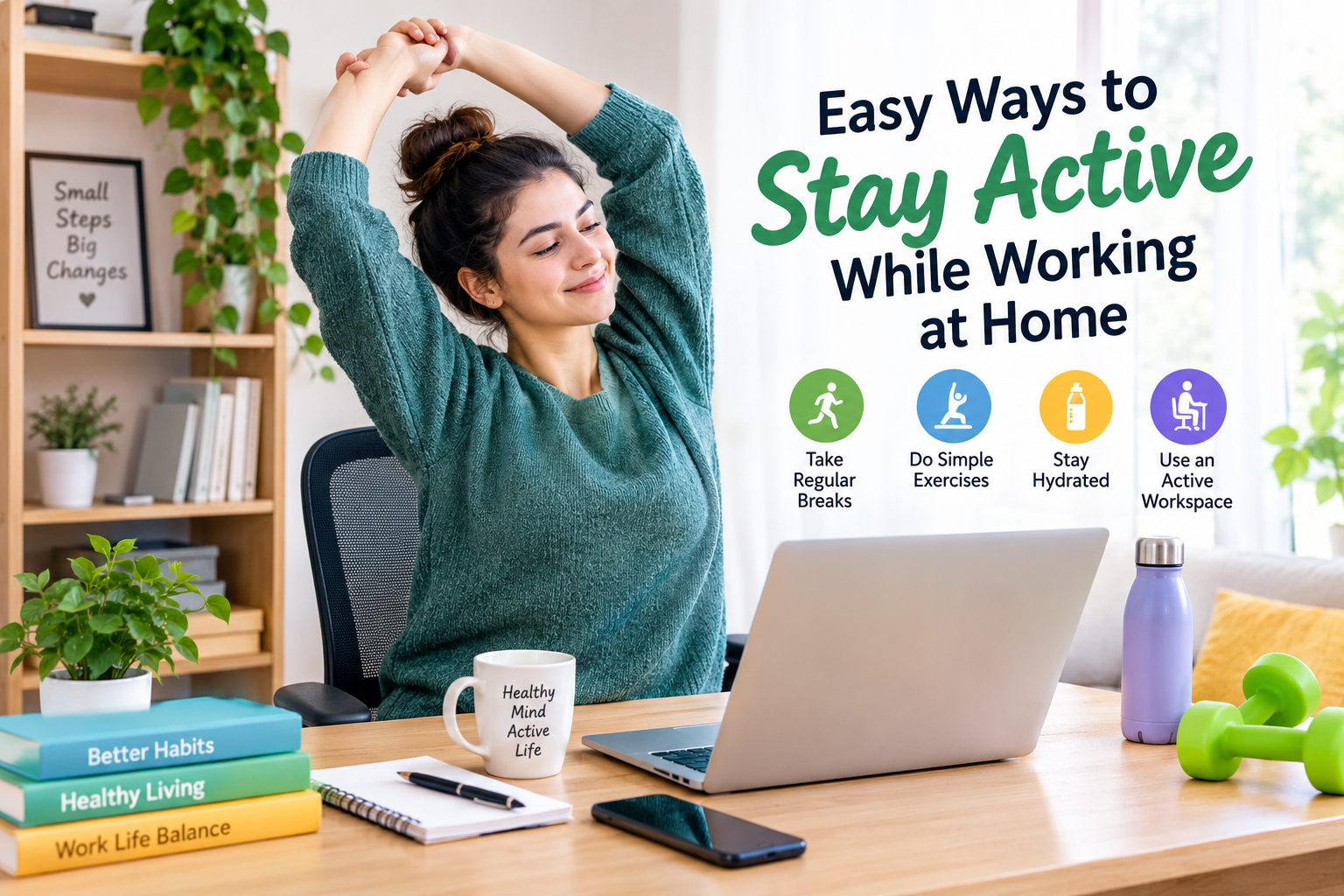
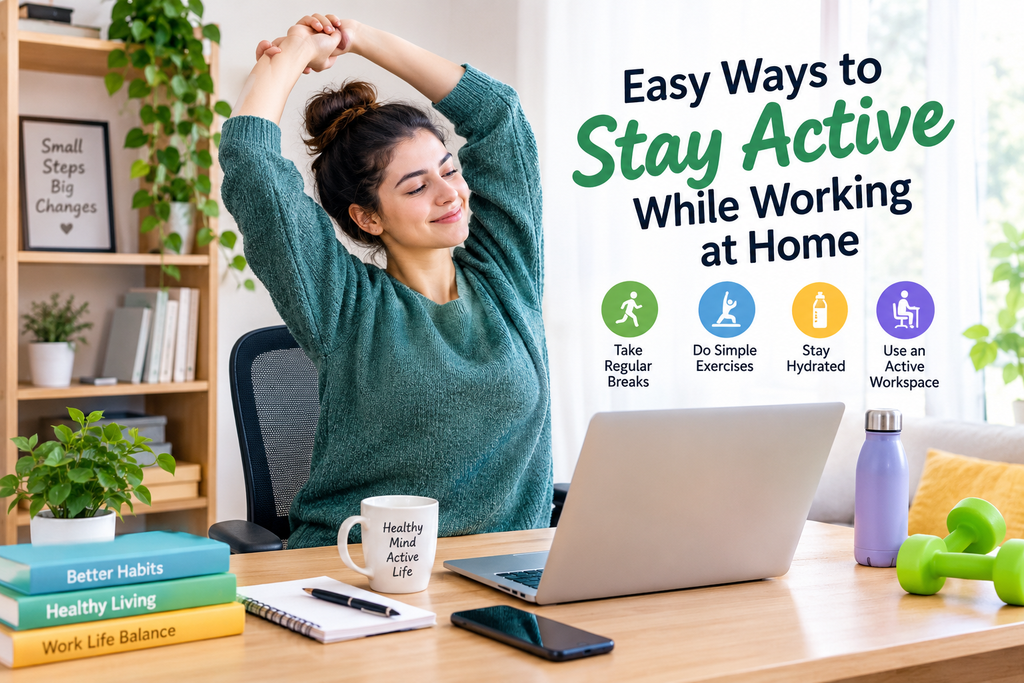
Working from home has become a normal part of life for many people. It offers flexibility, saves commuting time, and allows us to manage our daily responsibilities more comfortably. However, one challenge I have noticed with a home based work routine is that it can be surprisingly easy to spend the entire day sitting in one place. Between checking emails, attending online meetings, completing assignments, and meeting deadlines, physical activity often becomes less important than work.
In my opinion, staying active while working at home does not require an expensive gym membership or a complicated workout plan. Small changes in our daily routine can help us move more, feel refreshed, and create a healthier balance between work and personal life.
The good news is that there are many easy ways to stay active while working at home without disturbing your productivity. By making movement a regular part of the day, you can gradually develop healthier habits that are easier to maintain.
1. Start Your Day With a Short Walk
One of the simplest ways to stay active while working at home is to begin the morning with a short walk. Instead of opening your laptop immediately after waking up, give yourself ten to fifteen minutes to walk outside or move around your home.
I believe that starting the day with movement can make a daily routine feel more organized. A morning walk gives you an opportunity to wake up gradually, enjoy some fresh air, and prepare mentally for the tasks ahead.
You do not need to walk quickly or cover a particular distance. The main goal is to avoid starting your day with hours of sitting.
If going outside is not convenient, you can walk around your home, use the stairs when appropriate, or march gently in place. Choose an activity that fits your schedule and comfort level.
2. Take Regular Breaks From Sitting
When we become focused on work, it is easy to forget how long we have been sitting. Unfortunately, spending most of the day in one position can leave us feeling stiff, tired, and uncomfortable.
One practical solution is to take regular movement breaks throughout the working day.
For example, you can stand up every thirty to sixty minutes and spend a few minutes walking, stretching, or changing your position. You can also set a reminder on your phone or computer to help you remember.
During these breaks, try simple activities such as walking to another room, stretching your arms, rolling your shoulders, or gently moving your legs.
In my view, short breaks are easier to maintain than long exercise sessions that require extra planning. They also help divide a busy workday into manageable periods.
The important thing is to make movement a regular habit instead of waiting until you feel exhausted.
3. Create an Active Home Workspace
Your home workspace can influence how much you move during the day. If everything you need is within arm’s reach, you may spend several hours sitting without getting up.
I recommend arranging your workspace in a way that encourages occasional movement while still allowing you to work comfortably.
Keep your water bottle nearby, but consider walking to the kitchen when you need a refill. Place a small notebook or frequently used item a short distance away if doing so is practical and does not interfere with your work.
If your budget allows, you might consider an adjustable standing desk. This gives you the option to alternate between sitting and standing during suitable tasks.
However, standing all day is not necessary. A comfortable chair, a suitable desk height, and regular changes in position are important parts of a practical home office setup.
The goal is to make your workspace supportive of both productivity and physical activity.
4. Try Simple Desk Exercises
You do not always need to leave your desk to add movement to your routine. Simple desk exercises can help you move your body during short breaks.
Here are a few easy options to consider:
- Shoulder rolls: Gently roll your shoulders forward and backward to reduce the feeling of stiffness.
- Seated leg extensions: While sitting securely, slowly straighten one leg, hold briefly, and lower it before changing sides.
- Standing calf raises: Hold a stable surface for support and gently raise your heels before lowering them.
- Gentle neck movements: Slowly turn your head from side to side within a comfortable range.
- Standing stretches: Stand up and gently stretch your arms overhead if the movement feels comfortable.
You can choose one or two exercises between tasks rather than trying to complete an entire workout at once.
I find this approach practical because it does not require special equipment or a separate exercise area. Start gently, avoid movements that cause pain, and adjust the exercises to your abilities.
5. Use Walking Meetings When Possible
Online meetings are a major part of remote work. Although some meetings require you to look at documents or take detailed notes, others involve listening and discussing ideas.
When appropriate, consider taking a walking meeting instead of sitting at your desk.
For example, if you are attending an audio only meeting, you might walk slowly around your home while listening. You could also walk during a phone call with a colleague or client, provided that the conversation does not require your full attention on a screen.
Before doing this, make sure your environment is safe and your movement will not affect the quality of the meeting.
Walking meetings are a convenient way to combine work responsibilities with physical activity. They can be particularly useful on busy days when finding separate time for exercise feels difficult.
6. Schedule Short Exercise Sessions
One common mistake is believing that exercise only counts when we complete a long workout. In reality, shorter sessions can help us build a more active daily routine.
If you have a busy schedule, try dividing your physical activity into manageable periods.
For example, you could spend ten minutes walking in the morning, take a few movement breaks during work, and complete another ten minute walk in the evening.
You can also try beginner friendly activities such as gentle yoga, bodyweight exercises, dancing, or following a low impact workout video.
The best activity is one that suits your current fitness level and that you enjoy enough to repeat.
I would suggest starting with a realistic goal instead of following an intense routine immediately. Once the habit becomes familiar, you can gradually increase the duration or frequency of your activity.
Consistency is often easier to maintain when your exercise plan fits your everyday life.
7. Make Household Chores More Active
Working from home means you are already in an environment where many everyday tasks need attention. You can use some of these activities as opportunities to move more.
For example, washing dishes, tidying a room, folding laundry, watering plants, and organizing shelves all involve movement.
Instead of sitting during every short break, choose a small household task when appropriate. You could tidy your desk after finishing a project or water your plants between meetings.
However, it is important to remember that household chores do not always replace structured physical activity. Their value is that they provide additional opportunities to avoid sitting continuously.
I personally think this approach works well because it combines two everyday responsibilities without requiring extra travel or equipment.
Just remember to maintain a reasonable balance between work, household duties, and rest.
8. Use Stairs and Walk Around Your Home
If your home has stairs, using them carefully can provide another opportunity for movement. You can walk up and down a few steps when you need a break, provided the stairs are safe and suitable for your physical abilities.
If stairs are not available, walking around your home is still a useful option.
Try walking while waiting for a file to upload, after completing an email, or before beginning your next assignment. You can also walk in place for a short period if you have enough space.
These small actions may seem insignificant, but they make it easier to include movement throughout the day.
You do not need to turn every work break into exercise. Simply looking for safe opportunities to stand and move can help you develop a more active lifestyle.
9. Stay Hydrated Throughout the Day
Drinking enough water is another important part of maintaining a healthy home working routine. When we are busy with work, we may forget to drink regularly or ignore our body’s signals.
Keep water available at your workspace and drink throughout the day according to your needs.
You can also use water refill breaks as a reminder to stand up and walk for a moment. This creates a simple connection between hydration and movement.
Keep in mind that individual fluid needs vary depending on factors such as weather, activity level, and health conditions. Do not force yourself to drink excessive amounts of water.
Although hydration does not replace physical activity, it supports your general well being and can be a helpful part of your daily routine.
10. Make Your Lunch Break More Active
Lunch breaks are often spent eating in front of a computer or scrolling through a phone. While this may seem convenient, it can leave you sitting for much longer than necessary.
Whenever possible, step away from your desk during lunch. Eat your meal comfortably, then take a short walk or spend a few minutes stretching.
Even a brief walk around your neighborhood or home can provide an opportunity to change your surroundings before returning to work.
I believe that taking a proper lunch break is beneficial because it creates a clear separation between work tasks and personal time.
You do not need to sacrifice your entire break for exercise. A few minutes of movement can be enough to make your routine feel more varied.
11. Set Realistic Daily Movement Goals
One of the easiest ways to stay active while working at home is to establish simple goals that you can follow consistently.
Instead of trying to change your entire lifestyle in one day, start with two or three manageable habits.
For example, you might decide to walk for ten minutes each morning, stand up regularly during work, and stretch after lunch.
Once these habits become comfortable, you can introduce additional activities.
A step counter or fitness tracker may help you monitor your movement if you enjoy tracking progress. However, you do not need a smartwatch or expensive device to stay active.
You can use a simple checklist or calendar to record your daily habits.
Remember that your goals should fit your schedule, abilities, and personal circumstances. If you miss a day, there is no need to feel discouraged. Start again the following day and continue building your routine.
12. Create a Balanced Work and Exercise Schedule
A balanced schedule makes it easier to protect your health without neglecting professional responsibilities.
At the beginning of each day, review your main tasks and identify suitable opportunities for movement. You might schedule a morning walk, short breaks between assignments, and a brief workout after finishing work.
Try to avoid planning too many activities at once. A complicated routine may become difficult to follow when unexpected meetings or deadlines appear.
Flexibility is especially important for people who work remotely because every day may look different.
On busy days, focus on small movement breaks. When you have more free time, consider a longer walk or exercise session.
The purpose is not to make every day perfect. It is to create a routine that continues to work even when life becomes busy.
Sample Daily Routine for Staying Active at Home
Here is a simple example of how you could add movement to a typical working day. Adjust the times according to your own schedule.
| Time | Activity |
|---|---|
| 7:30 AM | Take a 10 minute morning walk |
| 9:00 AM | Begin work and arrange your workspace |
| 10:00 AM | Stand up and stretch for a few minutes |
| 11:30 AM | Walk around your home |
| 1:00 PM | Have lunch away from your desk |
| 1:15 PM | Take a short walk after lunch |
| 3:00 PM | Complete a few gentle desk exercises |
| 4:30 PM | Take a movement break and refill your water |
| 5:30 PM | Finish work and enjoy a walk or suitable workout |
This schedule is only an example. You can change the activities and timings to suit your working hours, energy levels, and responsibilities.
Conclusion
Staying active while working at home does not have to be difficult. With a few simple adjustments, you can reduce long periods of sitting and make movement a natural part of your everyday routine.
From taking morning walks and scheduling movement breaks to trying desk exercises and making lunch breaks more active, there are many practical ways to stay active without disrupting your work.
In my opinion, the most important step is to begin with small habits that feel realistic. You do not need to exercise for hours or completely change your daily schedule to get started. Focus on moving regularly, choosing activities you enjoy, and allowing yourself enough time to rest.
Over time, these simple habits can help you build a more balanced approach to working from home. When you make physical activity part of your routine rather than an occasional task, it becomes easier to maintain a healthier and more active lifestyle.
The key is to stay consistent, listen to your body, and remember that every suitable opportunity to move is a positive step toward a more active day.