Introduction
Building strong legs does not always require a gym membership, expensive fitness equipment, or a complicated workout plan. In my opinion, one of the easiest ways to begin a fitness journey is to start exercising at home with simple bodyweight movements. A beginner leg workout at home without equipment can help you build strength, improve balance, and develop a regular exercise habit without spending extra money.
Many beginners believe they need dumbbells, resistance machines, or heavy weights to strengthen their legs. However, bodyweight exercises can be a useful starting point because they allow you to learn the correct movement patterns and gradually improve your fitness. You can perform most beginner leg exercises in a small space, making them suitable for people with busy schedules.
Your legs support almost every daily activity, including walking, climbing stairs, standing, and getting up from a chair. Keeping your leg muscles active can make these activities feel easier over time. The key is to begin with manageable exercises, use proper form, and remain consistent.
In this guide, I will explain how to follow a simple leg workout at home without equipment, which exercises beginners can try, and how to create a routine that fits into everyday life.
Why Choose a Beginner Leg Workout at Home?
One of the biggest advantages of exercising at home is convenience. You do not need to travel to a gym or wait for fitness machines. You can choose a time that suits your routine and exercise at your own pace.
A beginner leg workout at home can target important muscle groups, including the quadriceps at the front of your thighs, the hamstrings at the back of your thighs, your glutes, and your calf muscles. Different exercises work these muscles in different ways, helping you develop more balanced lower body strength.
Another benefit is that bodyweight exercises allow you to adjust the difficulty. If a movement feels challenging, you can perform fewer repetitions or use a sturdy chair for support. As your strength improves, you can gradually increase your repetitions or choose a slightly more challenging variation.
I believe the best workout routine is one that you can follow regularly. Starting with ten or fifteen minutes is often more practical than following a demanding routine that leaves you exhausted and discouraged.
7 Best Leg Exercises for Beginners at Home Without Equipment
The following exercises are suitable starting points for many healthy beginners. Start slowly, focus on controlled movements, and rest whenever necessary.
1. Bodyweight Squats

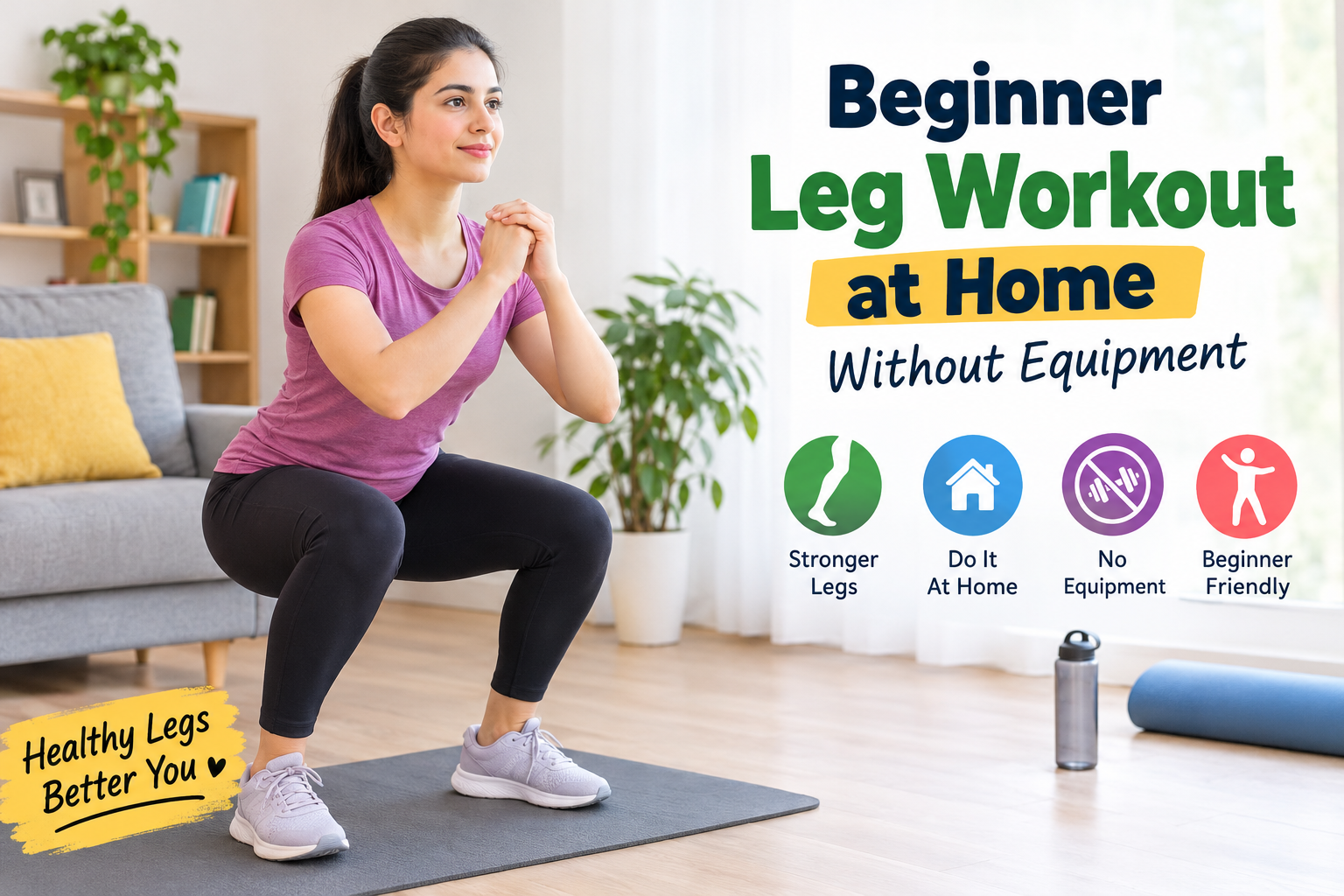
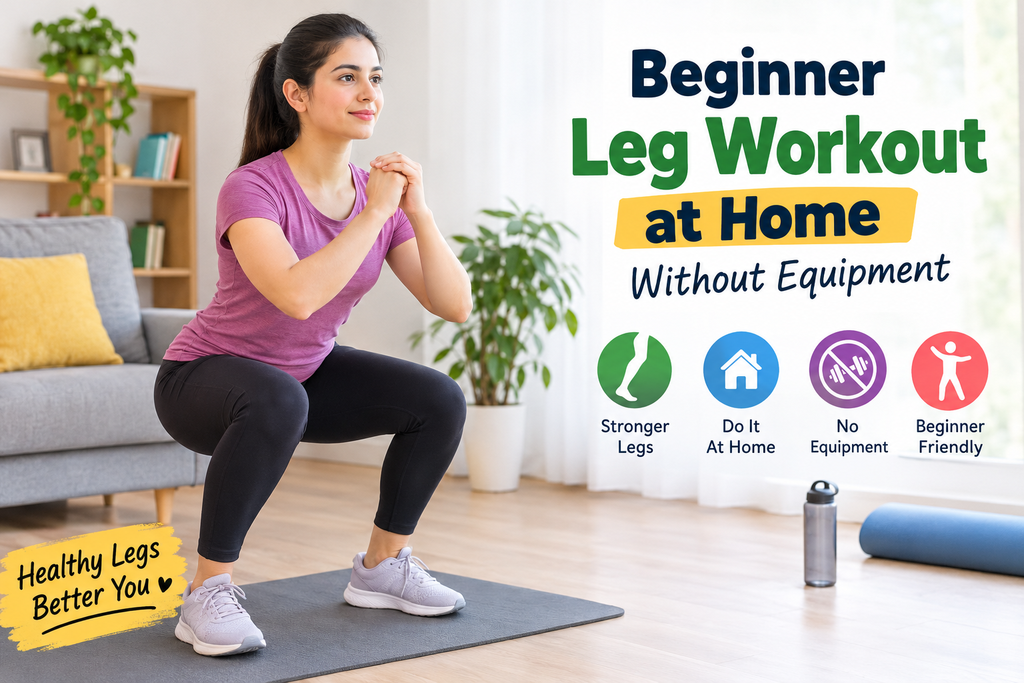
Bodyweight squats are one of the most useful exercises for a beginner leg workout at home. They work the quadriceps, glutes, and other muscles that help you sit down and stand up.
To perform a squat, stand with your feet approximately shoulder width apart. Keep your chest lifted and your back in a comfortable neutral position. Bend your knees and push your hips backward as if you were about to sit on a chair. Lower yourself only as far as you can comfortably manage, then push through your feet to return to standing.
Beginners can start with two sets of eight repetitions. If you struggle to maintain balance, practice sitting down on a sturdy chair and standing back up with control.
Avoid rushing through the movement. A comfortable range of motion and good technique are more important than completing a large number of repetitions.
2. Standing Calf Raises

Calf raises are a simple way to strengthen the muscles at the back of your lower legs. These muscles contribute to walking, pushing off the ground, and maintaining balance.
Stand with your feet hip width apart. Hold a sturdy chair or wall for balance if needed. Slowly raise your heels until you are standing on the balls of your feet. Pause briefly at the top, then lower your heels in a controlled manner.
Start with two sets of ten repetitions. Keep your knees comfortable and avoid bouncing at the top of the movement.
As you become more confident, you can gradually increase the number of repetitions while maintaining control.
3. Glute Bridges

Glute bridges primarily target the gluteal muscles and also involve the muscles around your hips and the back of your thighs. They are especially useful for beginners who want to exercise their lower body without standing throughout the entire routine.
Lie on your back on a comfortable exercise mat. Bend your knees and place your feet flat on the floor. Keep your arms beside your body. Tighten your abdominal muscles gently and lift your hips until your shoulders, hips, and knees form a comfortable diagonal line.
Pause briefly, then lower your hips slowly.
Try two sets of eight to ten repetitions. Do not force your back into an excessive arch. The movement should come mainly from your hips, and you should stop if you feel pain.
4. Reverse Lunges

Reverse lunges work the quadriceps and glutes while challenging balance and coordination. They can be more difficult than squats, so beginners should start with a small range of motion.
Stand upright with your feet hip width apart. Step one foot backward and bend both knees slightly, lowering your body only as far as you can comfortably control. Push through your front foot to return to the starting position. Repeat with the other leg.
Begin with five repetitions per side. You can hold a sturdy chair or stand near a wall for support.
Keep your movements slow and controlled. If lunges cause discomfort or make you feel unstable, replace them with supported sit to stand exercises until you feel more confident.
5. Wall Sits

Wall sits help build muscular endurance in the thighs. Unlike squats, this exercise involves holding a position rather than repeatedly moving up and down.
Stand with your back against a wall and your feet slightly forward. Slowly slide down the wall until you reach a comfortable partial squat position. Keep your feet flat and your knees aligned with your feet. Hold the position while breathing normally.
Start with ten to fifteen seconds and rest before repeating.
There is no need to lower yourself deeply. A shallow wall sit can be a sensible starting point, especially if you are new to exercise. Stop if you experience knee pain, dizziness, or unusual discomfort.
6. Side Leg Raises

Side leg raises target muscles along the outer hips, which help support hip movement and stability.
Lie on one side with your legs extended and your body comfortably aligned. Keep your top leg straight and lift it slowly without rotating your hips backward. Pause briefly, then lower the leg with control.
Perform eight to ten repetitions on one side before changing sides.
You do not need to lift your leg very high. A smaller, controlled movement is often easier to perform correctly than a high lift that causes your hips to twist.
7. Marching in Place

Marching in place is a beginner friendly movement that warms up the legs and adds light physical activity to your routine.
Stand tall with your feet comfortably apart. Lift one knee, lower it, and then lift the opposite knee. Swing your arms naturally if you feel comfortable doing so.
Continue for thirty to sixty seconds at a pace that allows you to breathe comfortably.
If balance is a concern, march beside a wall or hold a stable support. You can use this movement during your warm up or as a gentle finishing exercise.
Simple Beginner Leg Workout Routine at Home
Now that you know the basic exercises, you can combine them into one simple leg workout at home without equipment. The following routine is designed to help beginners practice the movements without making the session unnecessarily difficult.
| Exercise | Repetitions or duration |
|---|---|
| Marching in place | 1 minute |
| Bodyweight squats | 8 to 10 reps |
| Glute bridges | 8 to 10 reps |
| Standing calf raises | 10 to 12 reps |
| Reverse lunges | 5 reps per leg |
| Side leg raises | 8 reps per side |
| Wall sits | 10 to 15 seconds |
Rest for approximately 30 to 60 seconds between exercises, or longer if you need it. Begin with one round of the routine. When the exercises start feeling easier, you can gradually work toward two rounds.
This routine does not need to take a long time. Around 10 to 20 minutes can be enough for a beginner session, depending on your pace and rest periods.
Tips for Getting Better Results From Your Leg Workout
In my view, consistency matters more than trying to complete the hardest workout on your first day. A few simple habits can help you get more from your beginner leg workout at home.
Start with a warm up. Spend three to five minutes marching gently in place, moving your ankles, and bending and straightening your knees comfortably. This prepares you for the movements ahead.
Focus on proper form. Avoid rushing through squats, lunges, or calf raises. Controlled movements help you practice good technique and notice when something feels uncomfortable.
Increase difficulty gradually. Start with fewer repetitions if necessary. Once your routine feels manageable, increase the repetitions slightly or add another round. You do not need to make every workout harder.
Allow time for recovery. Your muscles need time to recover between challenging sessions. Many beginners can start with two or three nonconsecutive leg workout days per week, adjusting according to their fitness level and recovery.
Stay hydrated and eat balanced meals. Drinking enough water and eating a variety of nutritious foods can support your general fitness goals. Include appropriate sources of protein, carbohydrates, healthy fats, fruits, and vegetables.
Common Mistakes Beginners Should Avoid
One common mistake is doing too much exercise too quickly. Completing dozens of squats on your first day may leave you excessively sore and make it harder to maintain your routine. Start with a manageable amount and build gradually.
Another mistake is ignoring pain. Normal muscle effort can feel challenging, but sharp pain in your knees, hips, ankles, or back is a reason to stop. Do not force a movement that causes discomfort.
Some beginners also skip their warm up because they want to finish quickly. Even a few minutes of gentle movement can help you transition into the workout more comfortably.
Finally, avoid comparing your progress with other people. Everyone begins with a different level of strength, balance, and experience. Focus on improving your own technique and building a routine that fits your needs.
How Long Does It Take to See Results?
The time required to notice changes depends on your starting fitness level, workout consistency, recovery, nutrition, and other individual factors.
Some beginners may notice that movements feel easier after several weeks of regular practice. Improvements in strength, balance, and exercise confidence can develop gradually. Visible changes in muscle size or body composition may take longer and are not guaranteed by a short bodyweight routine alone.
Instead of focusing only on appearance, pay attention to practical improvements. For example, notice whether you can perform more controlled squats, maintain a wall sit for a little longer, or climb stairs with greater ease.
These small achievements can help you stay motivated while developing a healthier lifestyle.
Safety Tips for Beginners
Choose a flat, uncluttered surface and wear comfortable clothing that allows you to move freely. Keep a sturdy chair or wall nearby if you need support with balance.
If you have an existing injury, significant joint pain, a medical condition that affects exercise, or concerns about whether these movements are appropriate for you, seek guidance from a qualified healthcare professional before starting.
Stop exercising if you experience chest pain, faintness, unusual shortness of breath, or severe pain, and seek appropriate medical attention.
Remember that you do not have to complete every exercise immediately. You can begin with marching in place, supported squats, and calf raises, then introduce other movements as your confidence improves.
Conclusion
A beginner leg workout at home without equipment is a practical way to start building lower body strength and developing a consistent fitness habit. With simple exercises such as squats, calf raises, glute bridges, reverse lunges, wall sits, and side leg raises, you can work several important muscle groups without buying expensive equipment.
My recommendation is to start slowly, focus on proper technique, and choose a workout schedule that fits your everyday life. You do not need to push yourself to exhaustion to make exercise worthwhile. Regular practice, sensible progression, and adequate recovery are more helpful than trying to do everything at once.
Start with one round of the routine, listen to your body, and increase the challenge gradually as your fitness improves. With patience and consistency, these simple home exercises can become a useful part of your long term fitness routine.