Introduction
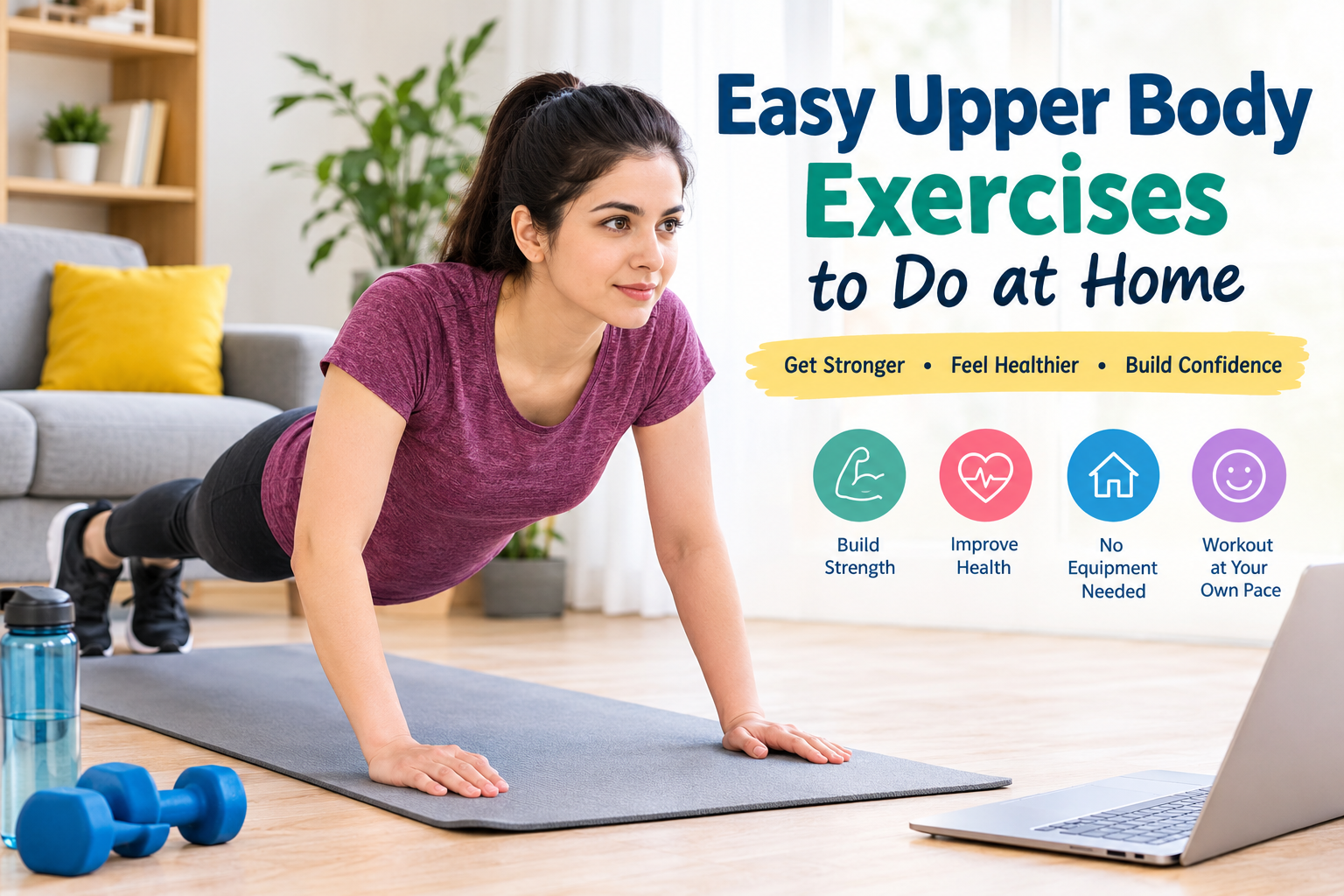
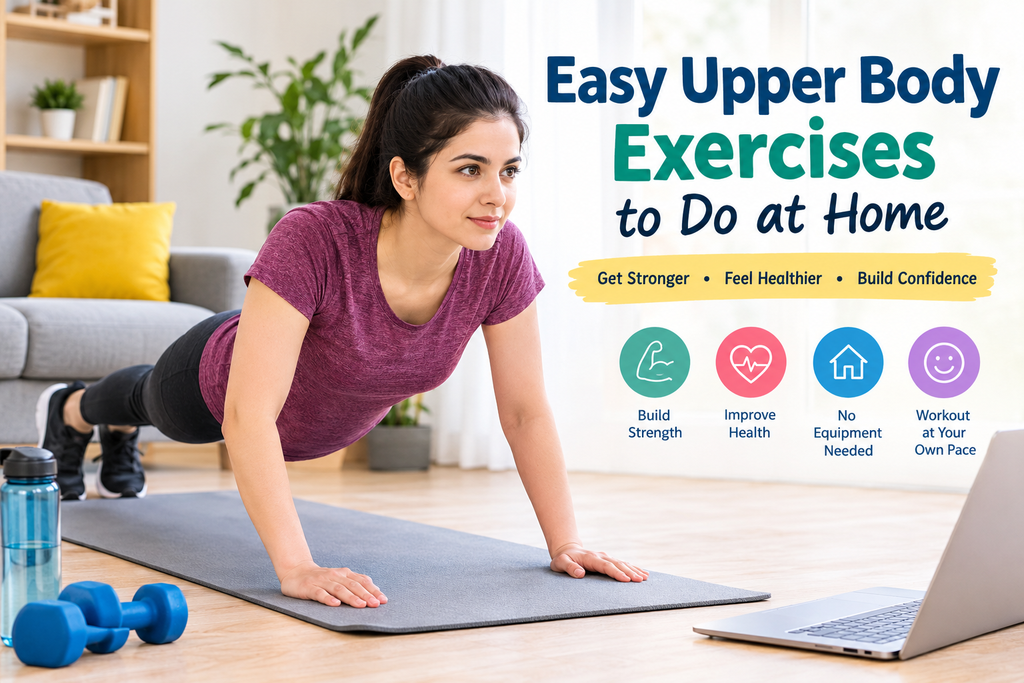
Staying fit does not always require a gym membership, expensive equipment, or hours of exercise every day. In my opinion, one of the easiest ways to build a healthy lifestyle is to start exercising at home with simple movements that fit into your daily routine. If you want to strengthen your arms, shoulders, chest, and back, there are several easy upper body exercises to do at home that can help you get started.
The upper body plays an important role in everyday activities. We use our arms to carry shopping bags, our shoulders to lift objects, and our back muscles to maintain good posture. However, spending long hours sitting at a desk or using a mobile phone can leave us feeling stiff and inactive.
The good news is that beginners can start with simple bodyweight exercises without buying special equipment. You can use a comfortable exercise mat, a sturdy wall, and a stable chair to create a practical home workout space.
In this article, I will explain some of the best upper body exercises for beginners, how to perform them correctly, and how to create a simple workout routine at home. The goal is to make exercise easy to understand, comfortable to follow, and suitable for building a consistent fitness habit.
Why Upper Body Exercises Are Important
Upper body exercises help strengthen the muscles in your chest, shoulders, arms, and upper back. These muscles support many everyday movements, from pushing a door open to lifting groceries and carrying household items.
I believe that beginners should focus on building strength gradually instead of trying difficult exercises immediately. Starting with manageable movements makes it easier to learn proper technique and develop confidence.
Regular strength training can improve muscular strength, support everyday movement, and help maintain bone health. Exercises that strengthen the upper back and shoulders may also support better posture when combined with good sitting habits and regular movement breaks.
Another benefit is convenience. You can complete a short upper body workout at home before work, during a break, or in the evening. You do not need to travel to a gym or follow a complicated exercise program.
Remember that progress looks different for everyone. Focus on improving your technique and consistency rather than comparing your results with other people.
1. Wall Push Ups

Wall push ups are one of the best easy upper body exercises to do at home, especially if you are new to strength training. They train the chest, shoulders, and triceps while allowing you to control the difficulty.
To perform a wall push up, stand facing a wall and place your palms against it at approximately shoulder height. Keep your hands slightly wider than your shoulders and step backward until your body forms a gentle diagonal line.
Bend your elbows slowly and bring your chest toward the wall. Keep your body straight instead of bending at the waist. Push through your palms to return to your starting position.
Start with 8 to 12 repetitions. If the movement feels comfortable, gradually increase the number of repetitions as your strength improves.
The main advantage of wall push ups is that they reduce the amount of body weight you need to support compared with floor push ups. This makes them a useful starting point for beginners.
2. Knee Push Ups

Knee push ups are a beginner friendly variation of traditional push ups. They target the chest, shoulders, and triceps while making the exercise more manageable.
Start on your hands and knees on a comfortable mat. Position your hands slightly wider than shoulder width and move your knees backward so your body forms a straight line from your head to your knees.
Bend your elbows and lower your chest toward the floor. Keep your stomach muscles gently engaged and avoid allowing your lower back to sag. Push yourself back up until your arms are extended comfortably.
Try 5 to 8 repetitions at first. Quality is more important than quantity, so stop when you can no longer maintain good form.
If knee push ups feel too difficult, return to wall push ups and build strength gradually. There is no need to rush into a harder variation.
3. Arm Circles

Arm circles are simple movements that warm up the shoulders and help you prepare for a workout. They require no equipment and can be performed in a small space.
Stand with your feet approximately shoulder width apart. Extend your arms out to the sides at shoulder height and keep your shoulders relaxed.
Make small circles with both arms for 15 to 20 seconds. Reverse the direction and repeat. Avoid shrugging your shoulders toward your ears or forcing the movement if it feels uncomfortable.
You can perform arm circles before other upper body exercises or use them during a short movement break after sitting for a long time.
Although arm circles are useful for warming up, they are not a replacement for resistance exercises when your goal is to build significant muscle strength.
4. Shoulder Taps
Shoulder taps help train the shoulders, arms, and core muscles. They also encourage balance and body control.
Begin in a high plank position with your hands beneath your shoulders. Keep your feet slightly apart for stability. If a floor plank is too challenging, perform the movement with your hands against a sturdy wall or elevated surface.
Lift your right hand and gently tap your left shoulder. Place your hand back on the floor, then repeat with your left hand touching your right shoulder.
Try 6 to 10 taps on each side. Move slowly and avoid rocking your hips from side to side.
If you experience wrist discomfort, stop and try a more comfortable variation. Shoulder taps should challenge your muscles without causing sharp pain.
5. Standing Wall Angels

Standing wall angels are useful for beginners who want to work on shoulder movement and upper back control. They are especially convenient if you spend much of your day sitting at a desk.
Stand with your back against a wall and your feet slightly forward. Keep your shoulders relaxed and bend your elbows so your arms form a goalpost shape. Try to keep your arms close to the wall without forcing them into position.
Slowly slide your arms upward as far as you comfortably can, then bring them back down. Keep your movements controlled and breathe normally.
Begin with 8 to 10 repetitions. If you cannot keep your arms against the wall, that is completely fine. Move through the range that feels comfortable and gradually improve your control.
This exercise can help you practice shoulder mobility and posture awareness. However, it does not replace a balanced strength routine for the chest, arms, and back.
6. Triceps Dips Using a Stable Chair

Triceps dips are designed to target the muscles at the back of your upper arms. However, traditional chair dips can place considerable stress on the shoulders, so beginners should approach them carefully.
A safer starting option is a seated triceps press. Sit upright in a sturdy chair, bend your elbows, and place your hands against the sides of the seat if comfortable. Press gently through your hands to engage your triceps without lifting your body from the chair.
Hold the contraction for two or three seconds, then relax. Repeat 8 to 10 times.
If you choose to try traditional chair dips later, use a chair that cannot slide or tip, keep the movement shallow, and stop if you feel shoulder pain. People with existing shoulder problems should choose a more comfortable alternative.
The important point is to train your arms without putting unnecessary pressure on your joints.
7. Superman Exercise

The Superman exercise is a simple bodyweight movement that targets the muscles along your back. Including back strengthening exercises is important because a balanced upper body routine should not focus only on the chest and arms.
Lie face down on an exercise mat with your arms extended in front of you. Keep your neck in a neutral position by looking toward the floor.
Gently lift your arms and upper chest a small distance off the mat. Keep your movements controlled and avoid trying to lift as high as possible. Lower yourself slowly and relax before repeating.
Start with 6 to 10 repetitions. You can also keep your chest on the floor and lift one arm at a time if that feels more comfortable.
Avoid arching your lower back excessively. If the exercise causes back pain, stop and choose a gentler movement.
8. Biceps Curls With Water Bottles

You do not always need dumbbells to train your biceps. Small water bottles can provide light resistance when you are exercising at home.
Stand upright with a water bottle in each hand. Keep your elbows close to your sides and your palms facing forward.
Bend your elbows to bring the bottles toward your shoulders. Lower them slowly to the starting position without swinging your body.
Try 10 to 12 repetitions using bottles that feel easy to control. If the bottles are too heavy, use smaller ones or start with one arm at a time.
Avoid leaning backward to lift the weight. Slow, controlled repetitions are generally more useful than swinging heavier objects.
As your strength improves, you can gradually increase the resistance using appropriately filled bottles or light dumbbells.
9. Standing Shoulder Press

The shoulder press works the shoulder muscles and also involves the triceps. It is a practical exercise for people who want to improve upper body strength with simple household equipment.
Stand with your feet shoulder width apart and hold a light water bottle in each hand at shoulder level. Keep your elbows bent and your stomach muscles gently engaged.
Press the bottles upward until your arms are extended comfortably overhead. Do not force your elbows into a locked position. Lower the bottles slowly to shoulder height.
Begin with 8 to 10 repetitions using very light resistance.
If raising your arms overhead causes pain, skip this exercise and try gentle arm raises within a comfortable range instead. Never force your shoulders through a painful movement.
10. Prone Reverse Snow Angels

Prone reverse snow angels are a useful option for activating the upper back and the muscles around the shoulders without weights.
Lie face down on a mat with your arms resting beside your body and your palms facing downward. Keep your forehead close to the mat and your neck relaxed.
Lift your hands slightly off the floor if comfortable. Slowly move your arms outward and upward in a wide arc, then return them to your sides. Keep the movement small and controlled.
Try 6 to 10 repetitions. Do not lift your chest excessively or arch your lower back to complete the movement.
This exercise can complement push ups and other chest focused movements by adding work for the upper back.
A Simple Upper Body Workout Routine for Beginners
If you are unsure how to combine these movements, start with a short routine that includes different upper body muscle groups.

Warm up
Arm circles and gentle shoulder movements
3 to 5 minutes

Wall push ups
Chest, shoulders, and triceps
8 to 12 repetitions

Water bottle biceps curls
Front of the upper arms
10 to 12 repetitions

Standing wall angels
Shoulder movement and upper back control
8 to 10 repetitions

Superman exercise
Back muscles
6 to 10 repetitions
Rest for 30 to 60 seconds between exercises, or longer if needed. Start with one round and add another when the routine feels manageable.
This beginner upper body workout can take approximately 10 to 20 minutes, depending on your pace and rest periods. Aim to perform strength training around two days per week initially, with recovery time between sessions.
You can adjust the number of repetitions according to your current fitness level. There is no need to complete every exercise in this article during a single session.
Tips for Getting Better Results From Home Upper Body Exercises
In my view, the best workout is one that you can follow regularly without feeling overwhelmed. A few simple habits can help you get more from your home exercise routine.
1. Start with exercises that match your fitness level. If you are a beginner, wall push ups may be more suitable than floor push ups. Choose movements that allow you to maintain proper form.
2. Focus on correct technique. Moving slowly and controlling each repetition helps you learn the exercise. Do not sacrifice good form just to complete more repetitions.
3. Increase difficulty gradually. Once an exercise becomes easier, you can add a few repetitions, perform another set, or use slightly more resistance. Avoid increasing everything at once.
4. Allow your muscles to recover. Your body needs time to adapt to strength training. Take rest days between challenging upper body sessions and avoid repeatedly training muscles that are still very sore.
5. Stay consistent. A short workout performed regularly is often more practical than an intense routine that you abandon after a few days.
6. Maintain balanced nutrition and hydration. Eat a variety of nutritious foods, including protein sources, vegetables, fruits, and whole grains. Drink water regularly, especially when exercising in warm weather.
7. Be patient with your progress. Strength improvements happen gradually. Pay attention to how comfortably you move, how well you control exercises, and whether everyday tasks become easier.
Common Mistakes to Avoid
When performing easy upper body exercises at home, beginners sometimes make mistakes that reduce the quality of their workouts.
One common mistake is rushing through repetitions. Fast movements can make it harder to maintain control and notice poor technique. Another is holding your breath during difficult movements. Try to breathe naturally and exhale during the effort.
You should also avoid using heavy household objects that are difficult to grip securely. If you use water bottles, ensure their lids are tight and that the bottles are easy to hold.
Skipping warm ups is another habit worth avoiding. A few minutes of gentle arm circles and comfortable shoulder movements can help prepare you for your session.
Finally, never assume that pain means an exercise is working. Stop if you experience sharp pain, dizziness, chest discomfort, or unusual shortness of breath. Seek appropriate medical advice when necessary.
Frequently Asked Questions
Can I build upper body strength at home without equipment?
Yes. Exercises such as wall push ups, knee push ups, and shoulder taps can help develop strength without gym equipment. You can also use light water bottles for resistance. As you become stronger, you may need more challenging exercises or additional resistance to continue progressing.
How many days a week should I do upper body exercises?
Beginners can start with two nonconsecutive days per week. Allow enough recovery time between strength sessions, especially when you are new to exercise. Adjust your schedule according to your fitness level and how your body responds.
How long should a beginner upper body workout last?
A simple workout can take around 10 to 20 minutes, including a warm up and rest periods. You can gradually increase the duration as your fitness improves. Longer workouts are not automatically better if your technique suffers or you cannot recover adequately.
Are upper body exercises helpful for improving posture?
Strengthening the upper back and shoulders may support better posture, especially when combined with regular movement breaks and comfortable desk positioning. However, no single exercise can correct every posture issue.
Can I do upper body exercises every day?
Gentle movements and mobility exercises may be suitable for daily practice, but challenging strength workouts usually need recovery time. Beginners should avoid training the same muscles intensely every day.
Conclusion
Easy upper body exercises to do at home offer a practical way to begin building strength without investing in an expensive gym membership. Wall push ups, knee push ups, arm circles, shoulder taps, wall angels, biceps curls, and back strengthening movements can help you create a simple and balanced routine.
My recommendation is to start small, choose exercises that feel comfortable, and focus on proper technique. You do not need to complete a difficult workout on your first day. Begin with a few movements, repeat them consistently, and gradually increase the challenge as your strength improves.
Remember that fitness is a long term habit rather than a quick achievement. With patience, regular practice, adequate recovery, and a balanced lifestyle, you can make home workouts a useful part of your daily routine.
Fitness note: This article provides general educational information, not individualized medical advice. If you have an existing injury, a medical condition, or concerns about starting strength training, consult a qualified healthcare professional.