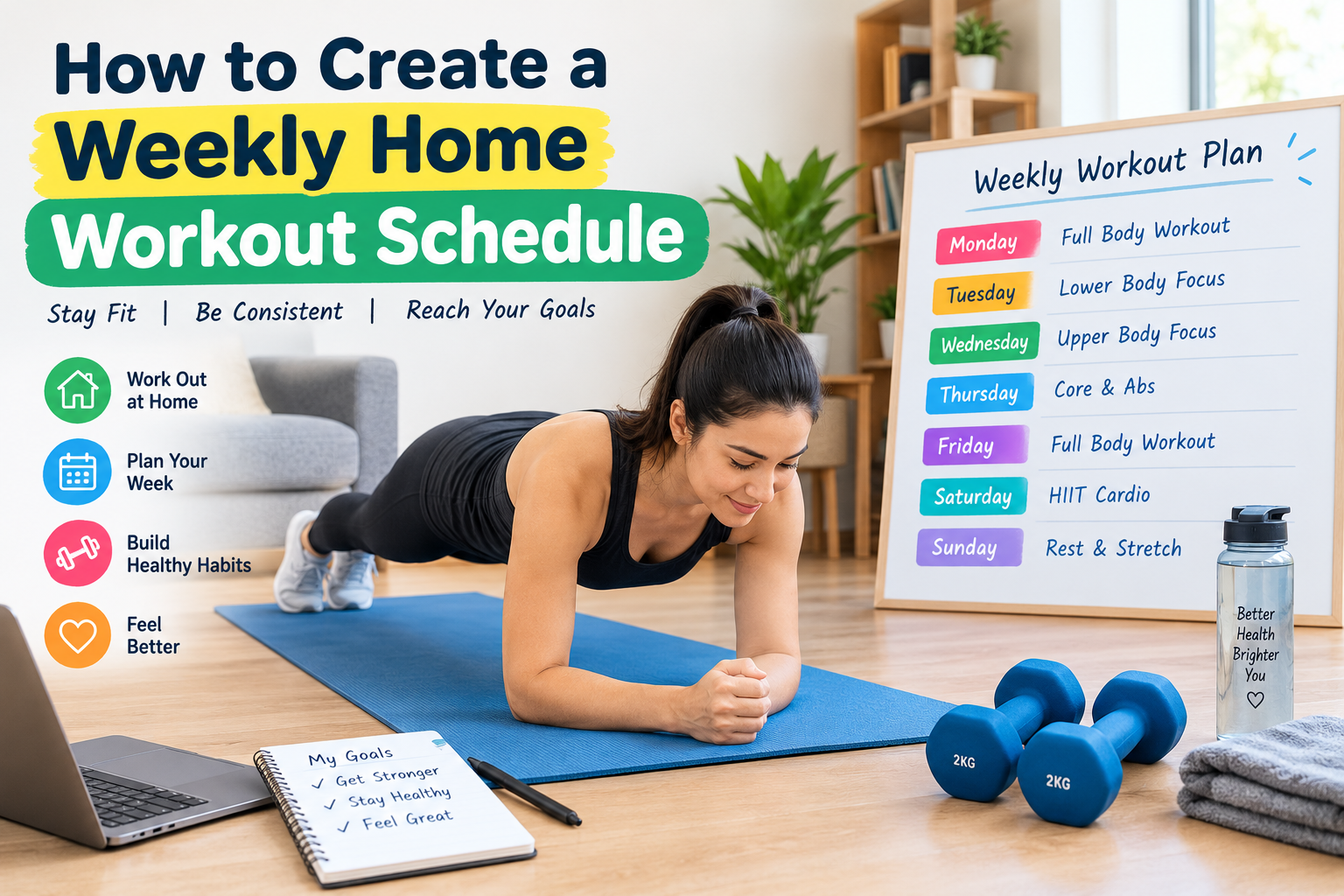
Creating a weekly home workout schedule is one of the simplest ways to build a healthy lifestyle without spending money on a gym membership. In my opinion, the best workout routine is not necessarily the hardest one. It is the one that fits into your daily life, matches your fitness level, and helps you stay consistent over time.
Many people want to exercise regularly, but they struggle to decide which exercises to do, how many days to work out, and when to take rest. Without a proper plan, it is easy to skip workouts or repeat the same exercises without giving the body enough recovery time.
The good news is that you do not need expensive equipment or hours of free time to get started. With a little planning, you can create a weekly home workout schedule that includes strength training, cardio, stretching, and rest days.
In this guide, I will explain how to organize a simple home workout routine, choose exercises for different days, and develop habits that make exercise easier to maintain.
Why You Need a Weekly Home Workout Schedule
I believe planning is one of the most useful steps for anyone who wants to improve their fitness. When you know what exercise you will do each day, you spend less time making decisions and more time being active.
A weekly workout schedule also helps you balance different types of exercise. For example, focusing only on cardio may leave you with fewer opportunities to develop muscular strength, while doing intense strength workouts every day can make recovery difficult.
A balanced exercise routine can help you:
- Improve overall fitness and stamina.
- Develop strength and muscular endurance.
- Support mobility and flexibility.
- Build a consistent exercise habit.
- Manage workout time more effectively.
- Make progress without needing a gym.
Another benefit of exercising at home is flexibility. You can choose a time that works for your schedule, whether that means exercising in the morning, during a lunch break, or in the evening.
1. Set Clear and Realistic Fitness Goals
Before creating your weekly home workout schedule, decide what you want to achieve. Your goals will help determine which exercises you should include and how often you should exercise.
For example, if your main goal is to improve general fitness, you can combine walking in place, bodyweight exercises, and stretching. If you want to build strength, focus more on exercises such as squats, wall push ups, glute bridges, and resistance training.
Beginners should start with small and achievable goals. Exercising for 15 to 20 minutes several days a week may be more manageable than attempting an intense one hour workout every day.
I recommend choosing goals that you can follow comfortably and reviewing your progress every few weeks. You can gradually increase your workout duration or repetitions as your fitness improves.
Remember that progress is not always about doing more exercise. Better technique, improved stamina, and a more consistent routine are also meaningful achievements.
2. Choose How Many Days You Can Exercise
The next step is deciding how many days per week you can realistically dedicate to exercise. Your schedule should fit your lifestyle instead of creating unnecessary pressure.
If you are a beginner, three or four workout days per week can be a practical starting point. You can add gentle walking or stretching on other days if you feel comfortable.
People who already exercise regularly may prefer five active days with a mixture of strength workouts, cardio, and mobility sessions.
The important thing is to avoid increasing your activity too quickly. Your body needs time to adapt, especially if you have been inactive for a long period.
Try to choose workout times that you can repeat each week. A regular time can make exercise feel like a natural part of your routine rather than another task you need to remember.
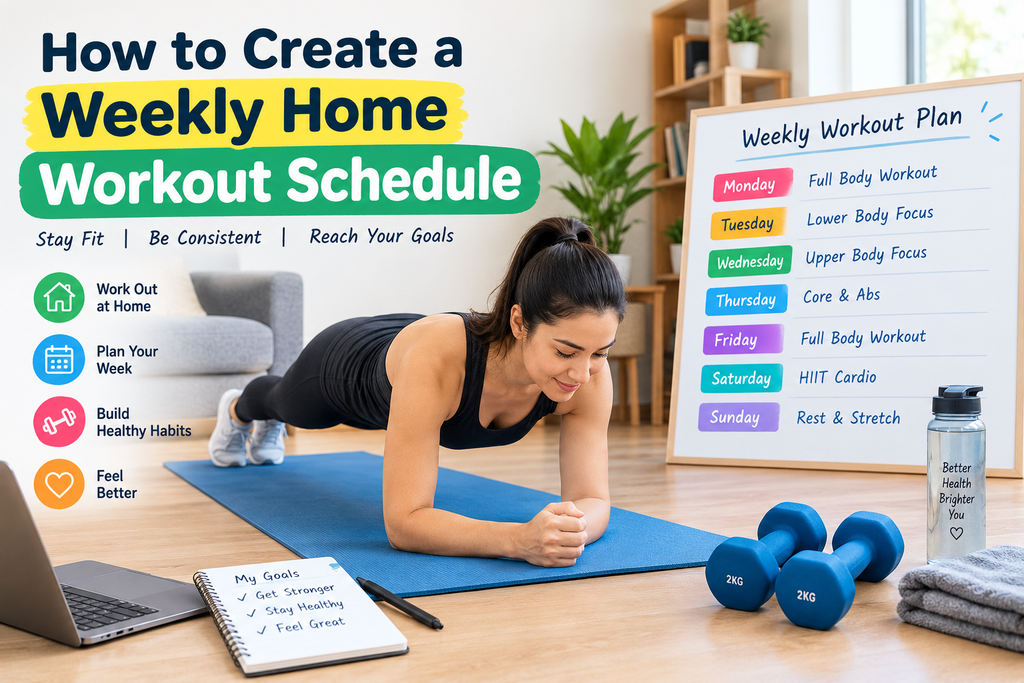
3. Create a Simple Weekly Home Workout Plan
Once you have chosen your fitness goals and available days, it is time to organize your weekly exercise schedule. A good plan should include strength exercises, cardiovascular activity, flexibility, and recovery.
Here is a beginner friendly weekly home workout schedule that you can adjust according to your fitness level.
| Day | Workout | Duration |
|---|---|---|
| Monday | Full body strength workout | 20 to 25 minutes |
| Tuesday | Low impact cardio | 20 minutes |
| Wednesday | Upper body and core exercises | 20 minutes |
| Thursday | Stretching and mobility | 15 to 20 minutes |
| Friday | Lower body strength workout | 20 to 25 minutes |
| Saturday | Walking or enjoyable cardio | 20 to 30 minutes |
| Sunday | Rest and recovery | As needed |
This weekly home workout plan is a starting point rather than a strict rule. Beginners can shorten their sessions, while experienced exercisers can gradually increase their training time.
The most important thing is to choose activities that match your current abilities and leave enough time for recovery.
4. Include Full Body Strength Exercises
Strength training is an important part of a balanced home workout routine. You can perform many effective exercises using only your body weight.
I recommend starting with basic movements that train several muscle groups at once.
Some useful exercises include:
Squats: Squats work the muscles of your legs and hips. Keep your feet comfortable, lower yourself with control, and maintain a stable position.
Wall push ups: These are a beginner friendly alternative to regular push ups. Place your hands against a wall and slowly bend your elbows to bring your chest closer.
Glute bridges: Lie on your back with your knees bent and feet flat on the floor. Lift your hips gently, pause, and lower them slowly.
Bird dogs: Start on your hands and knees, then extend one arm and the opposite leg while keeping your torso stable.
Standing calf raises: Raise your heels from the floor, pause briefly, and lower them with control.
For a beginner, one or two sets of each exercise may be enough. Start with a comfortable number of repetitions and increase gradually as your technique improves.
Avoid rushing through movements simply to finish your workout quickly. Good form and controlled movement are more important than completing a large number of repetitions.
5. Add Cardio to Your Weekly Exercise Schedule
Cardiovascular exercise supports heart health and stamina. You do not need a treadmill, exercise bike, or large workout area to include cardio in your home fitness routine.
Some simple options include marching in place, side steps, dancing, walking indoors, and step touches.
Choose movements that allow you to remain comfortable while gradually increasing your activity level. If you are new to exercise, start with short sessions and take breaks whenever necessary.
For adults, general physical activity guidelines recommend 150 to 300 minutes of moderate intensity aerobic activity each week, alongside muscle strengthening activities on at least two days. However, you do not need to reach this target immediately. Start with an amount you can manage and build up gradually.
NCBI Bookshelf
+1
You can divide your cardio into shorter sessions throughout the day. For example, a 10 minute morning walk and a 10 minute evening walking session can help you become more active.
6. Make Time for Stretching and Recovery
One mistake I often see in workout planning is giving too much attention to exercise and too little attention to recovery. Your weekly home workout schedule should include lighter days and opportunities to rest.
Stretching and mobility exercises can help you move comfortably and maintain flexibility. Consider including gentle shoulder rolls, ankle circles, comfortable hip movements, and calf stretches in your routine.
Avoid forcing your body into uncomfortable positions. Stretch slowly and stop if you experience sharp pain.
Rest days are equally important. You do not have to complete a demanding workout every day to maintain an active lifestyle. On recovery days, you can relax or enjoy gentle walking if it feels comfortable.
If your muscles remain unusually sore or your energy levels drop, consider reducing your training intensity. Consistency works better when your routine is sustainable.
7. Decide How Long Each Workout Should Last
Your workout duration should depend on your fitness level, available time, and the type of exercise you are performing.
For beginners, a 15 to 25 minute workout can be a practical starting point. You can gradually extend sessions as your endurance improves.
A simple 20 minute home workout might look like this:
Warm up
5 minutes of easy marching and gentle movements
5 min
Main workout
Bodyweight strength exercises or moderate cardio
12 min
Cool down
Slow movements and comfortable stretching
3 min
This structure gives you a clear beginning, middle, and end. It also makes it easier to plan your workout around work, family responsibilities, and other daily activities.
8. Prepare Your Home Workout Space
You do not need a dedicated home gym to exercise effectively. A small, tidy area with enough room to move safely is usually sufficient for basic bodyweight exercises.
Before starting your workout, remove objects that could cause you to trip. Use a stable exercise mat if you have one, and wear comfortable clothing and suitable footwear when needed.
Keep drinking water nearby and prepare any equipment you intend to use. Optional items include resistance bands, light dumbbells, and a sturdy chair for supported exercises.
I find that preparing your workout space in advance can make it easier to begin exercising. When everything is ready, you have fewer reasons to postpone your planned session.
9. Track Your Progress Every Week
Tracking your progress can help you understand whether your weekly home workout schedule is working for you.
You do not need complicated fitness software. A simple notebook or calendar is enough to record your workouts.
Write down which exercises you completed, how long you exercised, and how difficult the session felt. You can also note improvements in your technique, repetitions, or stamina.
Review your notes at the end of each week. If you consistently complete your sessions and feel comfortable, you may be ready to increase the difficulty slightly.
Avoid comparing your progress with other people. Fitness levels, schedules, and starting points vary. Focus on your own improvements instead.
If you miss a workout, do not assume that the entire week has been wasted. Return to your routine at the next available opportunity.
10. Stay Consistent With Your Home Workout Routine
Consistency is often more challenging than choosing the right exercises. Even a well designed workout plan will not be useful if it becomes too difficult to follow.
To make your routine easier to maintain, schedule workouts around your existing habits. For example, you could exercise after waking up or before taking an evening shower.
Set realistic expectations and avoid changing your entire routine every few days. Give yourself enough time to become comfortable with the exercises.
You can also make workouts more enjoyable by listening to music, following a beginner friendly fitness video, or choosing activities you genuinely like.
Remember that your weekly workout schedule should support your lifestyle. If a particular day becomes busy, move your workout rather than abandoning the plan completely.
Common Mistakes to Avoid When Planning Weekly Workouts
A few simple adjustments can make your fitness routine more effective and manageable.
Exercising too intensely at the beginning: Starting with difficult exercises can make the routine harder to maintain. Begin at a comfortable level and progress gradually.
Ignoring rest days: Training the same muscles intensely every day may interfere with recovery. Balance challenging sessions with lighter activity.
Doing only one type of exercise: Include strength, cardio, and flexibility work to develop a more balanced routine.
Expecting immediate results: Fitness improvements take time. Measure progress through consistency, stamina, strength, and how comfortably you move.
Ignoring pain: Stop an exercise that causes sharp or unusual pain. Seek professional advice when symptoms persist or concern you.
If you have a chronic health condition, a significant injury, or concerns about whether exercise is suitable for you, speak with a qualified healthcare professional before starting a new routine.
Conclusion
Learning how to create a weekly home workout schedule does not need to be complicated. Start by setting realistic goals, choosing a manageable number of workout days, and combining strength training, cardio, stretching, and recovery.
My main recommendation is to keep your first schedule simple. Choose exercises you can perform safely, set aside a regular time for movement, and track your progress each week.
You do not need expensive equipment or a perfect routine to begin improving your fitness. Small, consistent efforts can help you build a lasting exercise habit.
With patience and regular practice, your weekly home workout plan can become a practical part of your everyday life.