Starting a fitness routine does not always mean lifting heavy weights, running long distances, or spending hours at the gym. In my opinion, one of the easiest ways to begin taking care of your body is by adding a simple stretching routine to your daily life. Stretching requires very little equipment, can be done at home, and is suitable for many people who want to improve their flexibility and movement.
Many beginners feel confused about which exercises they should start with. Some people want to become more flexible, while others simply want to feel less stiff after sitting at a desk or working for long hours. I believe that simple stretching exercises are a practical starting point because they allow you to move at your own pace without making fitness feel complicated.
A simple stretching routine for beginners at home can help you build a consistent exercise habit. With regular practice, appropriate movements, and patience, you can gradually improve your range of motion and become more comfortable with everyday activities.
In this guide, I will explain some easy stretches that beginners can perform at home, how long to hold each position, and how to make stretching a regular part of a healthy lifestyle.
Why Is Stretching Important for Beginners?
Stretching is an activity that helps maintain or improve the range of motion around your joints. It can be particularly useful for people who spend a lot of time sitting, studying, working on computers, or performing repetitive daily tasks.
From my point of view, the biggest advantage of stretching is that it makes exercise feel more accessible. You do not need expensive equipment or a complicated workout plan to get started.
Here are some potential benefits of regular stretching.
Improved flexibility: Gentle stretching can gradually help you move your muscles and joints through a more comfortable range of motion.
Better mobility: Maintaining joint movement can make everyday activities, such as reaching overhead or bending down, feel easier.
Reduced feelings of stiffness: Stretching after long periods of sitting may help you feel less stiff and more comfortable.
Relaxation and stress management: Slow movements combined with steady breathing can create a calming break in a busy day.
Support for physical activity: Flexibility exercises can complement walking, strength training, and other forms of exercise.
It is important to understand that stretching is not a guaranteed way to prevent every injury or eliminate pain. Its benefits depend on your needs, technique, and overall activity level.
1. Neck Stretch

The neck stretch is a good starting point, especially if you spend several hours looking at a computer or mobile phone. It gently stretches the muscles around the sides of your neck.
To perform this stretch, sit comfortably on a chair or yoga mat. Keep your back straight and your shoulders relaxed. Slowly tilt your head toward your right shoulder without lifting the shoulder. Hold the position for 10 to 15 seconds, then return to the center and repeat on the other side.
Try to keep your movements gentle. Do not pull your head forcefully with your hand or make quick circular movements.
Recommended duration: 10 to 15 seconds on each side.
2. Shoulder Stretch

Shoulder stretching is helpful for beginners who spend a lot of time sitting, typing, or using their phones. It can help you move your shoulders more comfortably.
Stand or sit with your back straight. Bring your right arm across your chest, then use your left arm to support it gently near the upper arm. Keep your shoulders relaxed and hold the stretch for 15 to 20 seconds. Repeat with the opposite arm.
I recommend including this movement in your morning routine or taking a short stretching break during work.
Recommended duration: 15 to 20 seconds per arm.
3. Arm and Overhead Stretch

An overhead stretch is one of the easiest exercises to perform at home. It helps stretch the muscles around your shoulders, arms, and upper body.
Stand with your feet approximately hip width apart. Raise both arms above your head and reach upward comfortably. Keep your shoulders away from your ears and breathe naturally. Hold the position for 15 to 20 seconds before relaxing your arms.
Avoid arching your lower back excessively. The goal is to feel a gentle stretch, not to force your body into an uncomfortable position.
Recommended duration: 15 to 20 seconds.
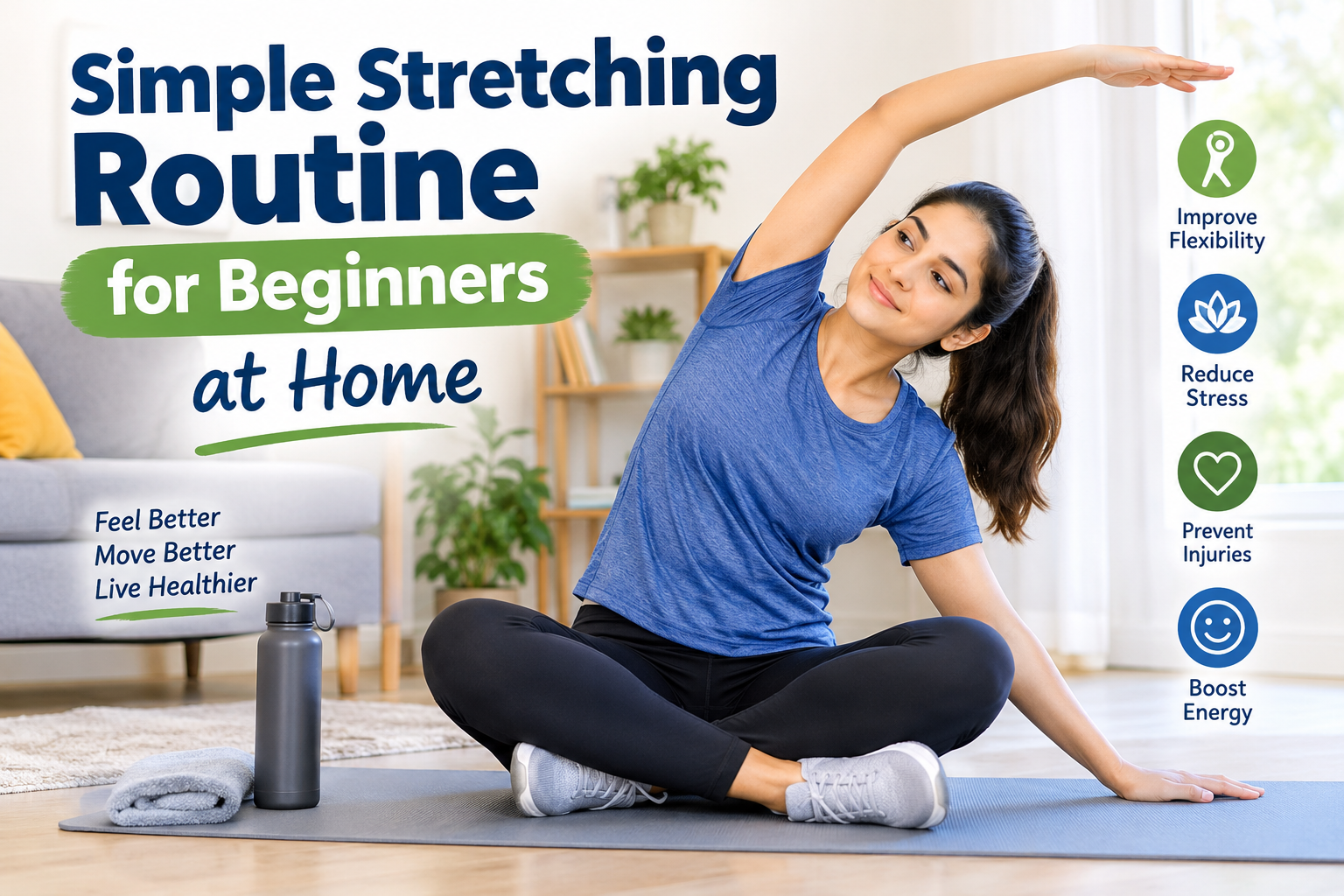
4. Standing Side Stretch

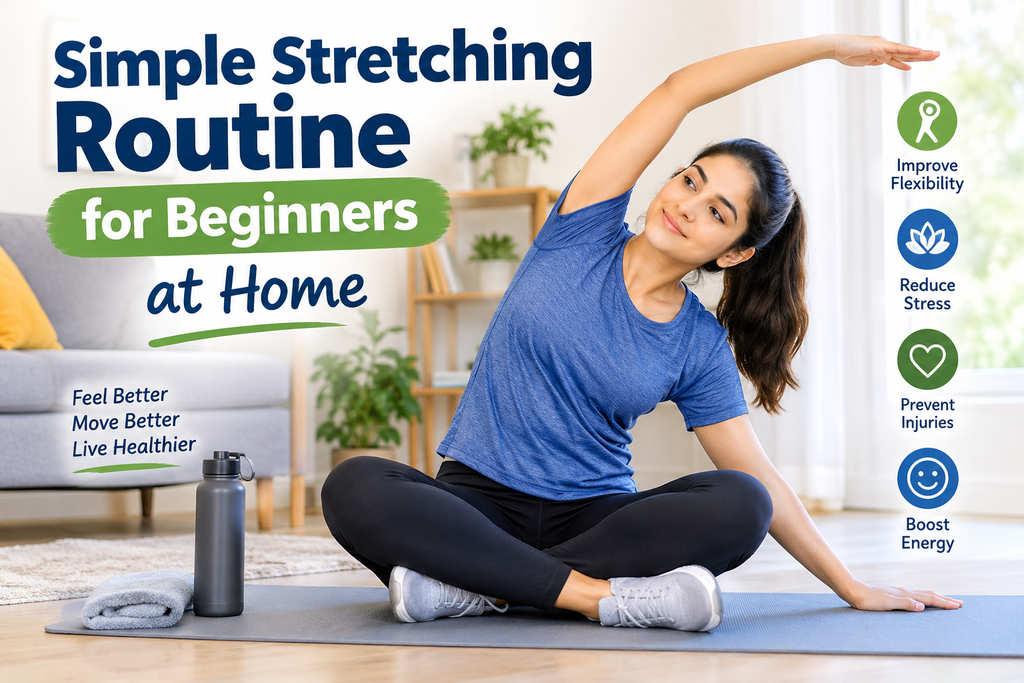
The standing side stretch is a simple way to stretch the sides of your torso. It is easy to perform and requires no special equipment.
Stand with your feet comfortably apart. Raise your right arm overhead and slowly lean toward your left side. Keep both feet on the floor and avoid twisting your body. Hold for 15 seconds, return to the center, and repeat on the opposite side.
This exercise can be a useful addition to a morning stretching routine, particularly when you want to move your upper body after waking up.
Recommended duration: 15 seconds on each side.
5. Cat Cow Stretch

The cat cow stretch is a beginner friendly movement that gently moves your spine through two positions. It is commonly included in yoga and mobility routines.
Start on your hands and knees, with your hands under your shoulders and knees under your hips. As you inhale, gently lift your chest and allow your back to move into a comfortable arch. As you exhale, round your back gently and lower your head slightly.
Repeat slowly without forcing your spine into either position.
I find this type of movement useful as part of a gentle warm up because it encourages controlled movement rather than holding one position for a long time.
Recommended duration: 6 to 10 slow repetitions.
6. Hamstring Stretch

The hamstrings are the muscles located at the back of your thighs. Gentle hamstring stretching may help improve flexibility, especially for people who spend much of the day sitting.
Sit on a mat with one leg extended and the other leg comfortably bent. Keep your back as straight as possible and slowly lean forward from your hips toward the extended leg. Stop when you feel a mild stretch behind your thigh.
You do not need to touch your toes. Avoid bouncing or rounding your back excessively to reach farther.
Hold the position, breathe normally, and switch legs.
Recommended duration: 15 to 30 seconds per leg.
7. Standing Quadriceps Stretch

The quadriceps are the muscles at the front of your thighs. This stretch can be helpful for people who walk regularly, exercise at home, or want to maintain comfortable leg movement.
Stand beside a wall or sturdy chair for support. Bend your right knee and bring your heel gently toward your buttocks. Hold your ankle if you can reach it comfortably. Keep your knees close together and your torso upright.
Hold the position without pulling your foot forcefully. If balancing is difficult, keep one hand on the wall throughout the exercise.
Recommended duration: 15 to 20 seconds per leg.
8. Calf Stretch

Calf stretching is a useful addition to a daily flexibility routine. It can be particularly helpful for people who walk, stand for long periods, or participate in other physical activities.
Place both hands against a wall. Step one foot backward while keeping it flat on the floor. Bend your front knee slightly and lean toward the wall until you feel a gentle stretch in the calf of your back leg.
Keep your back heel down and avoid bouncing. Repeat on the other side.
Recommended duration: 20 seconds per leg.
9. Child’s Pose

Child’s pose is a gentle yoga position that can help you relax and stretch your back, hips, and shoulders.
Begin on your hands and knees. Slowly move your hips toward your heels while extending your arms forward on the mat. Rest your forehead on the mat if comfortable. If your hips do not reach your heels easily, place a cushion underneath them.
Breathe slowly and stay in the position only as long as it feels comfortable. You can keep your knees farther apart if that feels better.
Recommended duration: 20 to 30 seconds.
A Simple 10 Minute Stretching Routine for Beginners
You do not need to perform every stretch for a long time. The following routine provides an easy starting point for beginners who want a consistent daily stretching habit.
| Exercise | Suggested time |
|---|---|
| Neck stretch | 1 minute |
| Shoulder stretch | 1 minute |
| Overhead stretch | 30 seconds |
| Standing side stretch | 1 minute |
| Cat cow stretch | 1 minute |
| Hamstring stretch | 2 minutes |
| Quadriceps stretch | 1 minute |
| Calf stretch | 1 minute |
| Child’s pose | 1 minute |
Move slowly between exercises and use any remaining time to settle into a comfortable position. You can adjust the duration according to your fitness level.
Tips for Getting Better Results From Stretching
In my opinion, consistency matters more than trying to achieve perfect flexibility in a few days. Start with movements that feel comfortable and gradually build your routine.
Here are some practical tips to follow:
1. Warm up first. Walk around your room for three to five minutes before performing longer stretches. Warm muscles may tolerate movement more comfortably.
2. Breathe normally. Avoid holding your breath while stretching. Slow, natural breathing can help you remain relaxed.
3. Never force a stretch. You should feel mild tension, not sharp pain, numbness, or tingling.
4. Wear comfortable clothing. Choose clothes that allow you to move freely without slipping.
5. Create a regular schedule. Try stretching after waking up, during a work break, or in the evening when you have time to relax.
6. Progress gradually. Increase the duration or range of movement slowly as your comfort improves.
7. Pay attention to your body. If an exercise causes pain or worsens an existing problem, stop rather than pushing through it.
Remember that stretching should complement other healthy habits. Walking regularly, doing suitable strength exercises, sleeping adequately, and maintaining a balanced diet can also support general fitness.
Common Stretching Mistakes Beginners Should Avoid
One common mistake is trying to become flexible too quickly. Forcing your body into a deep stretch can cause unnecessary discomfort and may increase the risk of injury.
Another mistake is bouncing repeatedly at the end of a stretch. Beginners generally benefit from slow, controlled movements and comfortable holds instead.
Some people also stretch intensely before warming up. Start with gentle movement, particularly if you have been sitting for a long time or have just woken up.
Finally, do not assume that more stretching is always better. A short routine performed consistently may be more practical than a long session that leaves you sore or discouraged.
If you have a recent injury, significant joint pain, osteoporosis, balance difficulties, or a medical condition that affects movement, ask a qualified healthcare professional which stretches are suitable for you.
Frequently Asked Questions
How often should beginners stretch at home?
Beginners can start with a short routine several days per week and gradually work toward daily practice if it feels comfortable. The right frequency depends on your goals, activity level, and physical condition.
Is 10 minutes of stretching a day enough?
Ten minutes is a reasonable starting point for building a stretching habit. It can help you work on several major muscle groups, although improvements depend on consistency and individual circumstances.
Should I stretch in the morning or evening?
Both can work. Morning stretching may help you ease into your day, while evening stretching can provide a relaxing break. Choose a time that fits your schedule.
Can stretching improve flexibility?
Yes. Regular stretching can improve flexibility and range of motion over time. Results vary depending on your starting point, the muscles being stretched, and how consistently you practice.
Do I need equipment for home stretching?
No special equipment is required for most beginner stretches. A comfortable floor mat and a sturdy chair or wall for support can make your routine easier.
Conclusion
A simple stretching routine for beginners at home is an accessible way to start building healthier movement habits. You can begin with neck stretches, shoulder movements, hamstring stretches, calf stretches, and other gentle exercises without purchasing expensive equipment or joining a gym.
My advice is to focus on comfort, consistency, and gradual improvement rather than comparing your flexibility with someone else’s. Start with 10 minutes, pay attention to your body’s signals, and make small adjustments as you become more comfortable.
With patience and regular practice, stretching can become a practical part of your daily fitness routine and help you move with greater confidence.