Introduction
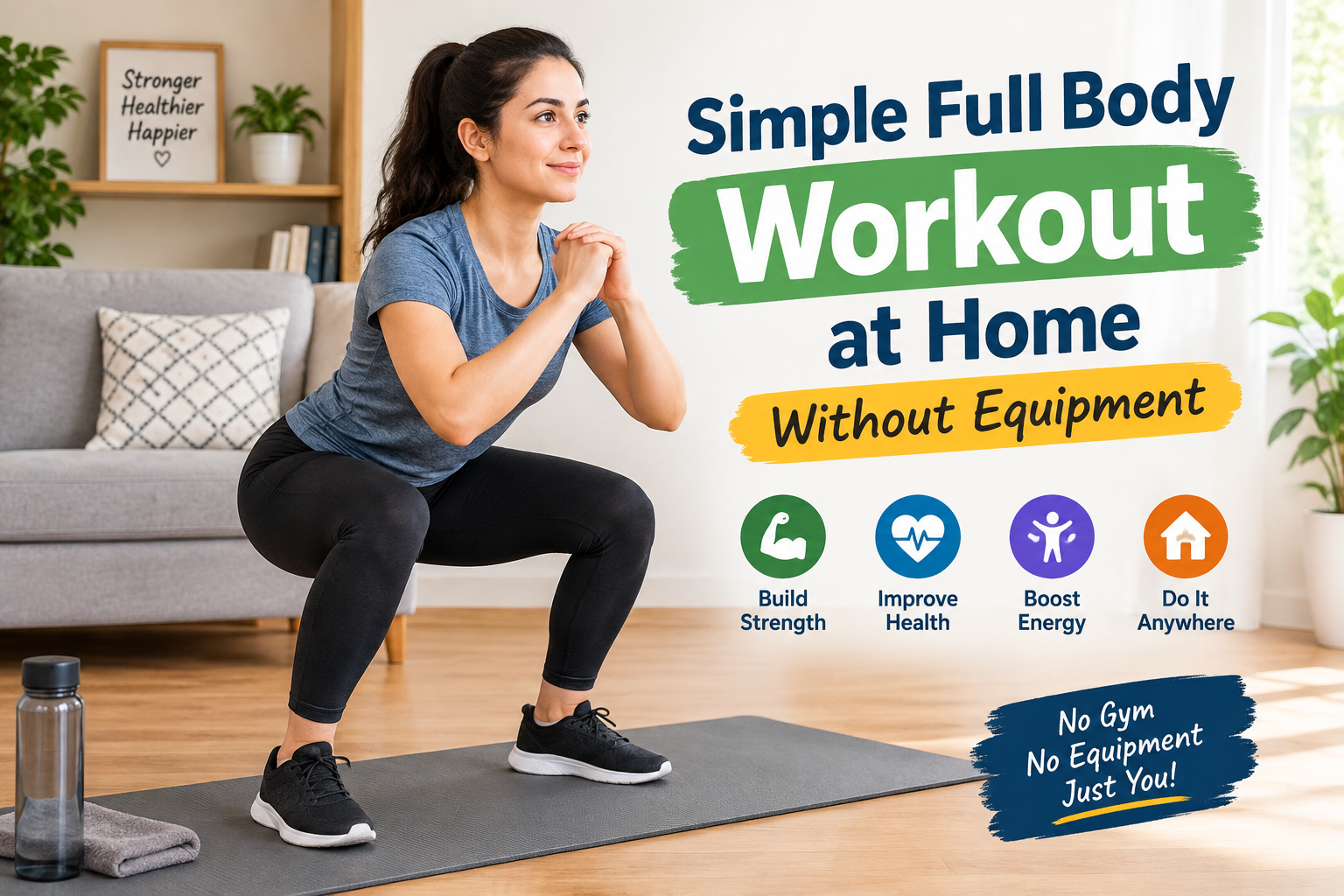
Staying fit and healthy does not always require a gym membership, expensive machines, or special workout equipment. In my opinion, one of the easiest ways to improve physical fitness is to start exercising at home. A simple full body workout at home without equipment can help beginners build strength, improve flexibility, increase energy, and develop a healthy daily routine.
Many people want to exercise but struggle to find enough time for the gym. Work, family responsibilities, studies, and other daily activities can make regular exercise difficult. This is why I believe home workouts are a practical option for people who want to stay active without changing their entire schedule.
The best part is that bodyweight exercises use your own body as resistance. You can perform many effective movements in a small space without buying anything. Whether you are a beginner or returning to exercise after a long break, you can start with simple movements and gradually improve.
In this article, I will explain how to perform a simple full body workout at home without equipment, which exercises beginners can try, and how to make home exercise a consistent habit.
Why Choose a Full Body Workout at Home?
A full body workout includes exercises that target different muscle groups, including the legs, arms, chest, shoulders, back, and core. Instead of focusing on only one area, you can work several parts of your body during a single session.
I find this approach especially useful for beginners because it keeps a workout simple and manageable. You do not need a complicated schedule or separate equipment for every muscle group.
There are several benefits of exercising at home.
First, you can save money because bodyweight workouts do not require a gym membership or expensive equipment. Second, you can exercise whenever it fits your schedule. Third, working out at home provides privacy and allows you to learn new movements at your own pace.
Regular physical activity can also support heart health, muscle strength, balance, and general well being. However, the results depend on consistency, exercise intensity, recovery, and your overall lifestyle.
1. Warm Up Before Starting
Before beginning any full body workout at home without equipment, I recommend spending five minutes warming up. A warm up gradually prepares your body for exercise and helps you move more comfortably.
Start by marching in place for one minute. Then perform gentle arm circles, shoulder rolls, side steps, and slow knee lifts.
You can also walk around your room at a comfortable pace. Keep your movements controlled and increase the intensity gradually.
Avoid starting with difficult exercises when your muscles are cold. If a movement causes sharp pain, stop and choose a more comfortable alternative.
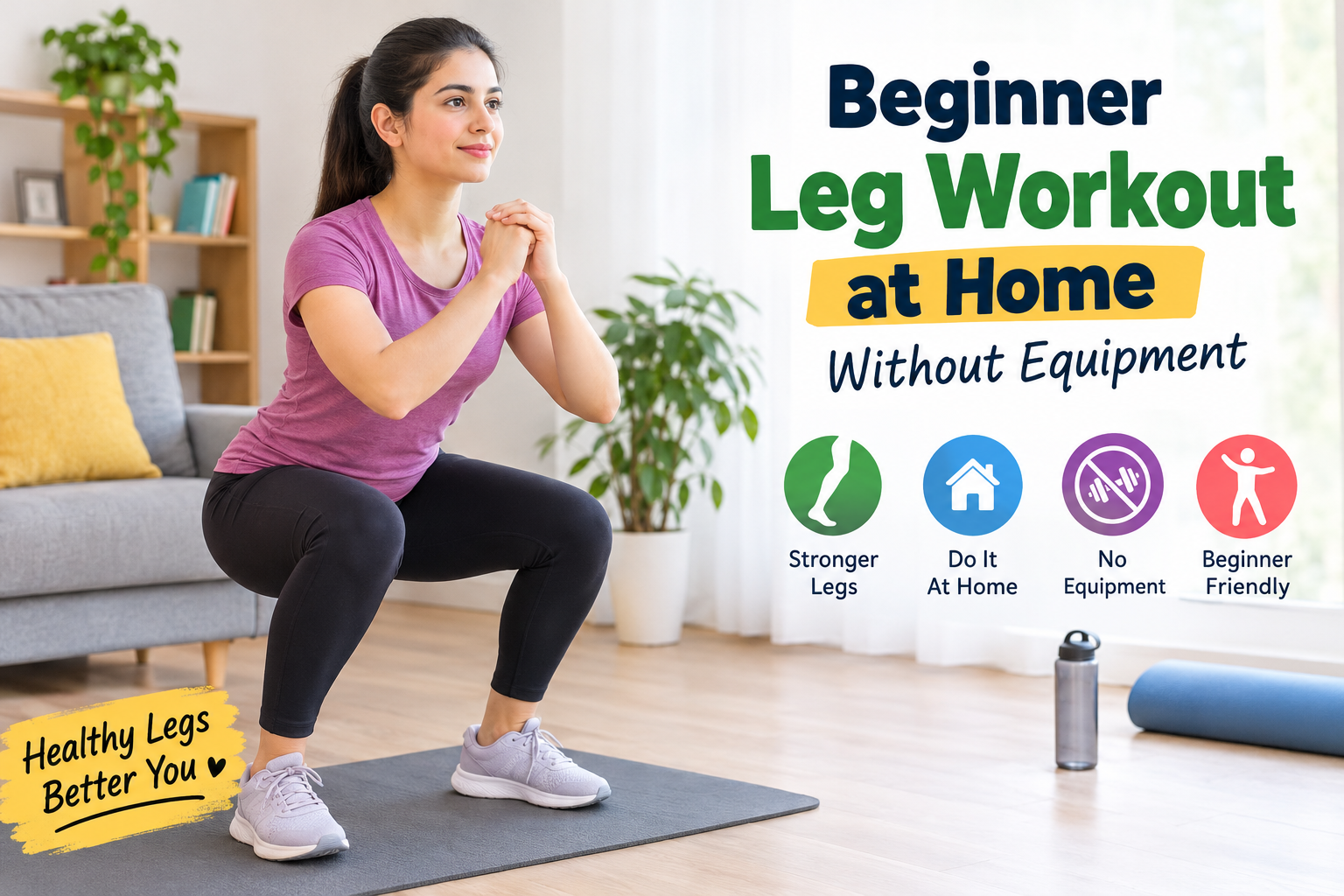
2. Bodyweight Squats
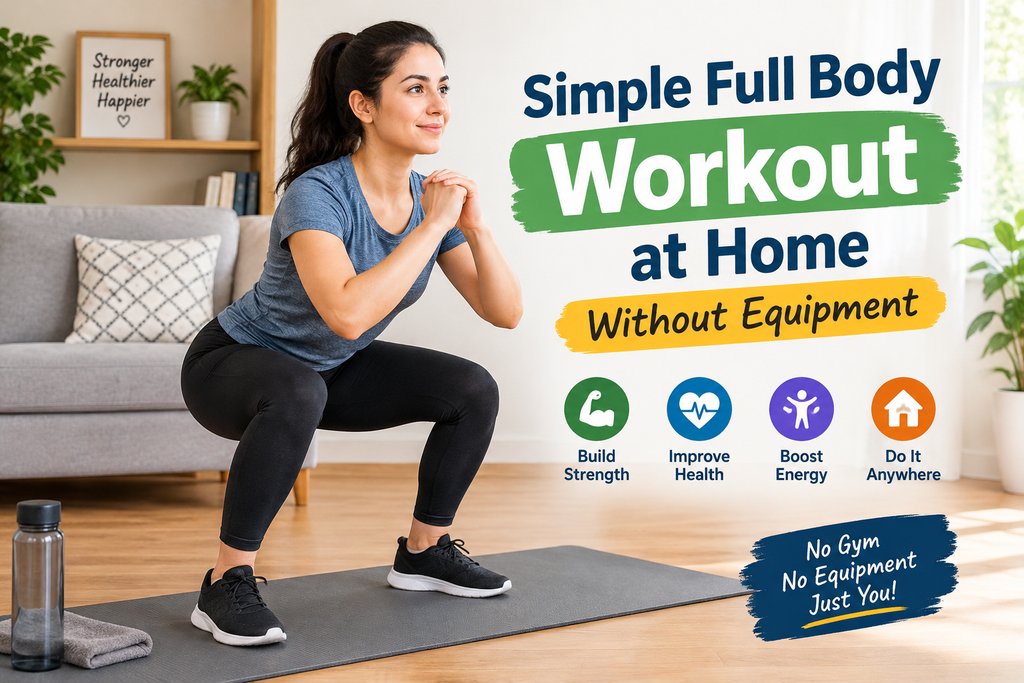
Bodyweight squats are one of my favorite exercises for a beginner friendly home workout. They target the thighs, hips, and glute muscles while also challenging your core.
To perform a squat, stand with your feet approximately shoulder width apart. Keep your chest lifted and your back in a comfortable neutral position. Slowly bend your knees and push your hips backward as if you were sitting on a chair.
Lower yourself only as far as you can comfortably manage. Then push through your feet to return to the standing position.
Beginner target: 8 to 12 repetitions.
Try to keep your knees aligned with your toes and avoid rushing through the movement. If a regular squat feels difficult, practice sitting down on a sturdy chair and standing up again.
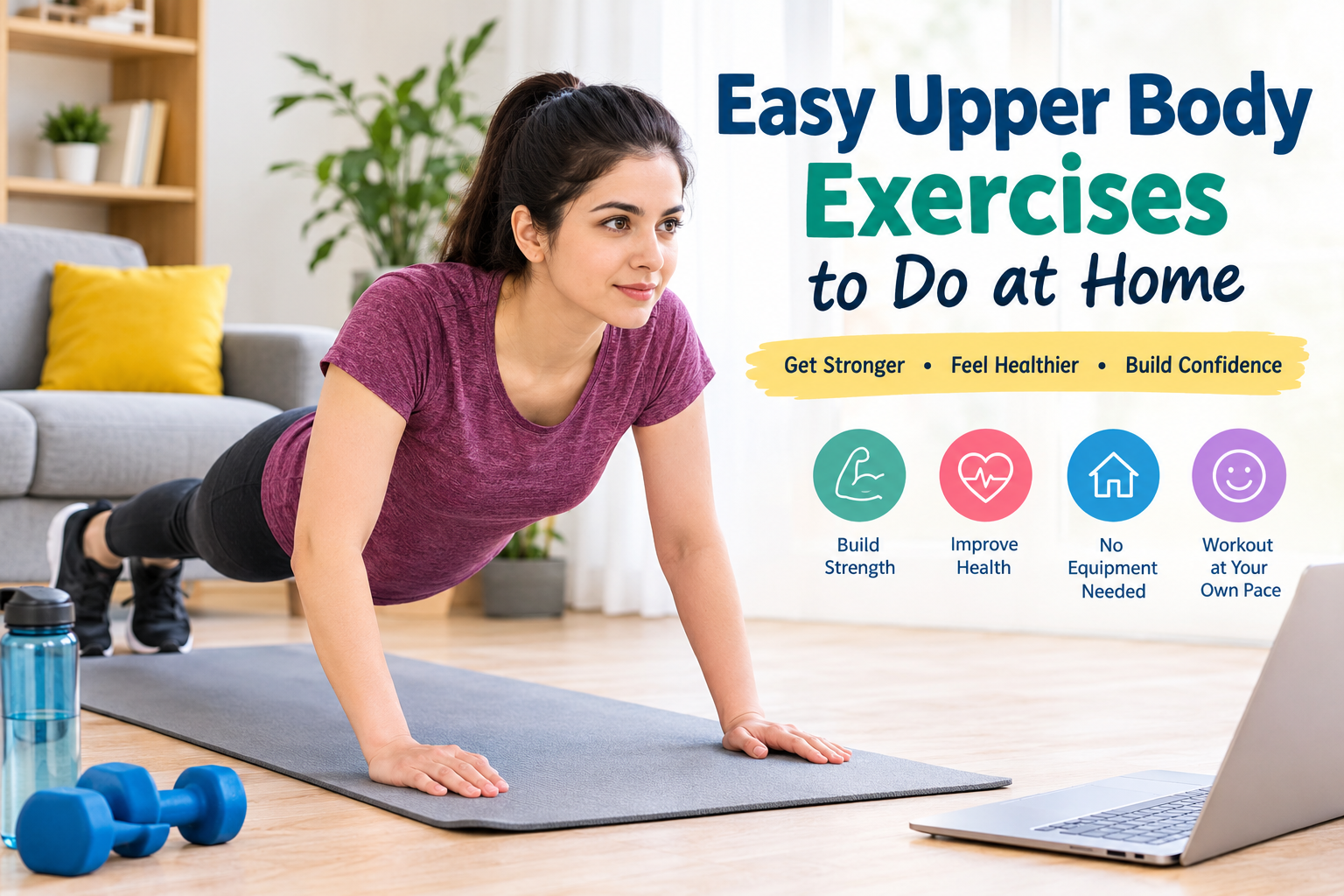
3. Wall Push Ups or Knee Push Ups
Push ups help strengthen the chest, shoulders, and triceps. They also engage the core when performed with good technique.
For beginners, I recommend starting with wall push ups. Stand facing a wall and place your hands against it at approximately shoulder height. Step backward slightly, bend your elbows, and bring your chest toward the wall.
Push gently through your hands to return to the starting position.
Beginner target: 8 to 12 repetitions.
As your strength improves, you can try knee push ups on a stable, nonslip surface. Keep your body aligned and lower yourself slowly. Choose the variation that allows you to maintain good form rather than forcing yourself to perform a more difficult version.
4. Reverse Lunges
Reverse lunges are useful for training the legs, hips, and glute muscles. They also help develop balance and coordination.
Stand upright with your feet about hip width apart. Step one foot backward and bend both knees as far as comfortable. Keep your front foot planted and your torso upright.
Push through the front foot to return to the starting position. Repeat with the opposite leg.
Beginner target: 6 to 8 repetitions per leg.
If you find it difficult to balance, stand beside a sturdy support and use it lightly for stability. You can also begin with a small step backward before increasing your range of motion.
5. Glute Bridges
Glute bridges are a simple floor exercise that targets the glute muscles and works the muscles around the hips.
Lie on your back with your knees bent and your feet flat on the floor. Keep your arms beside your body. Tighten your abdominal muscles gently and lift your hips until your shoulders, hips, and knees form a comfortable line.
Pause briefly at the top, then lower your hips slowly.
Beginner target: 10 to 12 repetitions.
Avoid arching your lower back excessively. Focus on controlled movement and use your glute muscles to lift your hips.
6. Bird Dogs
Bird dogs are a useful exercise for core stability, coordination, and controlled movement.
Begin on your hands and knees with your hands under your shoulders and knees under your hips. Slowly extend your right arm forward while extending your left leg backward.
Keep your hips level and avoid twisting your body. Return to the starting position and repeat with the opposite arm and leg.
Beginner target: 6 to 8 repetitions per side.
You do not need to lift your arm or leg very high. A smaller, controlled movement is often easier to perform correctly.
7. Standing Knee Raises
Standing knee raises provide a beginner friendly way to increase movement and engage the abdominal and hip muscles.
Stand upright with your feet comfortably apart. Lift one knee toward your waist while keeping your torso steady. Lower it slowly and repeat with the other leg.
Move your arms naturally to help maintain balance. You can perform the exercise slowly or increase your pace if it feels comfortable.
Beginner target: 30 to 45 seconds.
If you need extra support, stand near a wall or sturdy chair. This exercise can also serve as a low impact alternative to jumping movements.
8. Plank Hold
The plank is a popular bodyweight exercise that challenges the abdominal muscles, shoulders, and other muscles that help stabilize your body.
Start on your forearms and knees. Position your elbows beneath your shoulders and keep your body aligned. Tighten your core gently while breathing normally.
As you become stronger, you can progress to a forearm plank with your knees lifted from the floor.
Beginner target: 10 to 20 seconds.
Do not allow your lower back to sag. Stop when you can no longer maintain a comfortable, controlled position. Quality is more important than holding the plank for a long time.
A Simple 20 Minute Full Body Workout Plan
Here is a practical routine you can follow at home without purchasing any workout equipment.
- Warm up with marching and gentle movements for 5 minutes.
- Perform 10 bodyweight squats.
- Complete 8 wall push ups.
- Perform 6 reverse lunges per leg.
- Complete 12 glute bridges.
- Perform 6 bird dogs per side.
- March in place for 30 seconds.
- Hold a plank for 10 to 20 seconds if comfortable.
Rest for approximately 30 to 60 seconds between exercises when needed. After completing the circuit, rest and repeat if your fitness level allows.
The routine may take around 15 to 20 minutes depending on your pace and rest periods. Beginners can start with one round and gradually work toward two rounds.
How Often Should You Exercise at Home?
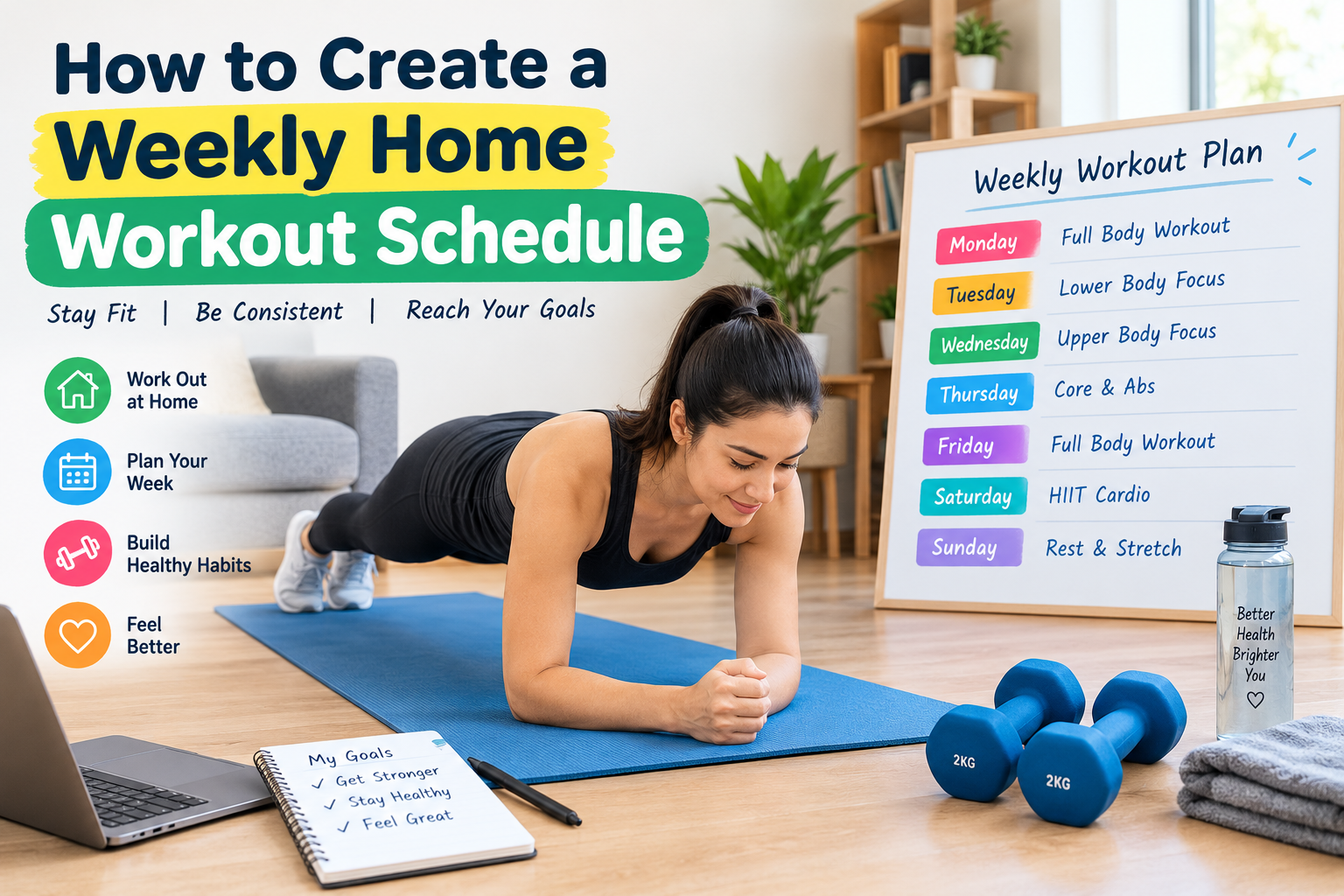
For most beginners, starting with two or three full body workout sessions per week is a reasonable approach. Leave recovery time between challenging sessions, especially when you are new to exercise.
On other days, you can take a walk, perform gentle stretching, or enjoy another activity that keeps you moving.
As your fitness improves, you may gradually increase the number of repetitions, add another round, or choose slightly more challenging exercise variations. Change one thing at a time so that you can understand how your body responds.
The goal is not to exercise as hard as possible every day. The goal is to build a routine that you can maintain over time.
Tips for Getting Better Results
In my opinion, consistency is one of the most important parts of a successful home workout routine. A short workout performed regularly can be more useful than an ambitious plan that you abandon after a few days.
Here are some practical tips to help you stay on track.
Set a realistic goal. Start with a routine that fits your current fitness level and daily schedule.
Focus on proper form. Perform every repetition slowly enough to maintain control. Do not sacrifice technique just to complete more repetitions.
Stay hydrated. Drink water throughout the day and have access to water during your workout.
Eat balanced meals. Include protein sources, fruits, vegetables, whole grains, and other nutritious foods that suit your needs.
Get enough sleep. Adequate rest supports recovery and helps you feel more prepared for your next workout.
Track your progress. Record your exercise sessions and repetitions. Small improvements can help you stay motivated.
Make exercise enjoyable. Play music, choose a comfortable workout time, and celebrate the habit of showing up.
Common Mistakes to Avoid
One common mistake is trying to do too much on the first day. Starting with too many repetitions can leave you excessively tired and make it harder to maintain your routine.
Another mistake is ignoring exercise technique. Fast movements and poor body alignment can make exercises less effective and may increase the risk of injury.
Avoid comparing your progress with other people. Everyone begins at a different fitness level, and progress can vary depending on age, experience, sleep, nutrition, and other factors.
Finally, do not ignore persistent pain, dizziness, or unusual shortness of breath. Stop exercising if these symptoms occur and seek appropriate medical advice. If you have a chronic health condition, an injury, or concerns about exercising safely, speak with a qualified healthcare professional before starting a new routine.
Conclusion
A simple full body workout at home without equipment is a practical way to begin building a healthier lifestyle. With exercises such as squats, wall push ups, reverse lunges, glute bridges, bird dogs, and planks, you can train several major muscle groups without visiting a gym.
I believe the best approach is to start small, learn the correct technique, and increase your activity gradually. You do not need a perfect workout space or an expensive fitness plan to take the first step.
Choose a convenient time, prepare a small area in your home, and begin with movements that feel manageable. With regular practice, balanced nutrition, and adequate recovery, you can gradually improve your strength, movement, and general fitness.
Remember that long term progress comes from healthy habits repeated over time. Start with what you can do today, stay patient with yourself, and make physical activity a regular part of your life.
Frequently Asked Questions
Can I do a full body workout at home without equipment?
Yes. Bodyweight exercises such as squats, wall push ups, lunges, glute bridges, and planks can help train several major muscle groups without gym equipment.
How long should a beginner workout last?
A beginner can start with approximately 10 to 20 minutes, including a warm up and rest periods. Adjust the duration to your fitness level and increase it gradually.
Can I lose weight with home workouts?
Home workouts can contribute to weight management by increasing physical activity. Results depend on your overall activity level, eating habits, sleep, and other individual factors.
Is it okay to exercise every day?
Gentle daily movement can be beneficial, but beginners should allow recovery between demanding full body strength sessions. Walking and comfortable mobility exercises can be suitable activities on recovery days.
Do I need a workout mat?
A mat is optional. You can perform standing exercises without one, but a clean, nonslip surface can make floor exercises more comfortable. Choose a safe area with enough room to move freely.